Somaschini
When we talk about Italian design, we tend to talk about designers, houses and pieces that made it into books. Far less often do we talk about the infrastructure that made all of it possible. Brianza is exactly that: a region where furniture manufacturers, woodworking shops, upholsterers, inlay specialists, lacquerers and metalworkers developed alongside a network of suppliers and craftspeople without whom much of what we now understand as Italian furniture would look very different.
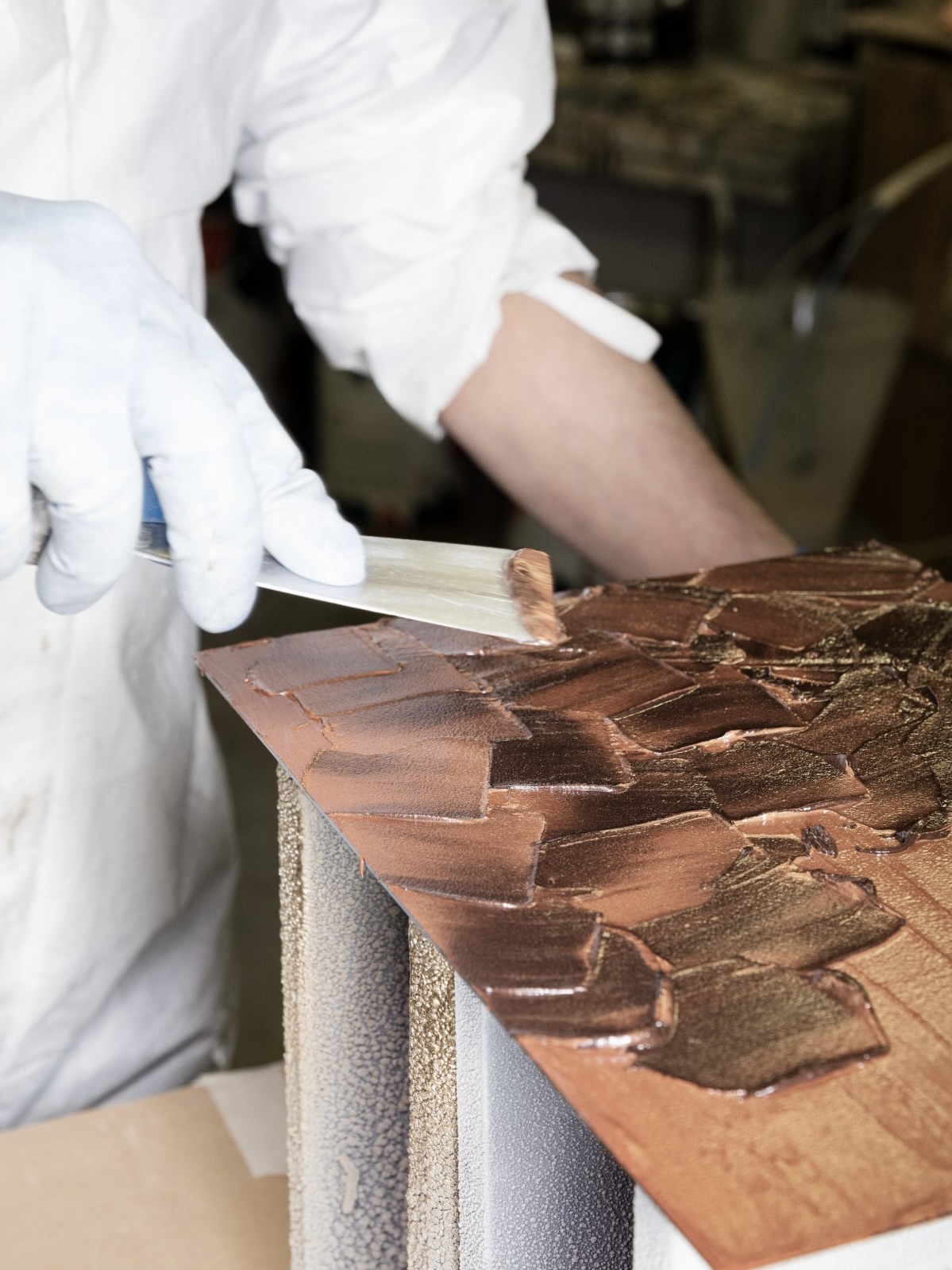
The brand comes out of that production culture without turning it into a stylistic theme. Craft remains a tool rather than a decorative footnote. Knowledge of materials works quietly in the background, strong enough to determine the quality of the making, but restrained enough to let the form remain its own.
Somaschini

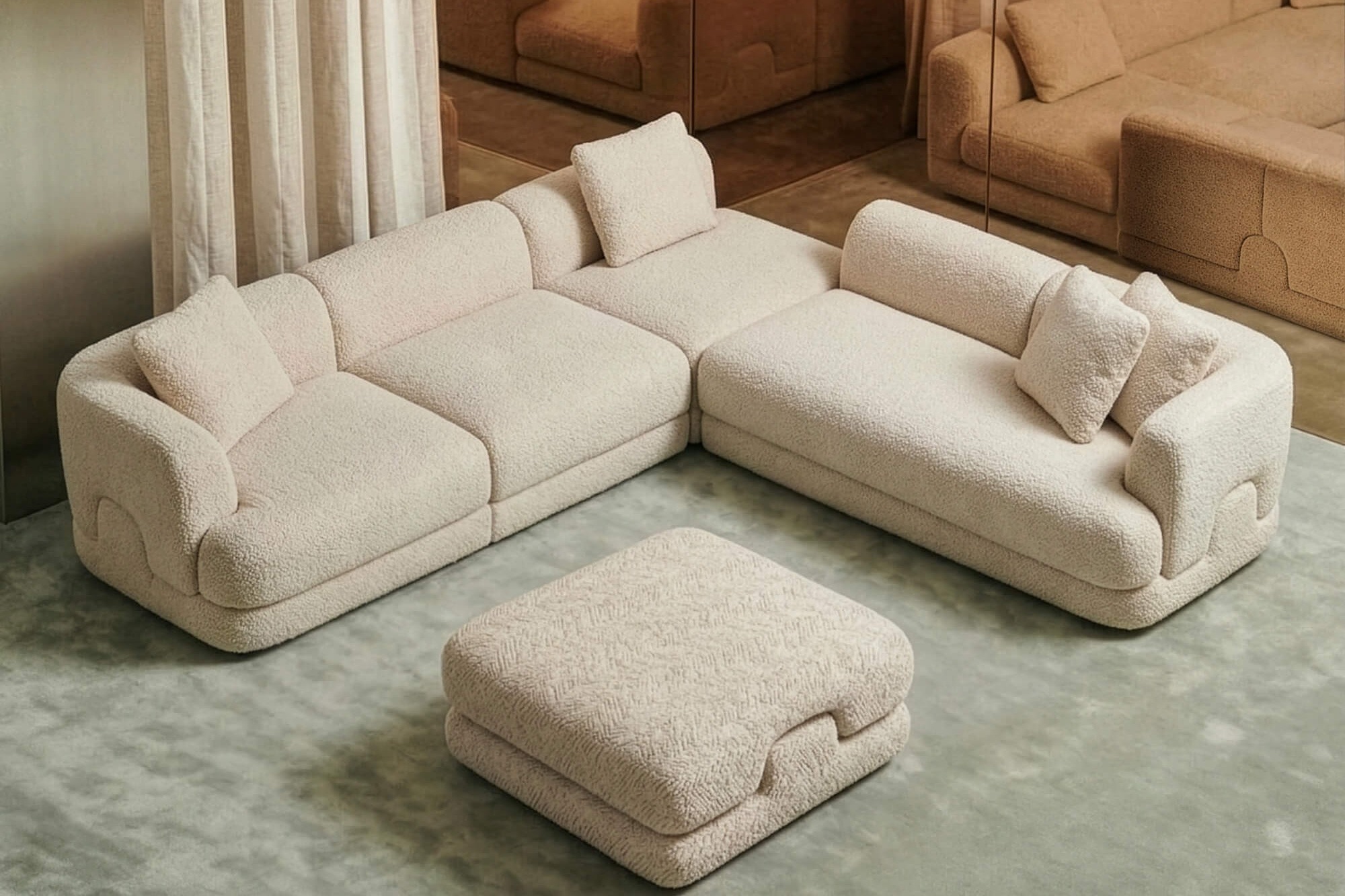
Zelig love seat.
The design is inspired by a historic club in Milan. Dainelli Studio, based in the Lombard city, has decided to refer to one of its iconic venues as well as to the Italian cabaret tradition and seeks a composition that invites imaginative ways of seating capable of facilitating conversation and exchange.
BRIANZA REVEALS ITSELF UP CLOSE
There is a certain immediacy to the collections. The pieces are not made complicated in order to prove how difficult they were to produce. Their strength lies in how clear they feel, while the seriousness of the making only becomes apparent once you get closer.
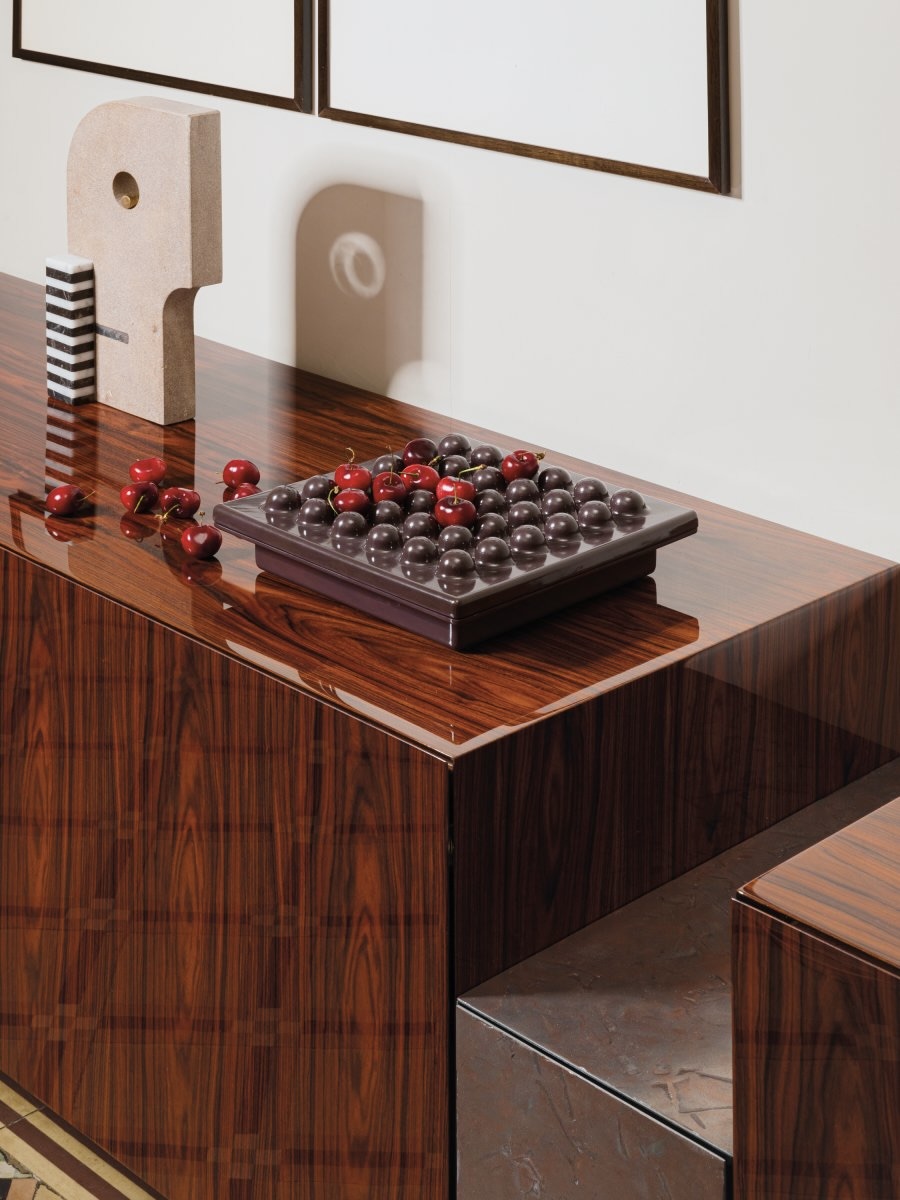
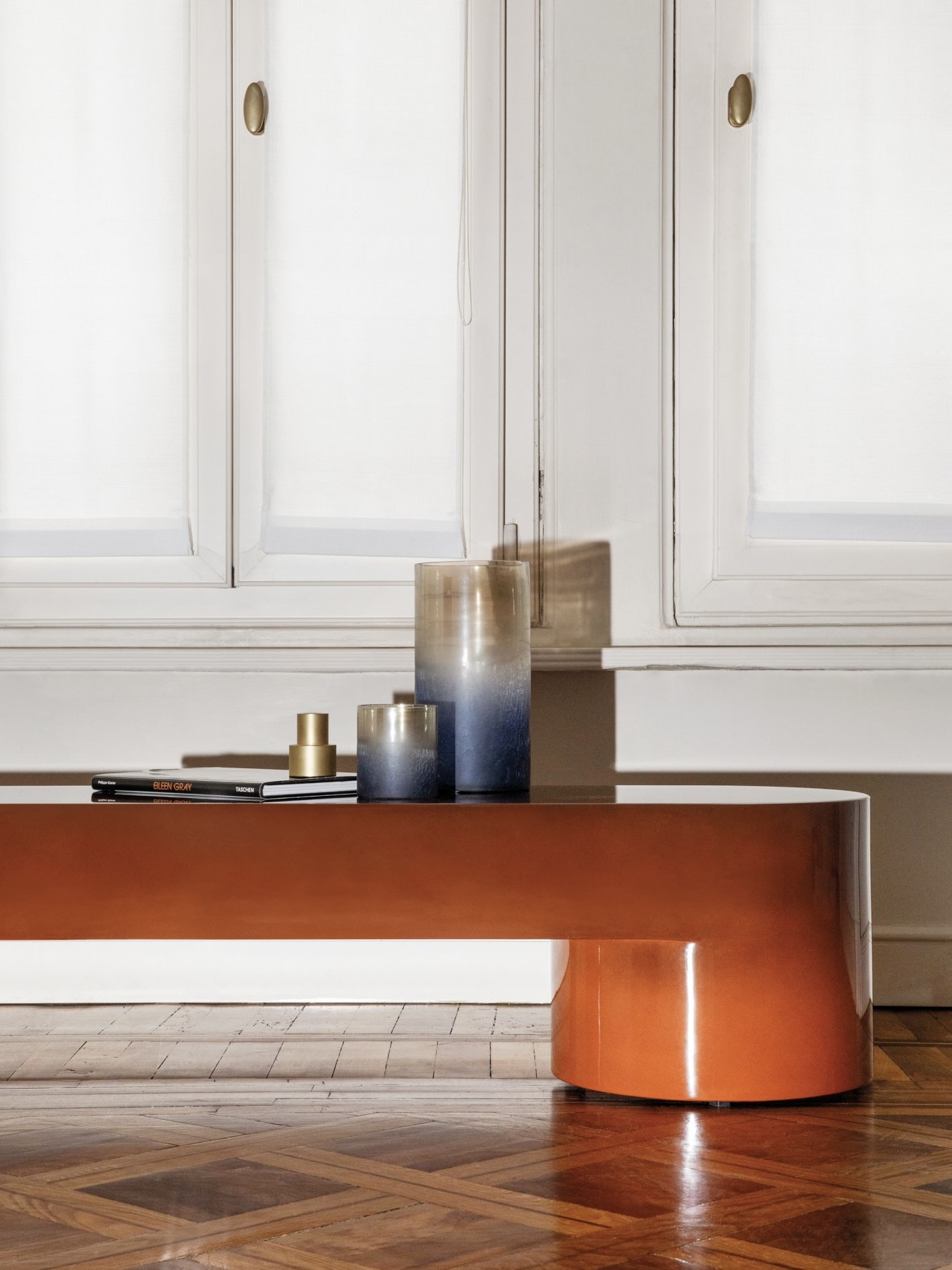
The Lazy O console is one of the clearest examples. A thin horizontal plane rests on large rounded volumes, and it is precisely that disproportion that gives the piece its character. Hunt revisits the three-legged chair, a familiar historical typology, and brings it into a contemporary context through a softer silhouette and carefully chosen finishes. Roma approaches the bookcase almost architecturally, built around a strong vertical element from which shelves extend in different directions, allowing function to take on the presence of an object.
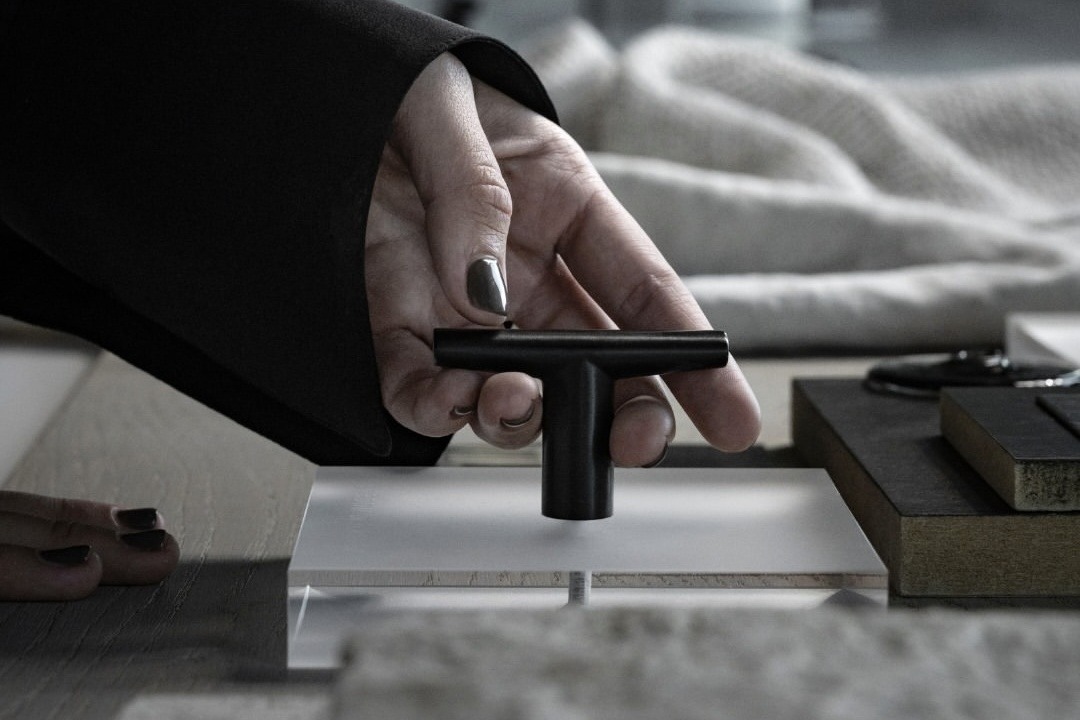
Behind those apparently simple gestures is a great deal of work that does not announce itself immediately. Woodworking, inlay, lacquer, upholstery, metal, glass, leather and textiles are not layers added afterwards, but part of the form itself. This is where Brianza becomes most legible. Not as an aesthetic code to recognise, but as the ability to execute an idea precisely without losing its character along the way.
A photograph can show the silhouette. In person, you understand how well it has actually been made.
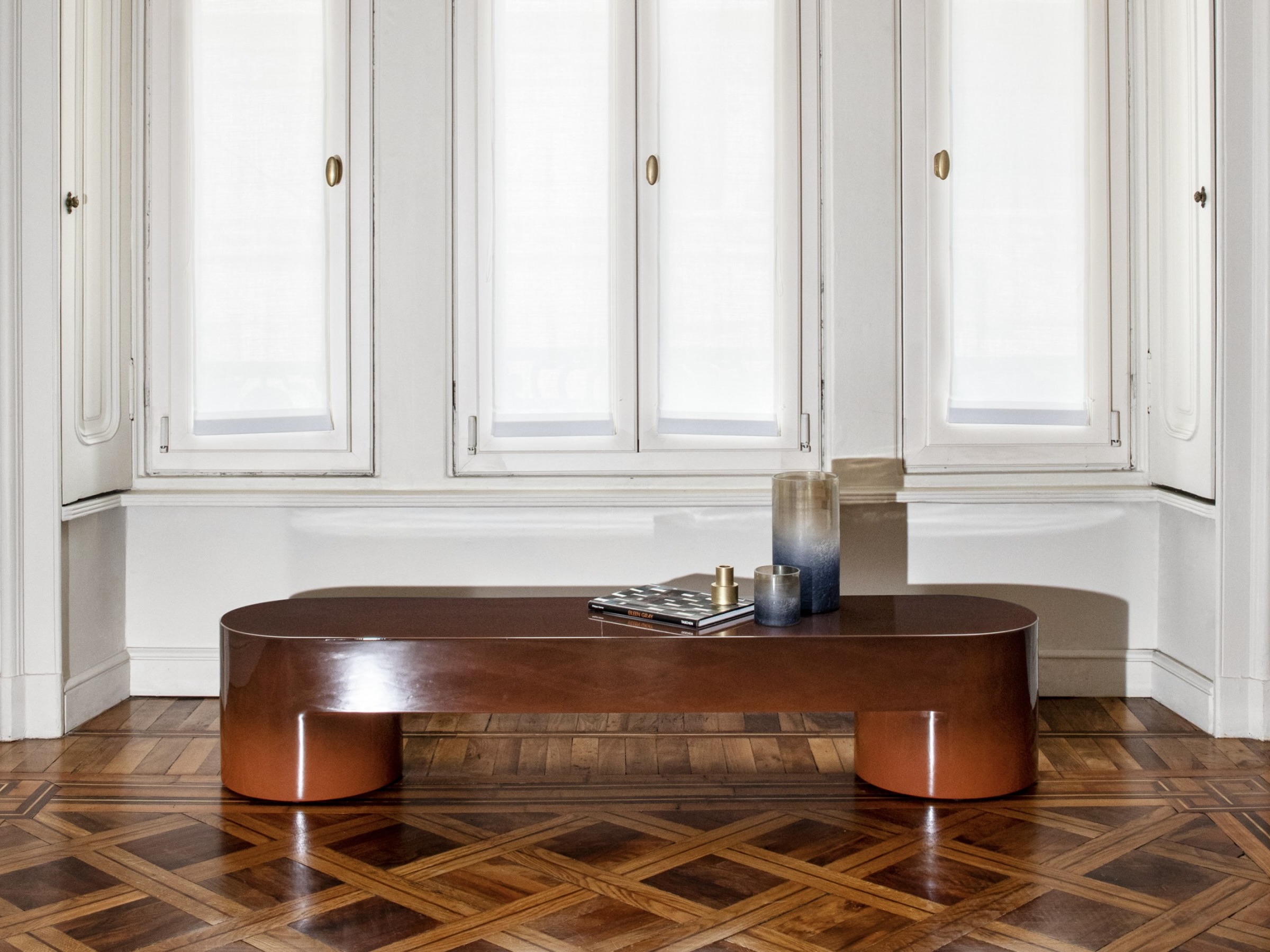
Lazy O bench, boccaccio

Roma bookshelf
FURNITURE HAS TO SURVIVE A REAL INTERIOR
The collection is visually strong enough to work beautifully in a campaign, but the real test begins once the furniture leaves the studio image.
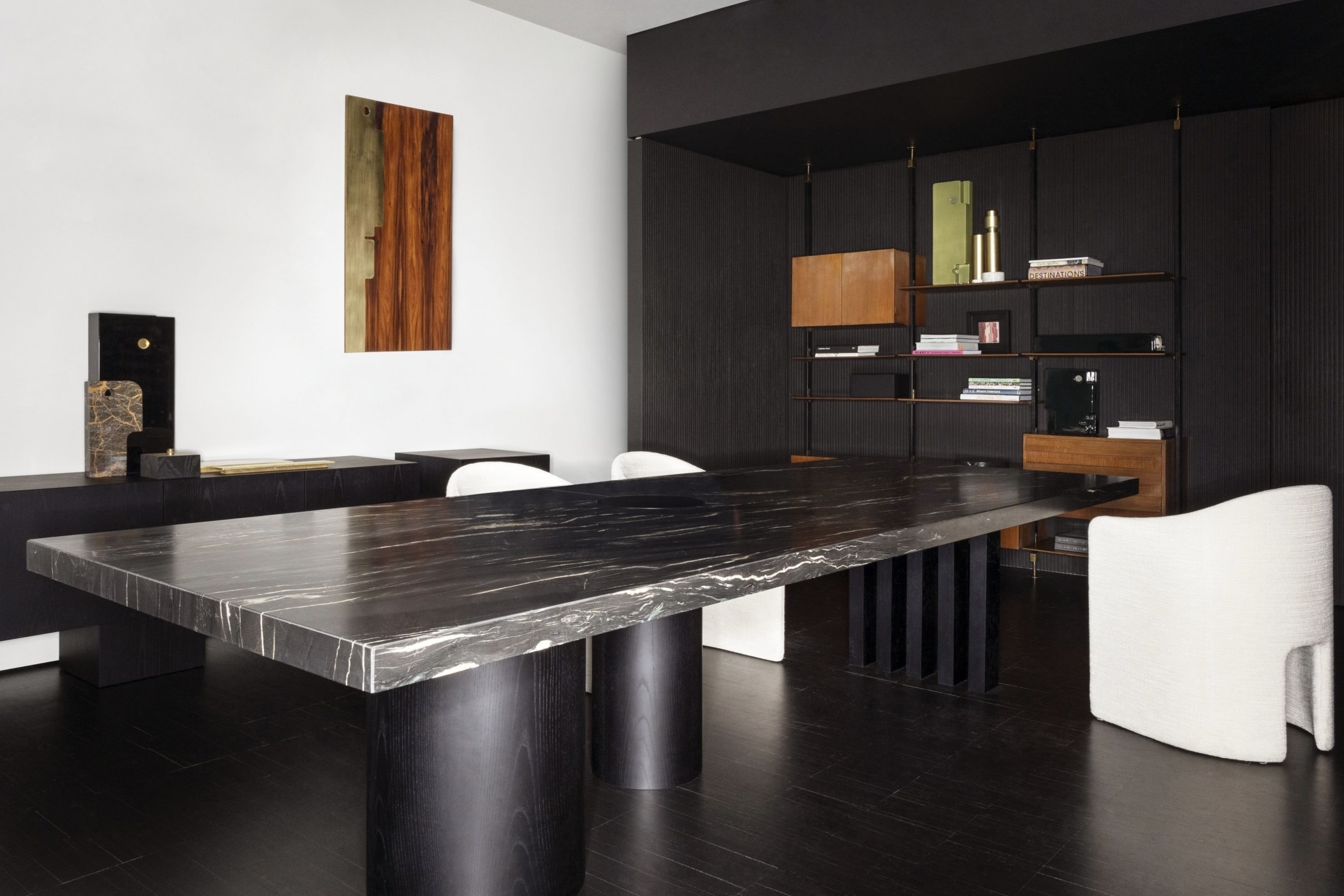
The Saturnia table takes its cue from the organic shapes of Tuscany’s thermal pools and translates them through travertine and metal. The Amazonia side tables build their identity through surface and texture, while Lazy O and Roma use volume in completely different ways. In one, mass becomes an almost sculptural gesture; in the other, structure begins to organise the space around it.
These pieces do not require the entire room to speak the same language. They can sit alongside art, older furniture, restrained architecture or things with no connection to the collection whatsoever. That is much closer to the way good interiors actually come together.
Rarely does everything arrive at once. There is already a table that stays, a painting that changes the balance of a wall, a chair nobody wants to throw away, or something brought back from a trip that may have no market value but every reason to remain. A new addition has to enter that conversation without taking control of the entire room.
This is where the collection becomes particularly convincing. An armchair can introduce a different proportion, a table can shift the centre of the room, and a bookcase can establish a new vertical where the wall had previously been little more than background.
The question is not how much you bring into an interior, but how precisely you choose.
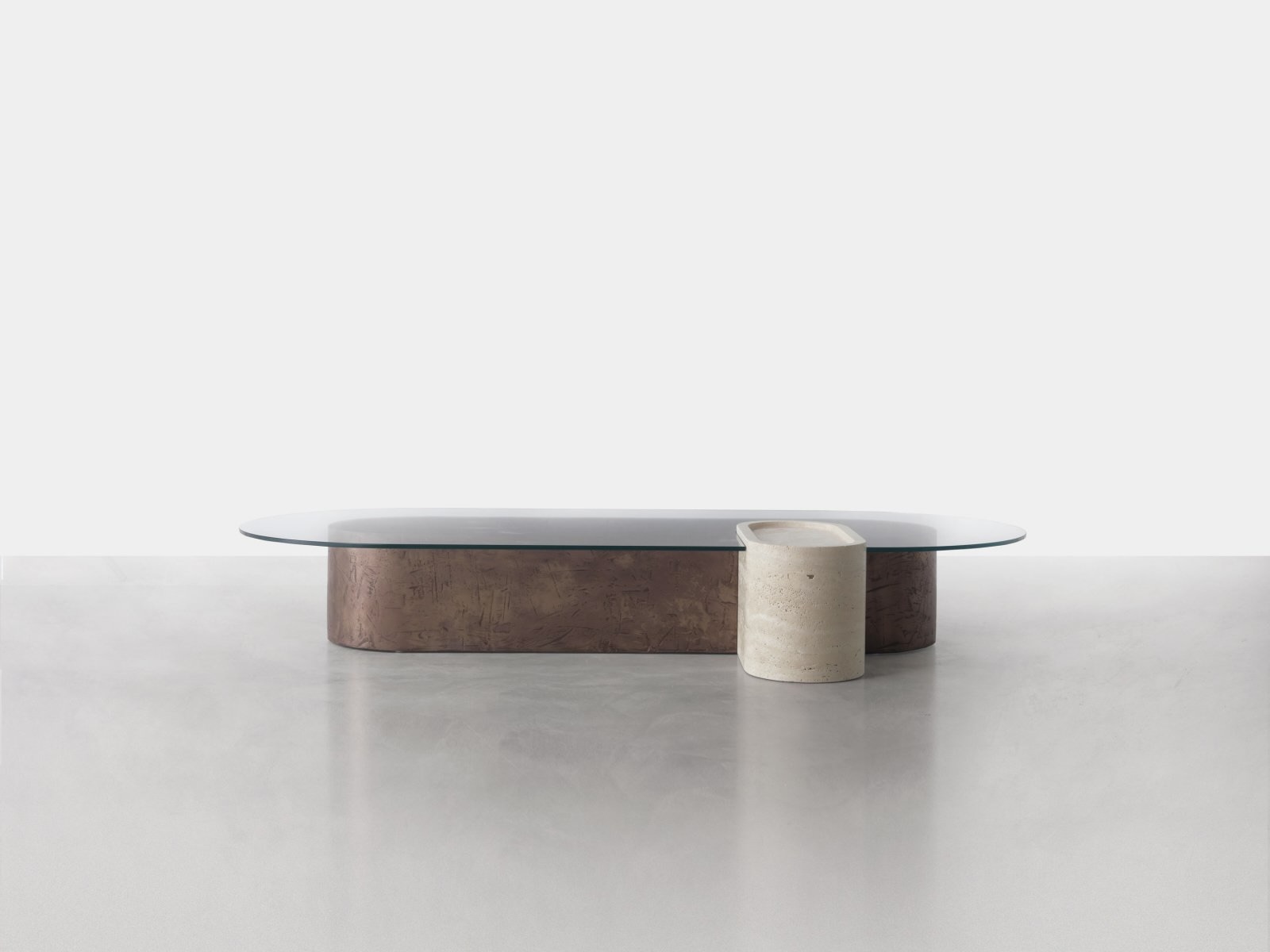
Saturnia coffee table
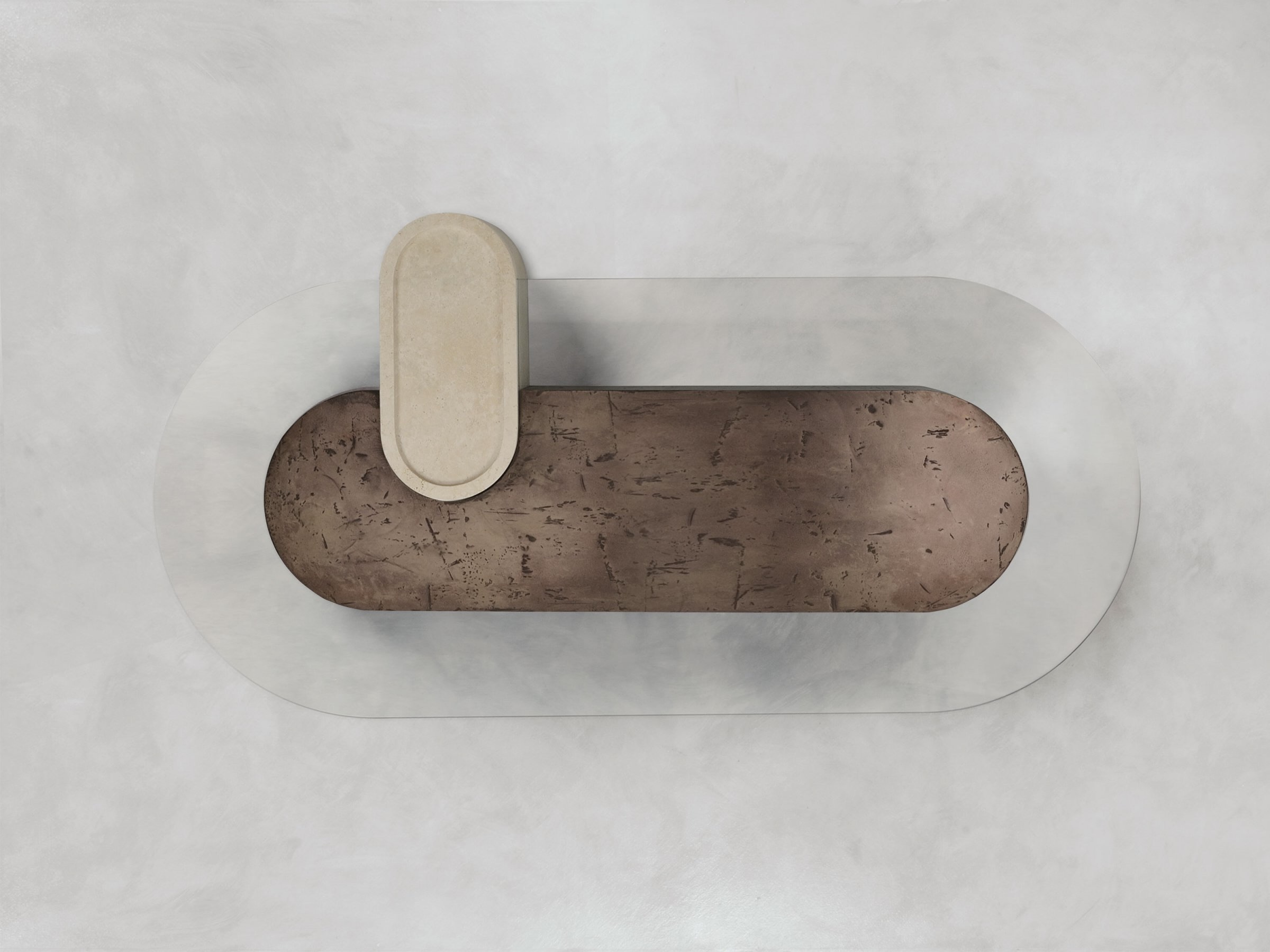
Saturnia coffee table
BESPOKE STARTS BEFORE THE ORDER IS PLACED
With furniture like this, choosing the model is only the beginning.
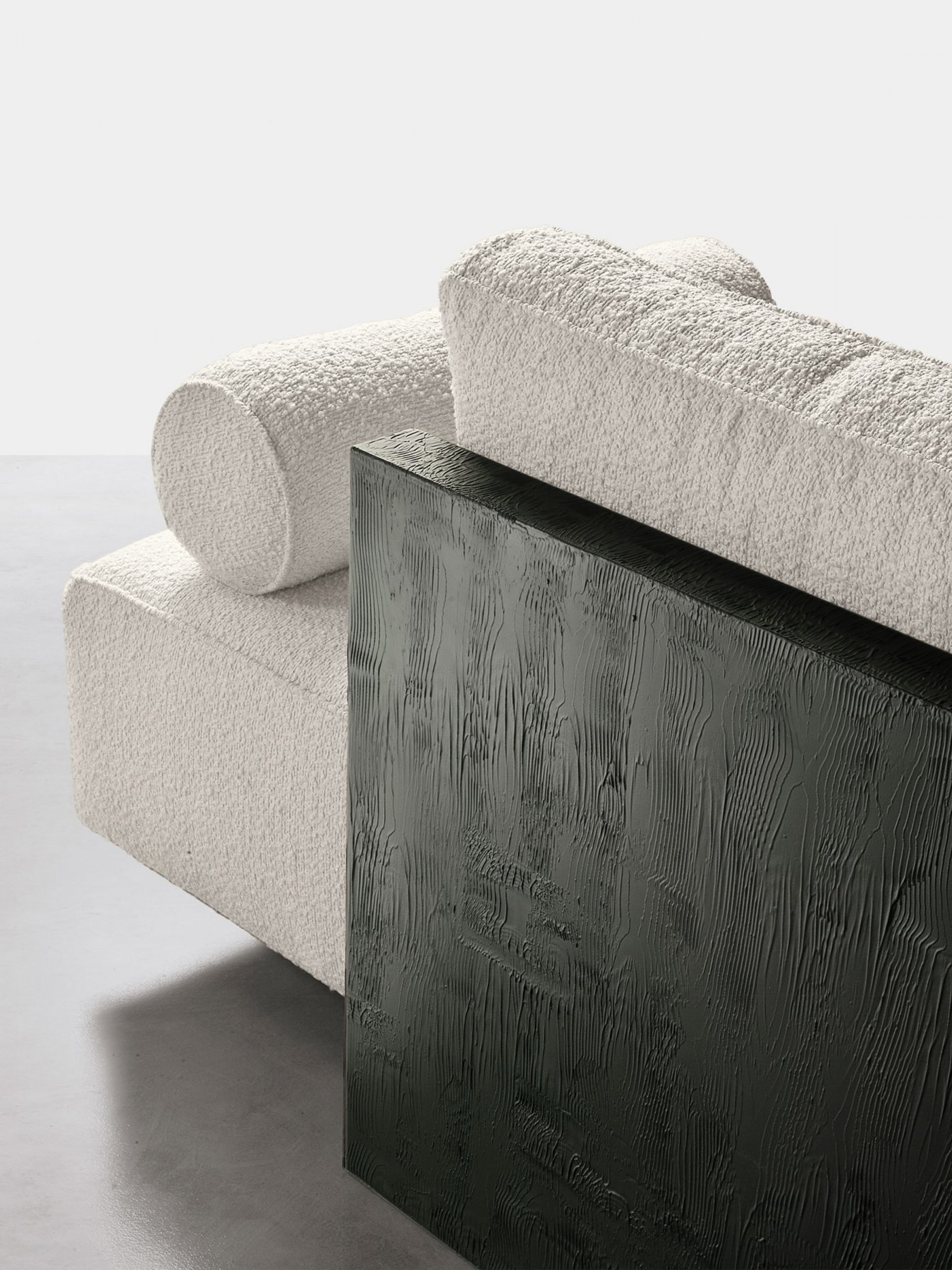
A different timber, upholstery, lacquer or metal can pull the same form in a completely different direction. Scale changes its relationship with the room, the finish changes the way the surface responds to light, and the choice of material alters its visual weight. Customisation, then, is not an extra option added after the purchase. It is part of the project itself.
This is where the relationship with NOT A STUDIO. begins.
Discover presents selected models and collections, while individual interiors extend the process through dimensions, upholstery, finishes and other details considered in relation to the space. A direct relationship with the brand means the decision does not end with what is shown in the catalogue, but can develop around the interior it is meant to live in.
That is why this relationship matters to us.
Not because the world needs another beautiful piece of Italian furniture, but because there is enough knowledge behind this one to ask more of it.

Rubik bookcase black ash
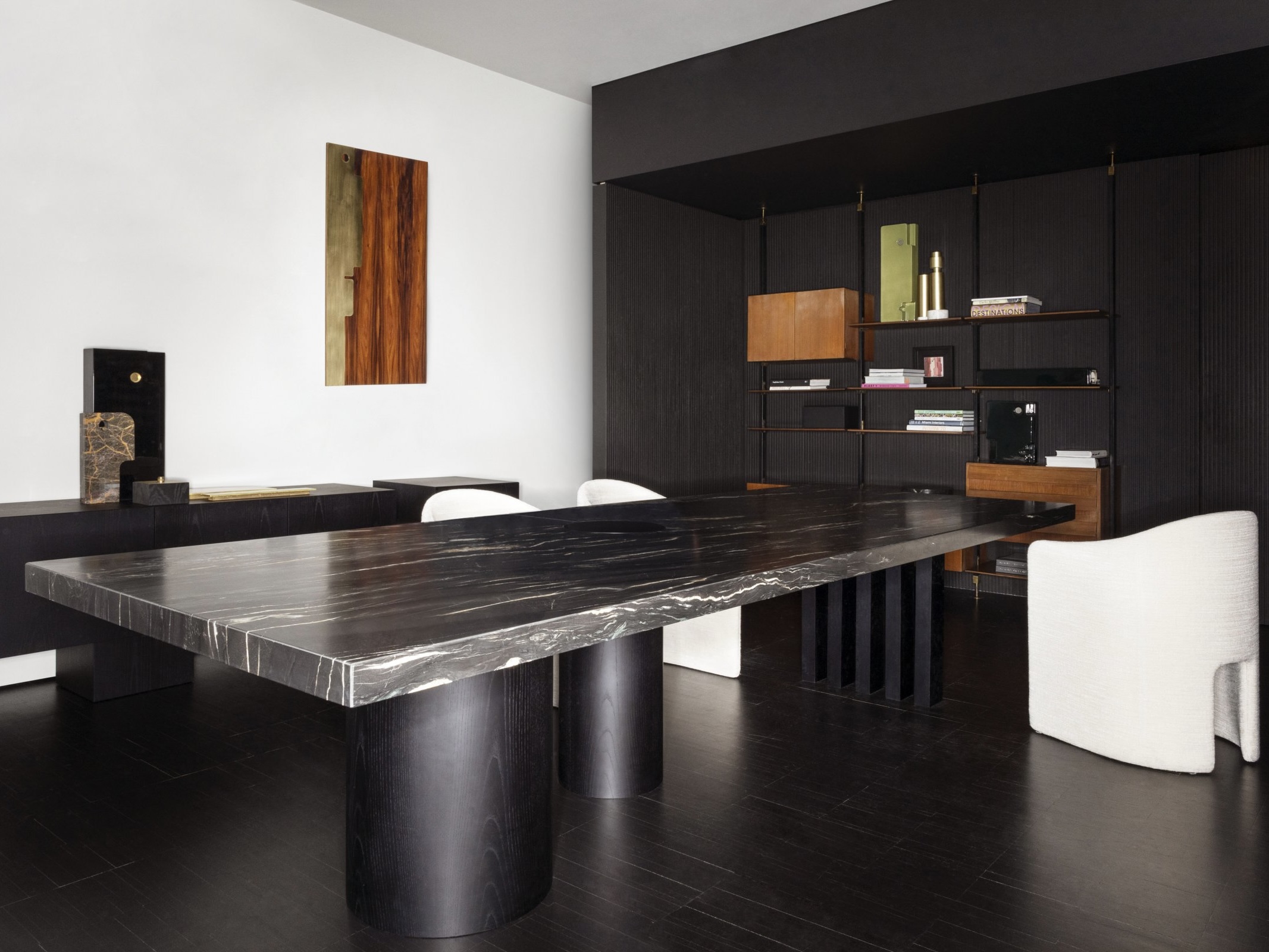
Ozark rectangular table

Labium side table