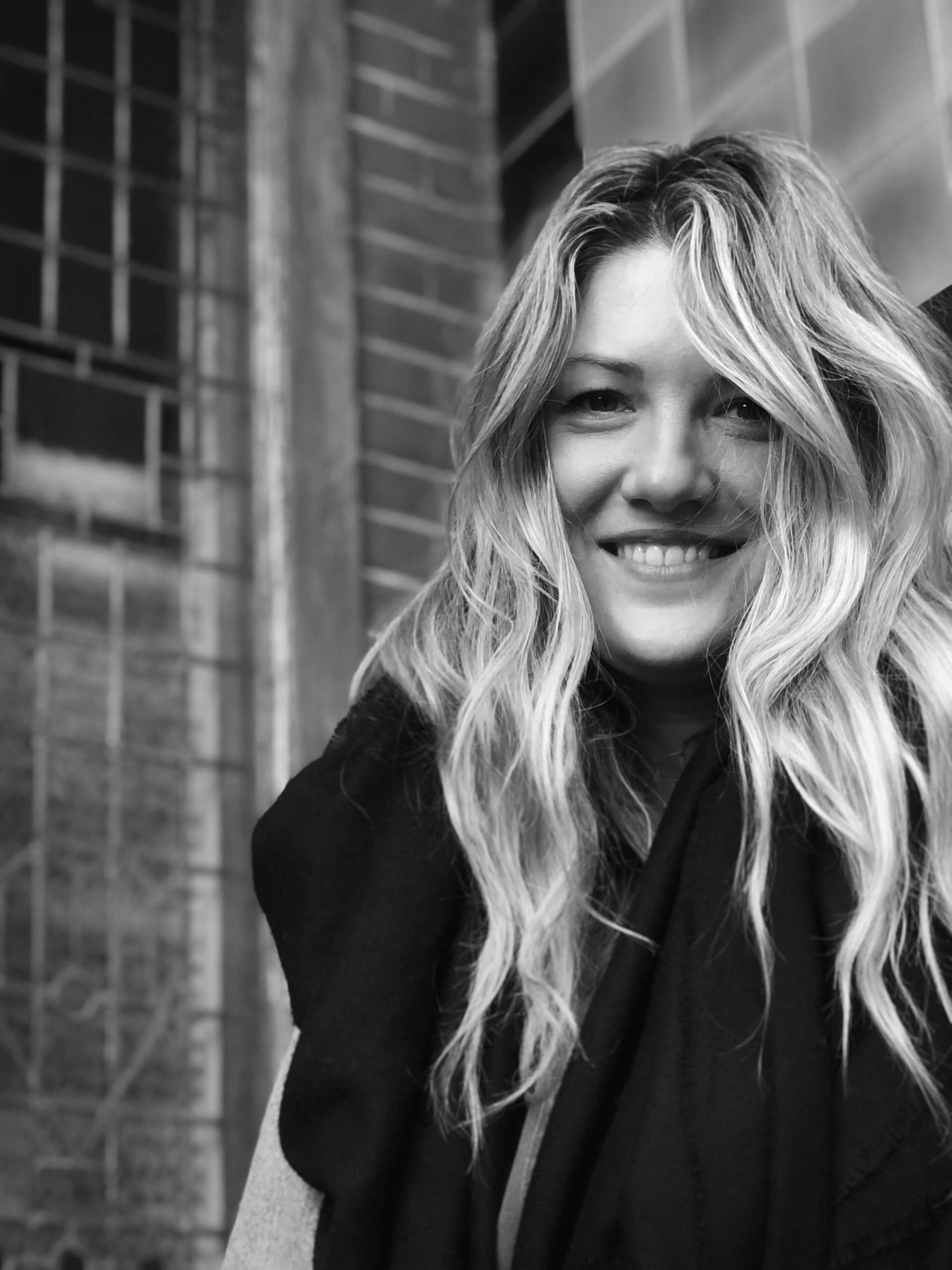
I think I began looking at Anja Demić’s work differently when I realised that the faces she records are rarely models in the conventional sense. They are her people. Friends, familiar faces and bodies, people with whom a relationship exists long before they enter the work. That small shift in perspective changes everything: what might initially read as a study of the body becomes a record of intimacy, trust and a precise moment that will never return in exactly the same form.
That feels close to the way I know her. She does not walk into a room with the urge to deconstruct it. She is calm, thoughtful and unobtrusive, but quick to notice relationships others overlook: between people, objects, materials and space. Listen to her for a little longer and you realise how precisely she observes what surrounds her. The same concentration runs through her work, through folds, shadows, textures and the small departures from order that make a surface feel alive.
She moves between painting, relief, the body, material and, occasionally, interiors, but none of those categories quite finishes the job. A list she offers almost in passing says far more about her practice: texture, shadow, tactility, touch.
“I always knew I would end up doing something that wasn’t tied to a fixed timeframe, and that it would be something I made with my hands.”
So the best place to begin is without too much theory, but with the hands.
ERROR IS NOT AN INCIDENT
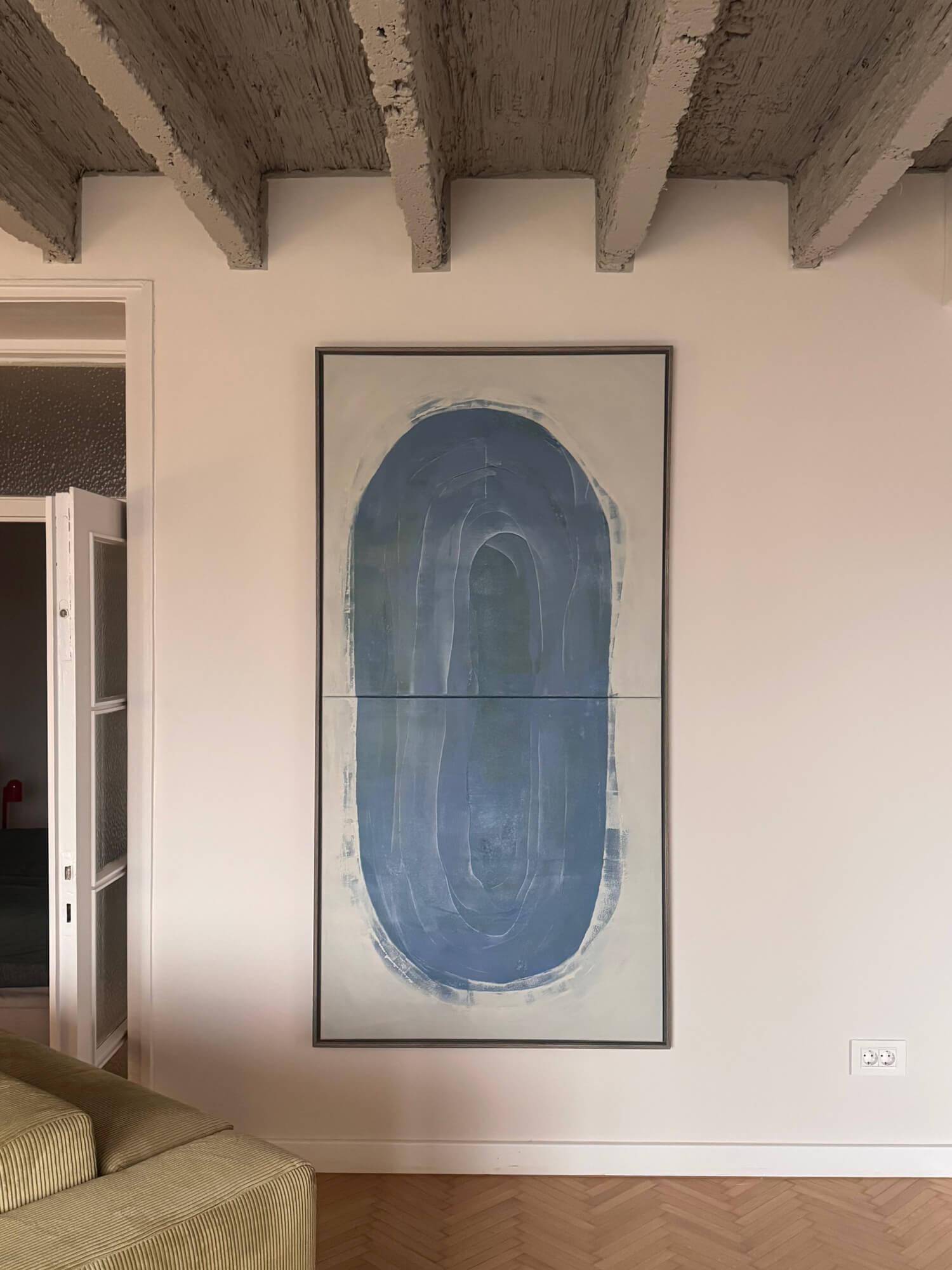
There is a work in her hallway that began as a test. It has been there for several years, long enough for the way she sees it to change. What looked like a mistake at the time has become interesting to her because of that mistake. Almost every work, she says, carries some form of imperfection or incompleteness, but this piece is a particularly good example of how time can alter our judgement of the things we initially dismiss.
Here, error is not a pre-designed irregularity inserted to prove that something has been made by hand. It is far more ordinary, and far more useful. A material may refuse to cooperate, a reaction can move in an unexpected direction or a surface can behave differently from what she had in mind, and the work moves somewhere else.
The materials she uses often behave in exactly that way. They change in contact with one another and respond to temperature, humidity and time, which makes her want to understand them better.
“The ceramicists and craftspeople I work with have been invaluable advisers. My mother, on the other hand, would answer almost every one of their that can’t be done with yes, it can. I suppose she taught me that things don’t always have to be done by the book, and that there is probably a way. Maybe that is why I often feel like I can do anything.”
That “I can do anything” feels less like a statement of confidence than a habit she has developed over time, a refusal to treat a technical “no” as the end of the conversation. If something does not work, she changes the material, the process or the direction and keeps testing until something opens up.
And yet she is at her best when there is no answer she has to find at all. As long as the process remains a game and there is no target she has to meet, she works more freely. She can stop at the moment the work feels right, without forcing it further just because it is supposed to be “finished”.
At a time when even leisure is quickly given a task, a result and a metric of success, that relationship with play feels almost radical because she does not present it as such. She does not turn it into a philosophy. She wants the work to have room to surprise her.
And almost always, something has to escape.
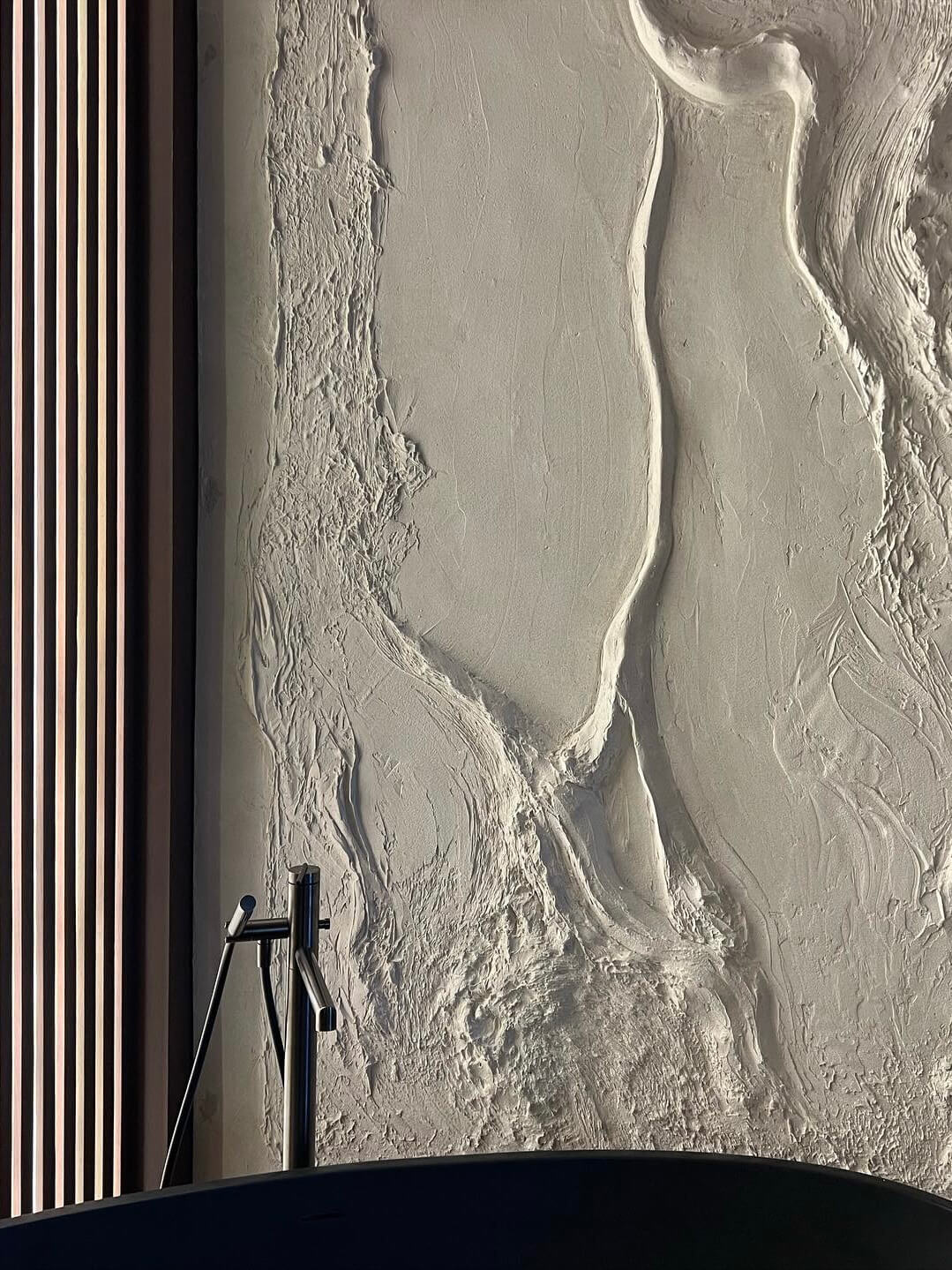
She does not like everything to resolve into a flat plane. She is drawn to the detail that moves beyond it, the fold that was not completely planned, the surface that lifts and changes the way the work catches light. Her reliefs are therefore not simply paintings with volume added to them. They operate through shadow, depth, shifts in angle and physical proximity. The boundary between the work and the space around it becomes less certain.
That desire for form not to behave too obediently also appears in the way she works. Physical closeness often matters to her more than an overview of the whole.
“I trust the eye, of course, but when I am sculpting or painting I often do not want to step back. I know seeing the whole is a crucial part of the process, but sometimes the detail, the fold and the feeling under my fingers that the material is the way I imagine it matter more to me.”
One gaze organises the whole, while another tests the skin of the work. For her, those two ways of seeing do not necessarily exist in a hierarchy. Sometimes what is beneath the fingertips carries more weight than the composition viewed from the other side of the room.
Texture spills into the things she chooses outside the studio too, into clothes, objects and surfaces. Even when something is flat, she looks for the point at which flatness stops being complete. Something has to disturb the image just enough to keep it from becoming dead.
Perfection bores her quickly.

THE CITY SHOWS UP IN MY PEOPLE
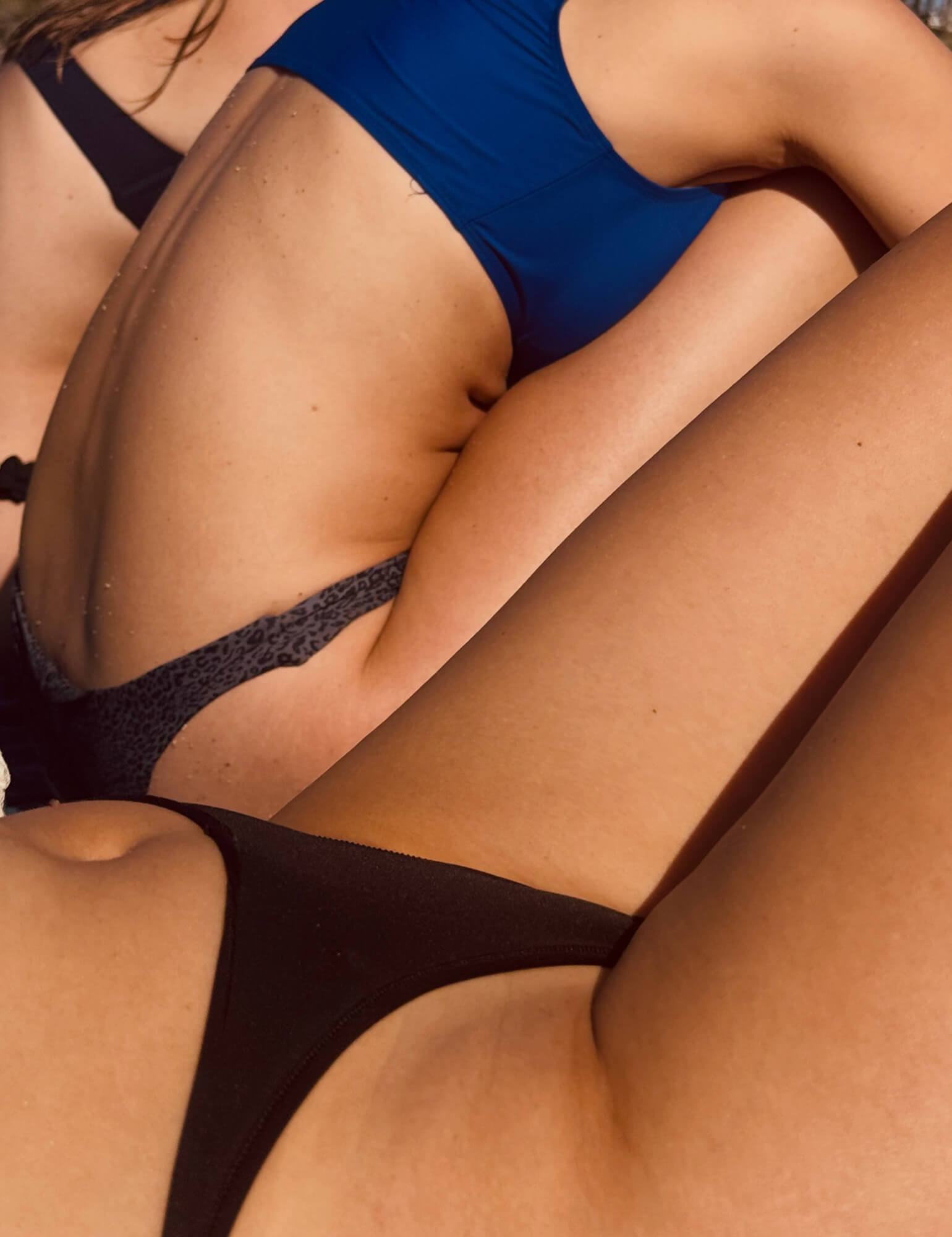
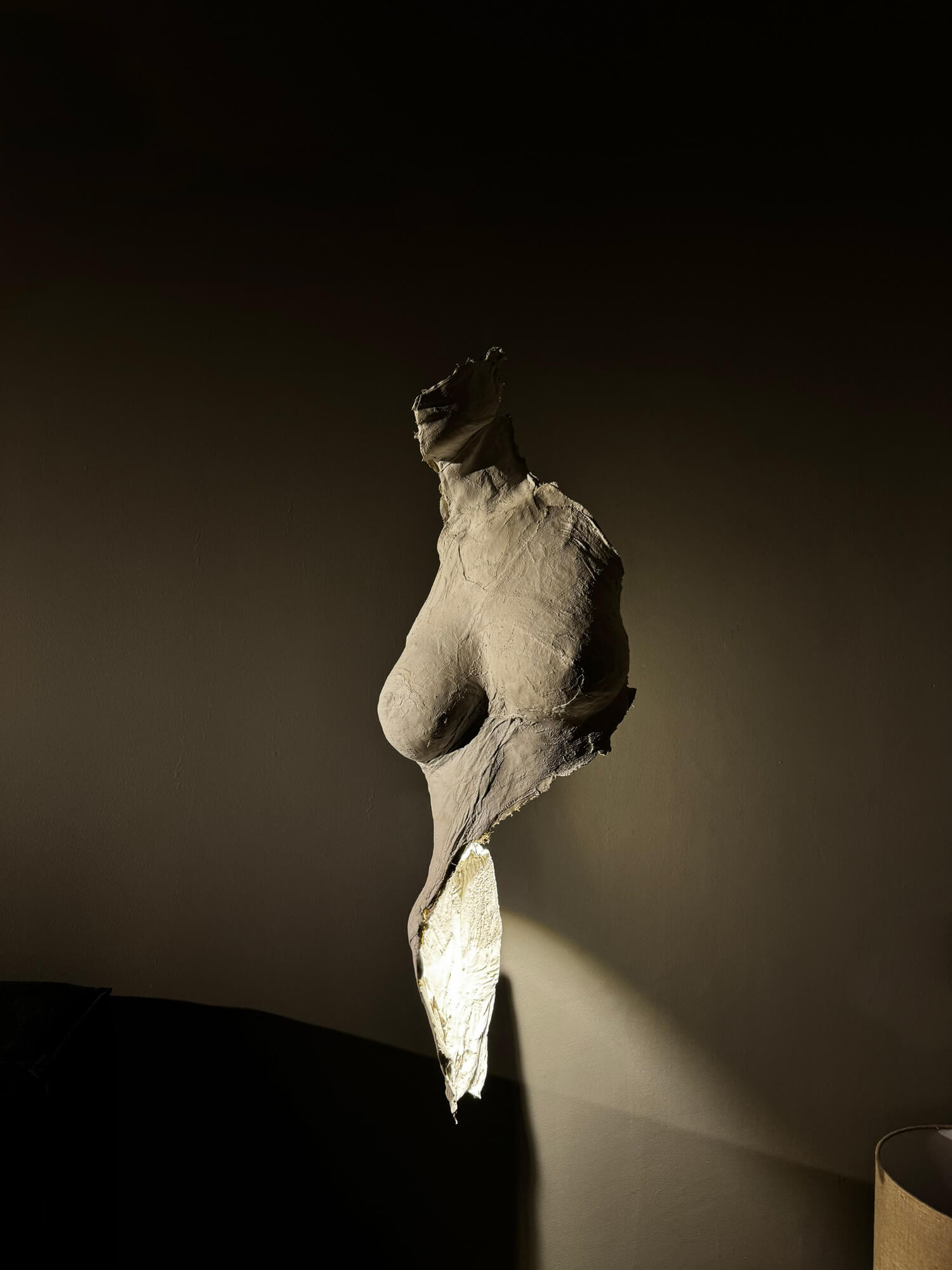
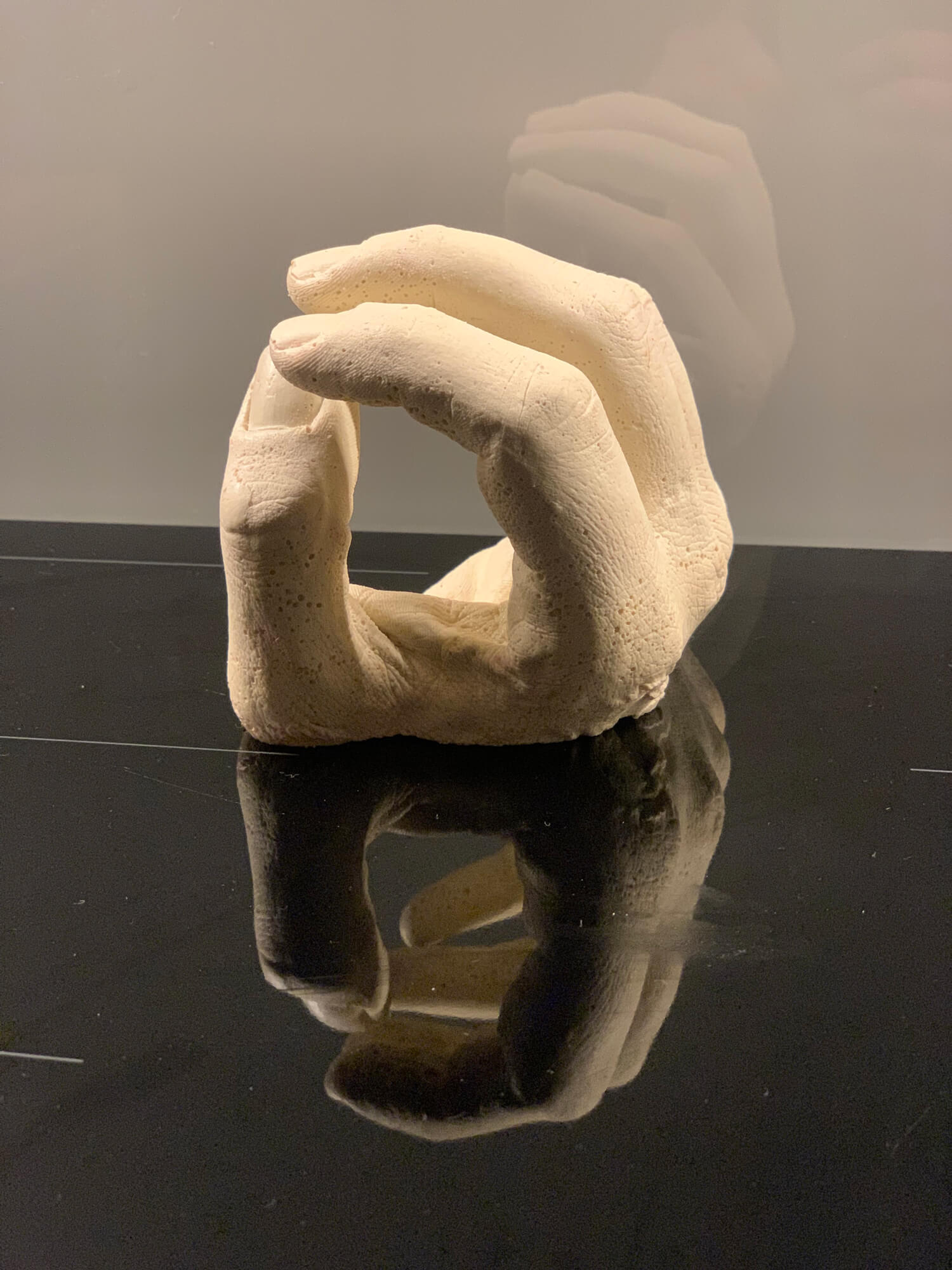
Belgrade Skin is a collection made directly through the human body. Plaster is applied to the skin, taking on its surface, its irregularities, folds and differences, so each work begins with an actual body at a specific moment. The title is easy to misread if taken too literally. The skin of Belgrade here is not a façade, asphalt or a collection of brutalist surfaces. It belongs to people.
“I think people are the greatest charm of Belgrade. The city has gone through dark periods, but the warmth and welcome of its people are still what foreigners remember when they leave.”
The city stops being something observed from the outside and begins to accumulate through the people who live it. In Belgrade Skin, the body is not simply a subject or a neutral surface onto which a concept is projected. It physically takes part in making the work. Through direct contact, the plaster takes on its form, leaving behind a relief-like record of that body at that moment.
No two bodies are the same, and individuality interests her far more than comparison. Bodies change, which means the same process can never produce the same result twice. A fold, a shift, a trace, a difference. All the things that make one body impossible to substitute for another.
Many of the people whose bodies become part of the collection belong to her everyday life. They are friends, familiar faces, people she knows before the work and continues to know afterwards. The gaze she turns towards them is therefore not the gaze of someone encountering a body for the first time, because it already contains closeness, memories and earlier versions of the person that came before the moment she records.
This is where Belgrade Skin functions as a personal archive, without any desire to freeze things in place. It does not preserve Belgrade through buildings, but through the physical traces of people who existed within it at a given moment. The city does not accumulate in a panorama, but in the presence, character and bodies of those who carry it with them.
That is a more precise way of recording a city. Architecture can remain unchanged for years while the people inside it change countless times.

HANDS KNOW MORE THAN THE PLAN
Workshops attract her because of the period before the finished object, when it is still not entirely clear what the material will do and when someone else in the room knows far more than she does.
“For me, a creative workshop is much more than a gallery. It is an inexhaustible source of play and possibility.”
When she travels, that can mean tiles, moulds, casting, clay and techniques that cannot be learned by looking alone. There is no need to romanticise craft because what interests her is the process itself, what happens when you take a material into your hands for the first time, get it wrong, repeat the gesture, learn its logic and only then begin to contradict it.
In every process, she feels as though she is back at the beginning. Again and again. There is always something else to explore in form, in the body, in material, in the way it behaves and affects its surroundings.
That sense of beginning does not mean she glorifies not knowing. Quite the opposite. The better she understands a material, the more confident she becomes in testing it and taking it further.
The workshop is therefore not an escape from artistic practice, but the place where that practice expands. She does not go looking for a souvenir, but for an experience that remains in the hands longer than the finished object.
She carries the same principle into interiors, which she occasionally works on without any need to declare them a second profession. She has a very specific measure for how much of a space should remain open to life: twenty per cent.
“A space should remain at least twenty per cent unfinished so that the person living in it can leave their own mark.”
It is a surprisingly good measure. Enough for a space to have intention, but not so much that the person entering it has to spend the rest of their life acting as an extra in someone else’s composition. A bad space interests her more than a characterless one. If nothing else, she says, it leaves a trace.
This is where the conversation about good taste becomes more complicated than the standard critique of Pinterest, Instagram or trends. Good references train the eye, and the problem begins when the gaze becomes so well trained that it no longer dares to make a mistake.
Once everyone has learned the same lesson about which wall colour looks serious, which chair signals design literacy and exactly how carelessly books should be left on the table, taste can easily stop being personal.
She would rather leave that twenty per cent unfilled, so life still has somewhere to enter.

THE BODY CHANGES FASTER THAN STONE
Anja loves rocks.
It could easily be one of those things you know about a friend and never have any reason to write down. In her case, though, it is difficult to separate from a body of work in which material, the body, change and time are so present.
Stone exists at a rhythm that is almost impolite towards human time. The body does not have that luxury.
“A sealed moment matters to me, but so does transience. As bodies age and change, they gain more character for me. They become more interesting.”
The most accurate way to see her here is as a kind of quiet witness. Not a portraitist in the classical sense, and even less someone attempting to stop time. She records a situation knowing that everything within it will continue once the work is over.
The people she knows will change. Their bodies will change. Her relationships with them may deepen, recede or become something else entirely. The city around them will change too, along with the way they see themselves. The work will remain as a precise record of one version of a person that was once the present.
That is why transience in her work does not carry the taste of loss. It is simply another material.
The materials she works with continue to shift in contact with time, air, temperature and other surfaces. A work that has spent three years in a hallway gradually stops being a mistake. A body once recorded acquires another history. Belgrade stays the same only on the map.
Stone, meanwhile, is doing something else entirely. Almost nothing.
It is enough to remain close: to see the fold before the whole, to feel the material under her fingers, to recognise when something should be allowed to escape, and when a moment, however brief, is worth keeping.