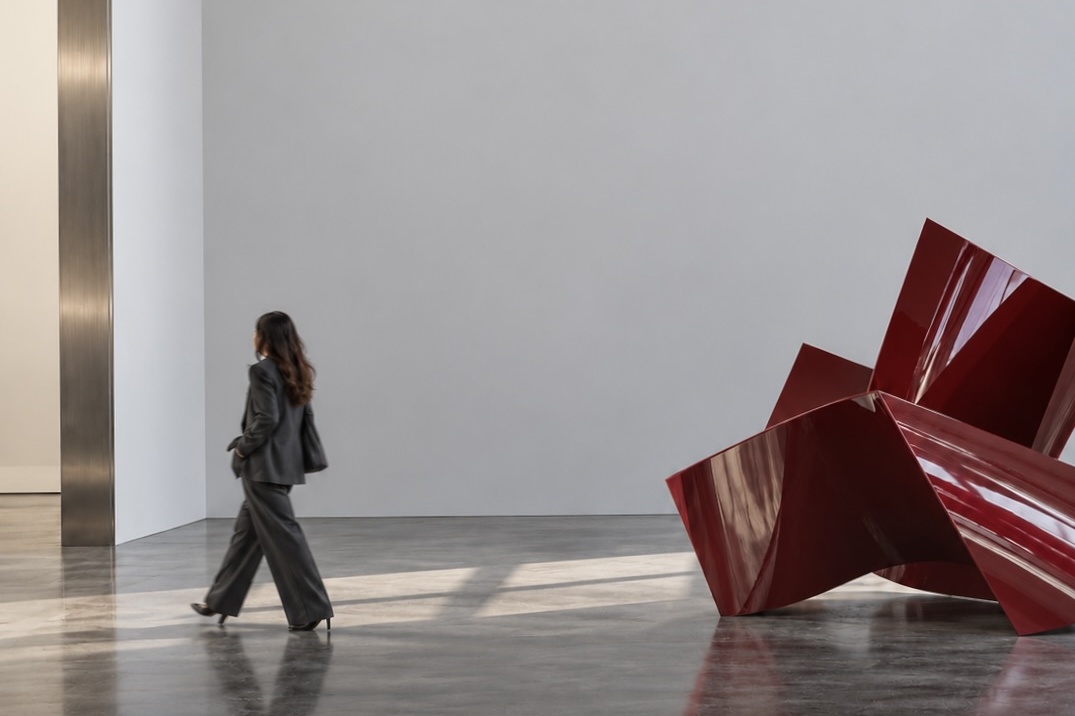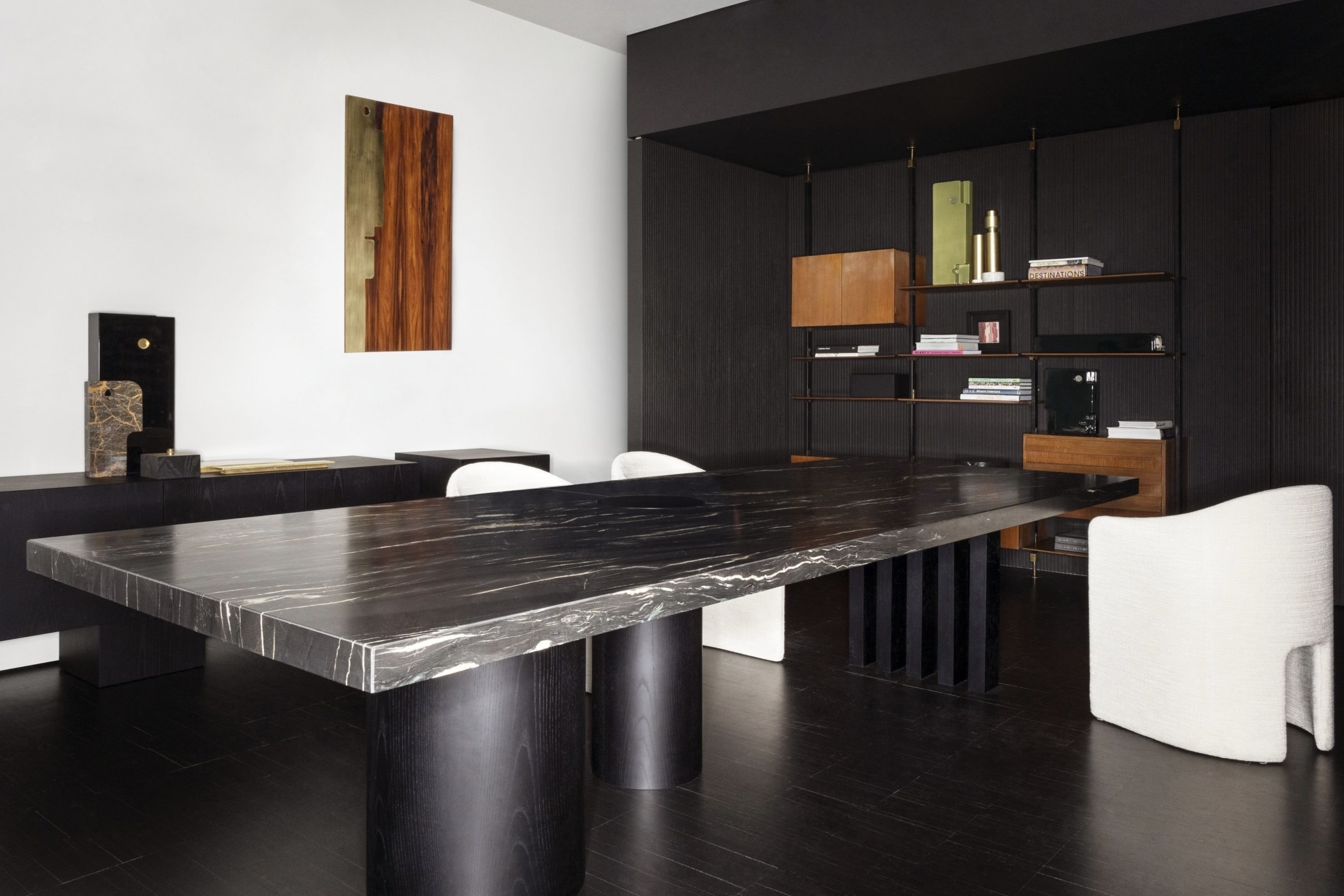
A good interior can be dangerously efficient. The proportions work, the light falls exactly where it should, the materials have been carefully chosen, the furniture is precisely where it belongs. Then the art arrives, often last, when the room is practically finished.
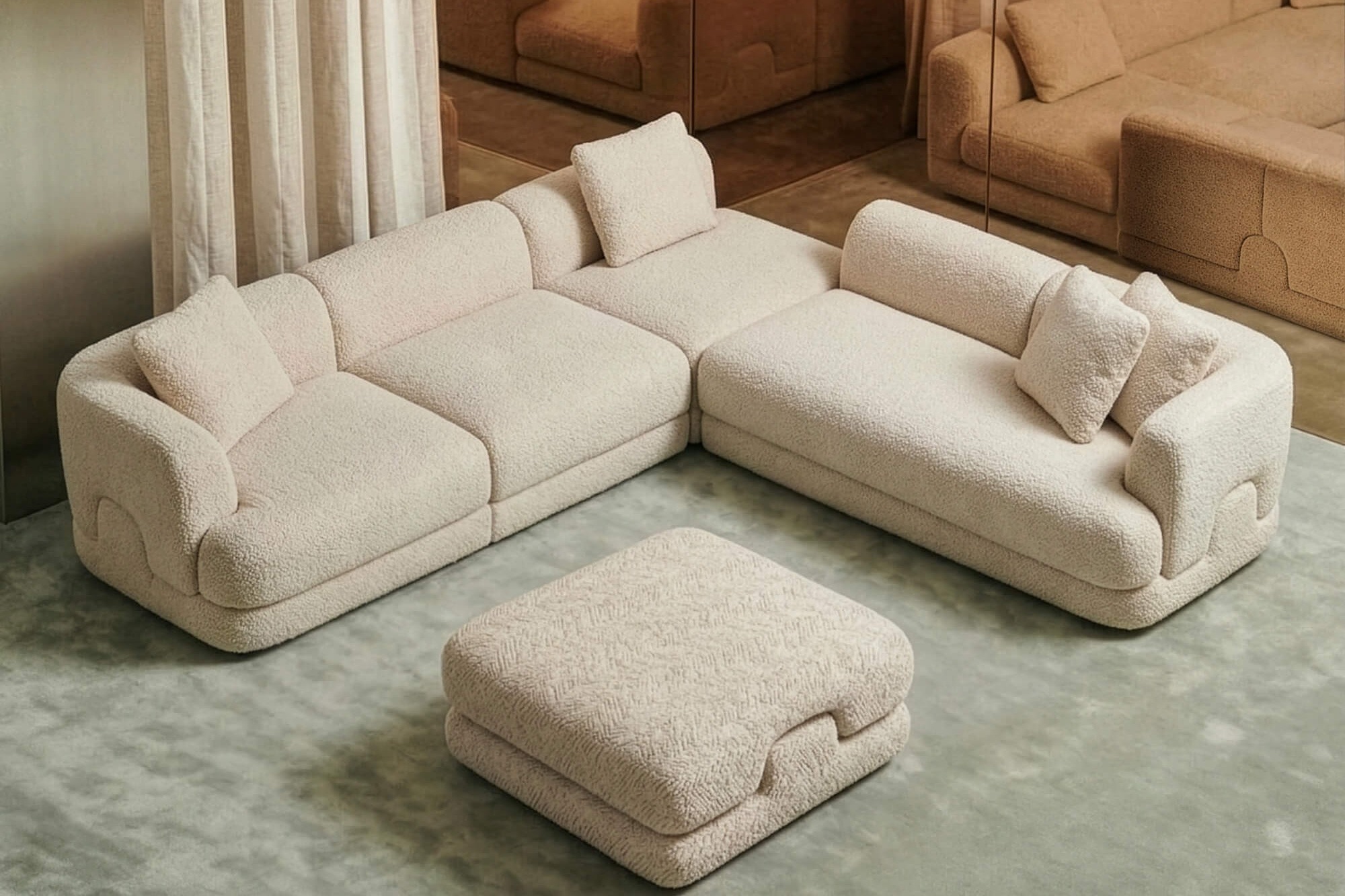
A work that felt difficult, strange or disruptive in the studio can become remarkably well behaved within minutes. The right wall, precise lighting, enough breathing room above a very expensive sofa, and even resistance can start to look as though it had been planned all along.
We know the ritual well. I work alongside someone who designs interiors, and together we run a platform that writes about art while also bringing it into spaces. We choose works, decide where they will live, watch them alter a room and, whether we mean to or not, alter them every time we place them somewhere new. Art acquires architecture around it, while architecture borrows some of its character.
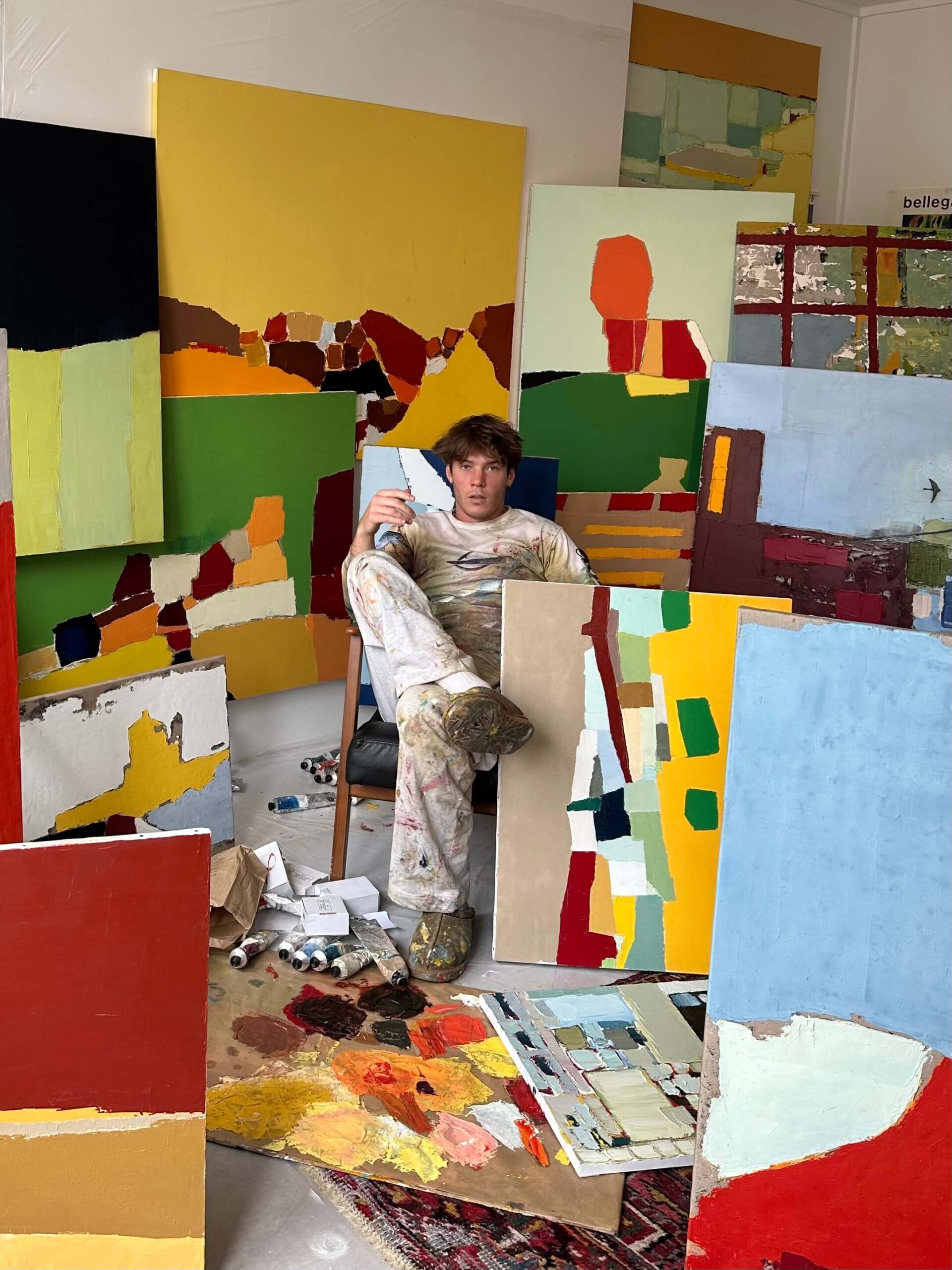
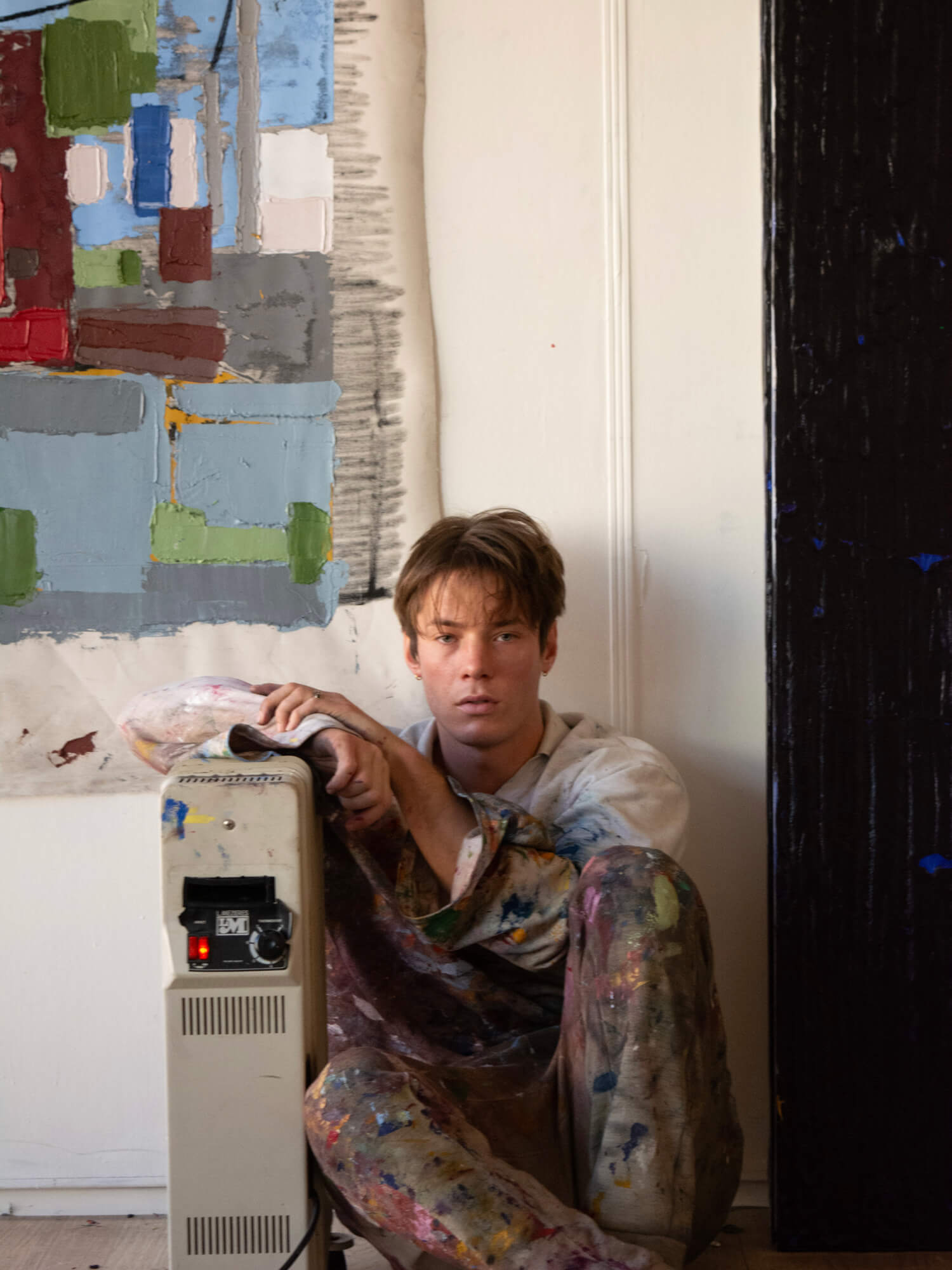
In recent years, Kamonn’s paintings have moved away from something darker and more enclosed towards landscapes with more air, while some of his works have begun to produce their own light. At that point, a painting is no longer simply an object brought into an already finished room. It changes the light, the wall and the space around it.
I was less interested in how Kamonn became an artist than in what happens when his work leaves the studio and finds itself among architects, collectors, galleries, auction houses and very expensive sofas.
FREEDOM LOOKED BETTER FROM THE OTHER SIDE
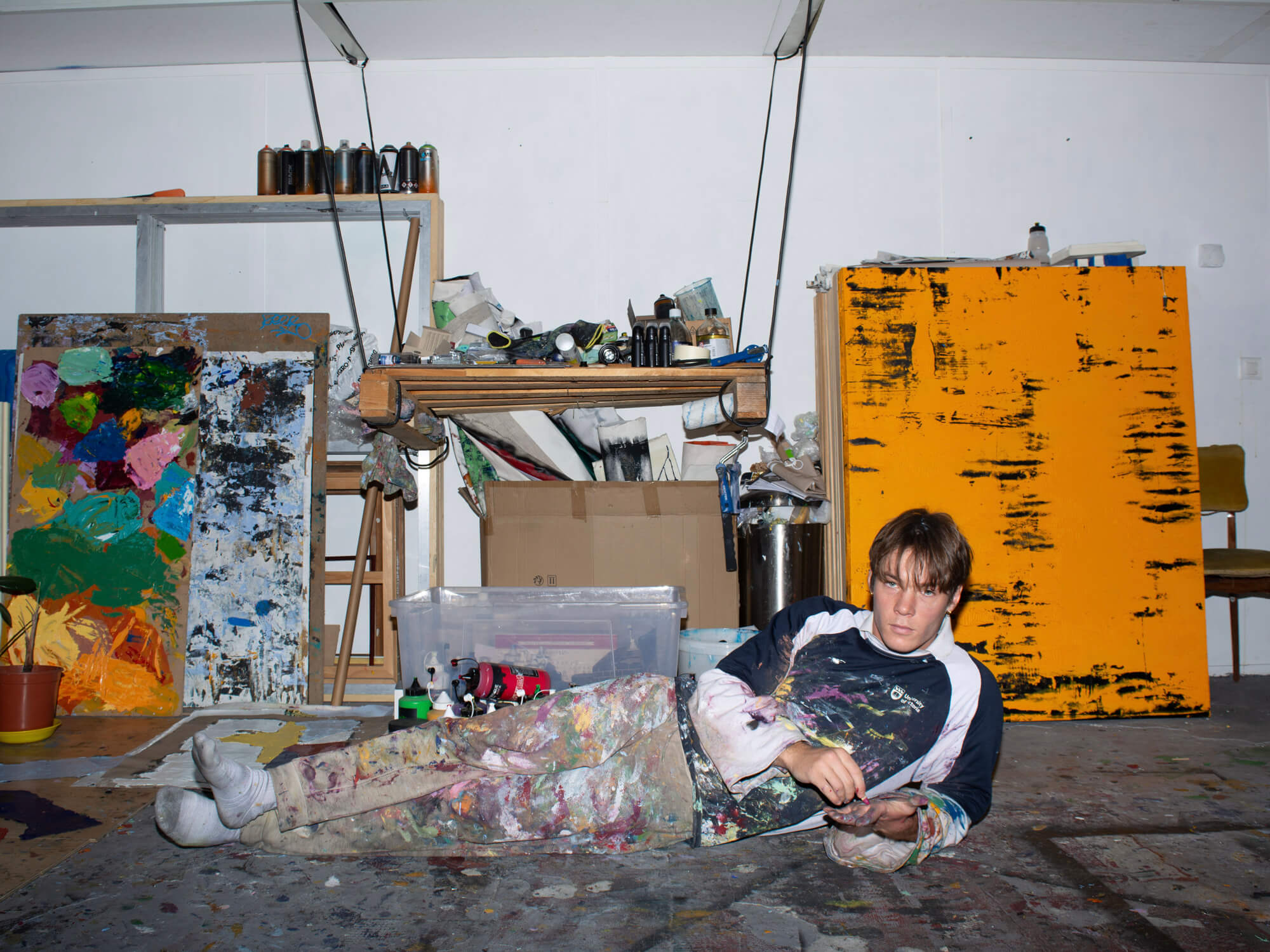
For years, painting existed alongside another professional life. Then the company he worked for offered him the CEO position, the sort of promotion usually delivered as proof that all the sensible decisions have finally paid off. He saw something rather different.
“I simply saw it as a choice between confinement and freedom. I’ve always been drawn to freedom, so the choice made itself. I chose life.”
He neither rejects the label that still follows him, self-taught artist, nor treats it as an awkward footnote to his biography. Not arriving by the prescribed route had its advantages: experimentation and curiosity remained central because nobody handed him the correct sequence in which an artist was supposed to develop. He also understands the less romantic function of labels. A biography can grant credibility just as efficiently as it can withhold it.
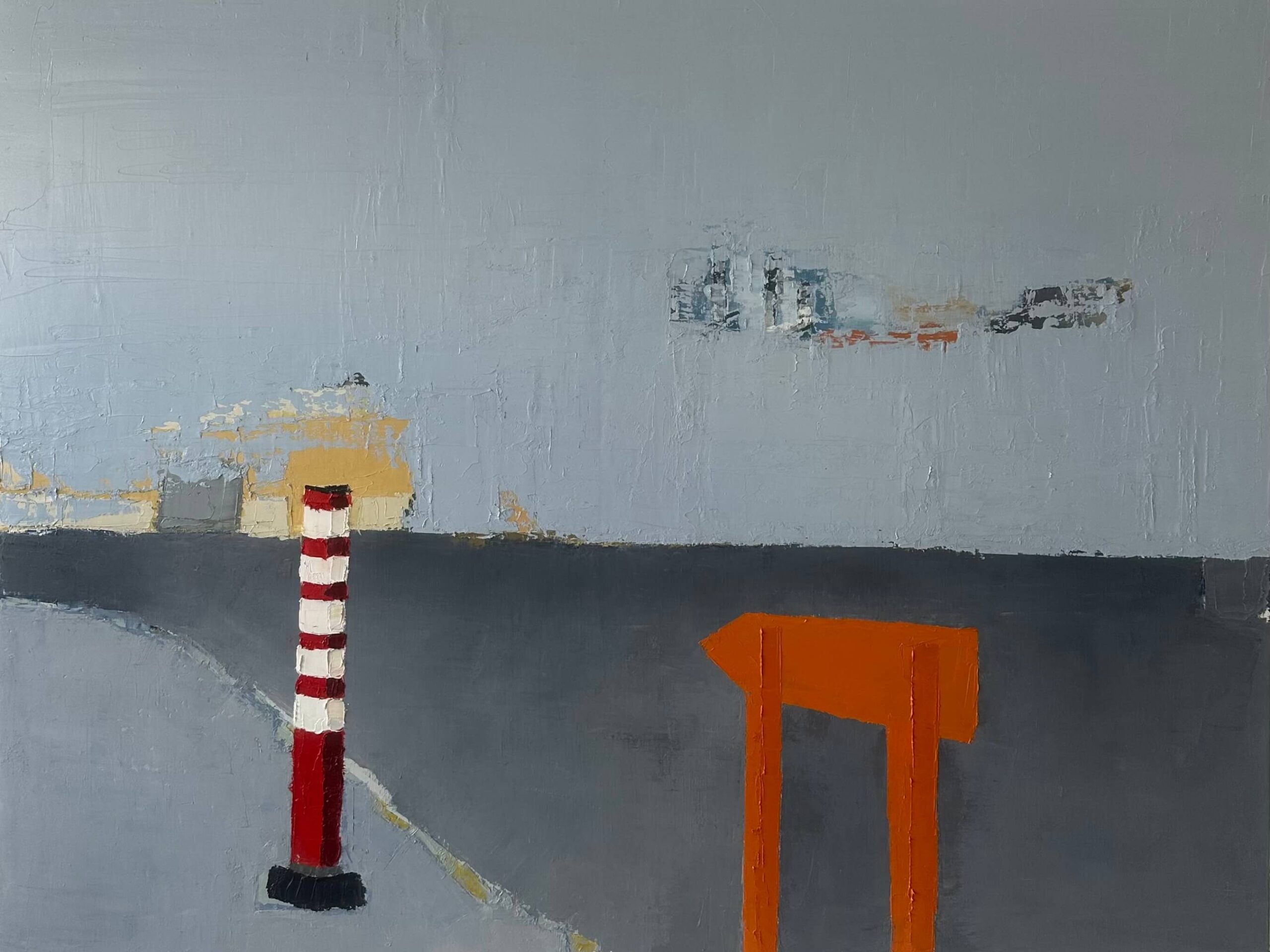
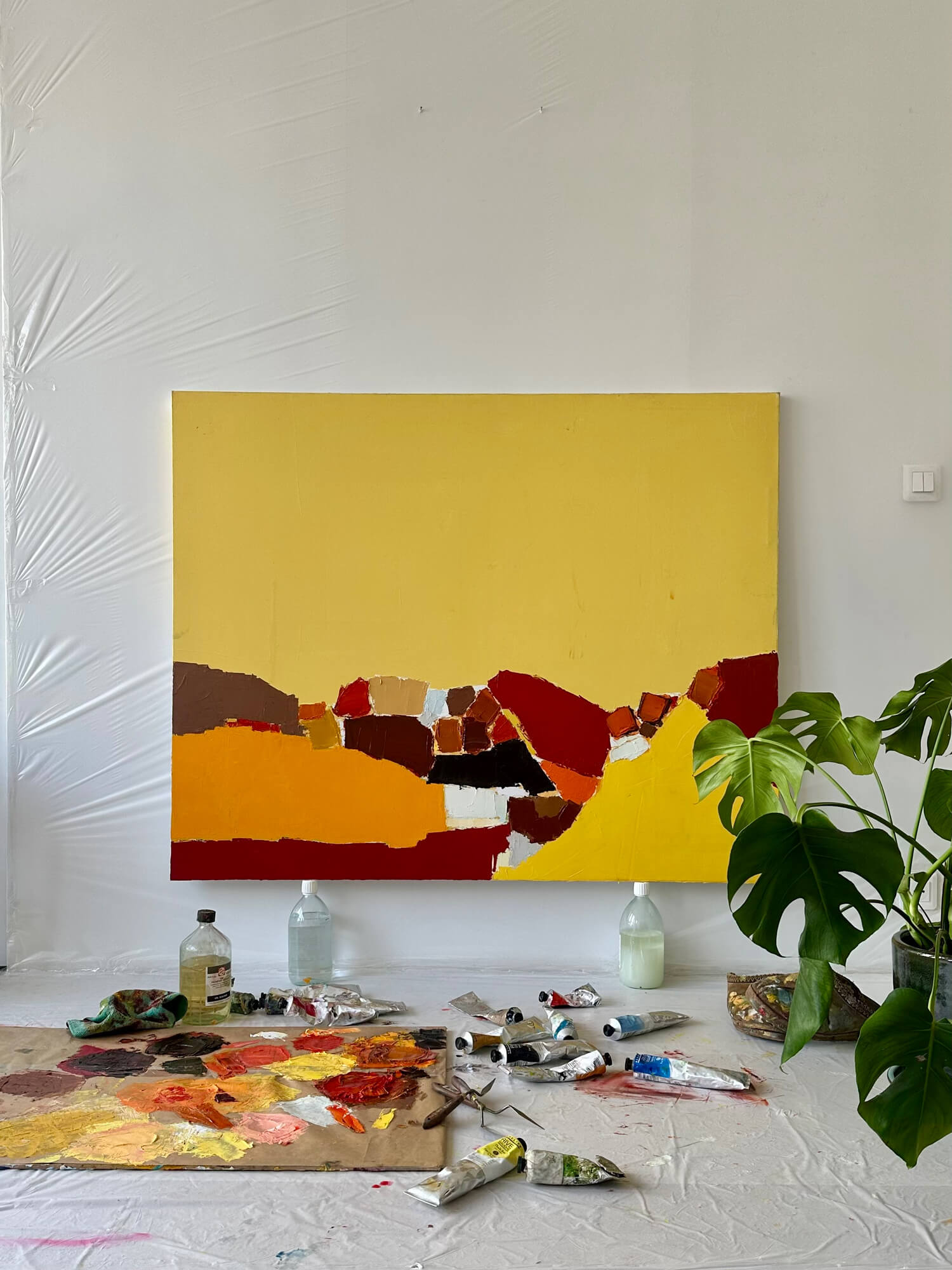
The paintings haven’t followed a particularly obedient route either. Earlier works felt darker and more enclosed, with an almost physical density. The newer landscapes breathe differently. The colour has shifted, the space has opened up and the work has grown quieter without becoming any tamer.
That shift carries particular weight in an art market reassured by a recognisable hand. If you want to make a living from art, the market is there. What Kamonn refuses is to let consistency harden into repetition. Desires change, people change, and he sees no reason the work should be denied the same freedom.
The way he describes the difference between then and now says more than any chronology could.
“My earlier paintings held me. Today’s walk beside me. Perhaps they’ve forgotten how to take the hit.”
MEMORY HAS TERRIBLE MANNERS
Landscape is a fairly unreliable witness in Kamonn’s work.
He doesn’t need to stand in front of a place to paint it. Distance is part of the process. He sees a landscape, leaves it behind and gives memory enough time to erode it before it returns to the canvas. By then the facts have begun to disappear, replaced by something far harder to verify.
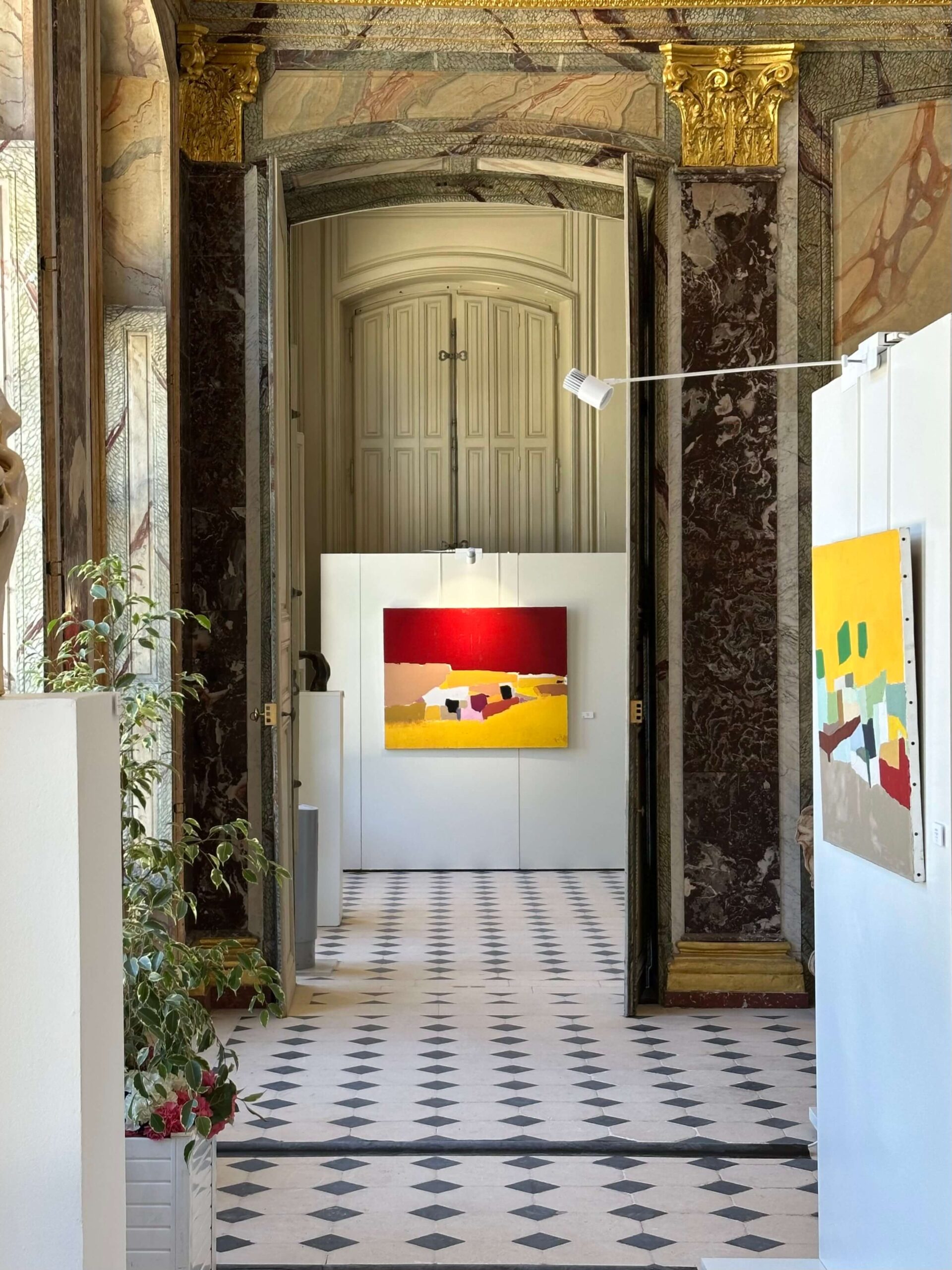
That tension runs through Sédiments — paysages. None of the thirty paintings shown at Château d’Asnières was made in front of its subject. Brazil’s north-eastern coast, the ochres of the Luberon, winter in Vienna and the plateaux of Aubrac appear only after time and distance have already done their work. Geography is the starting point, not the finished image.
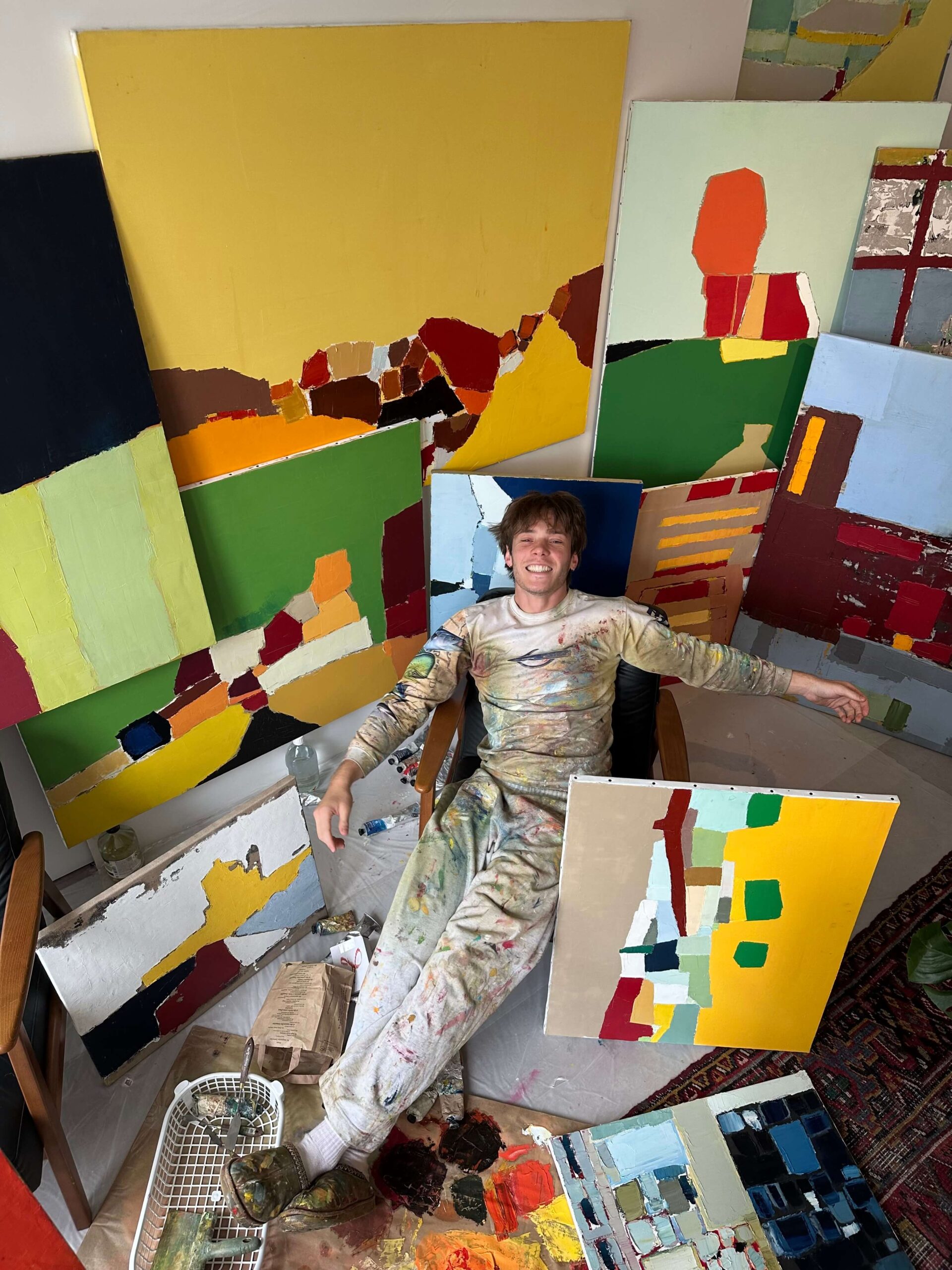
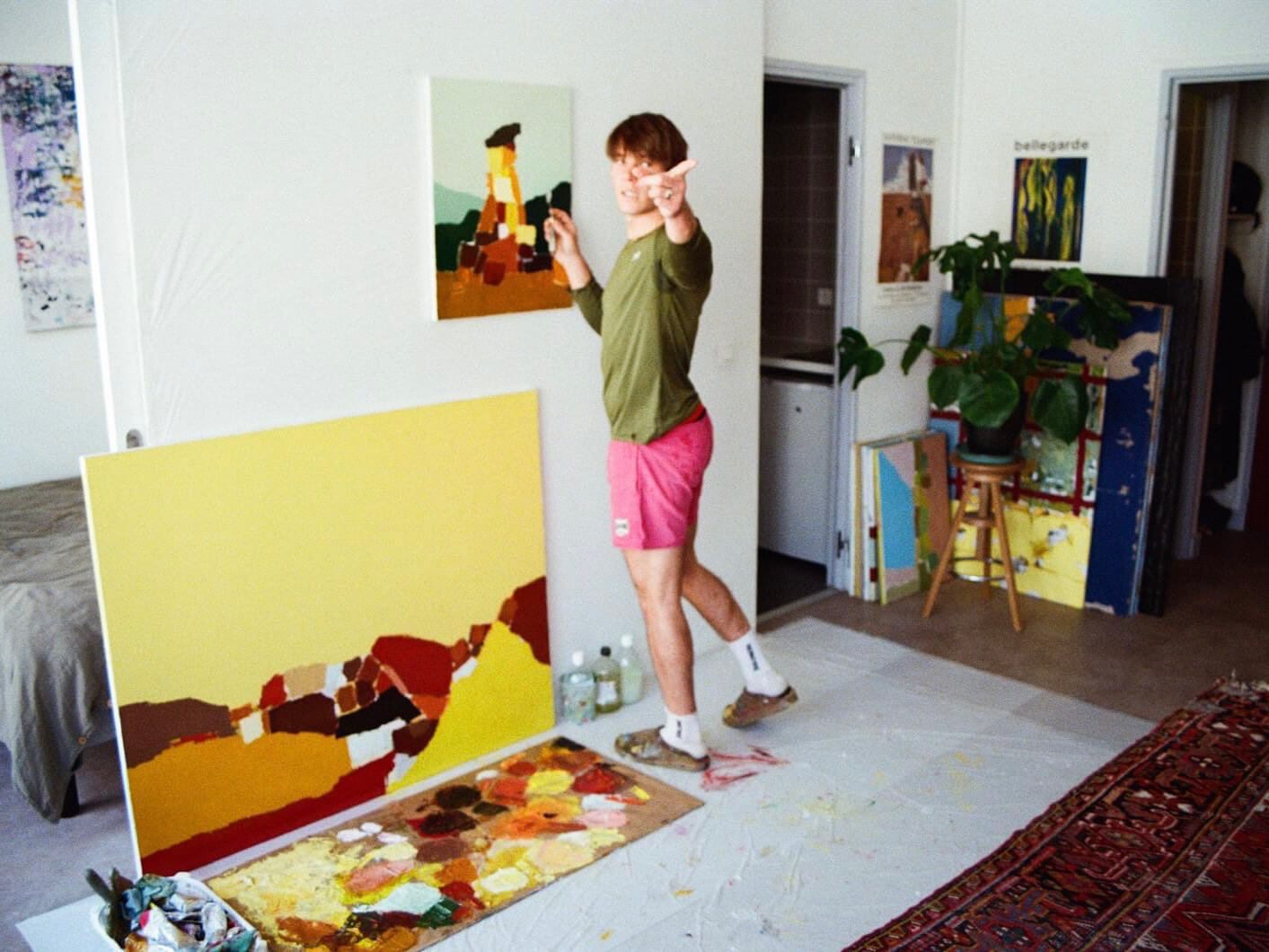
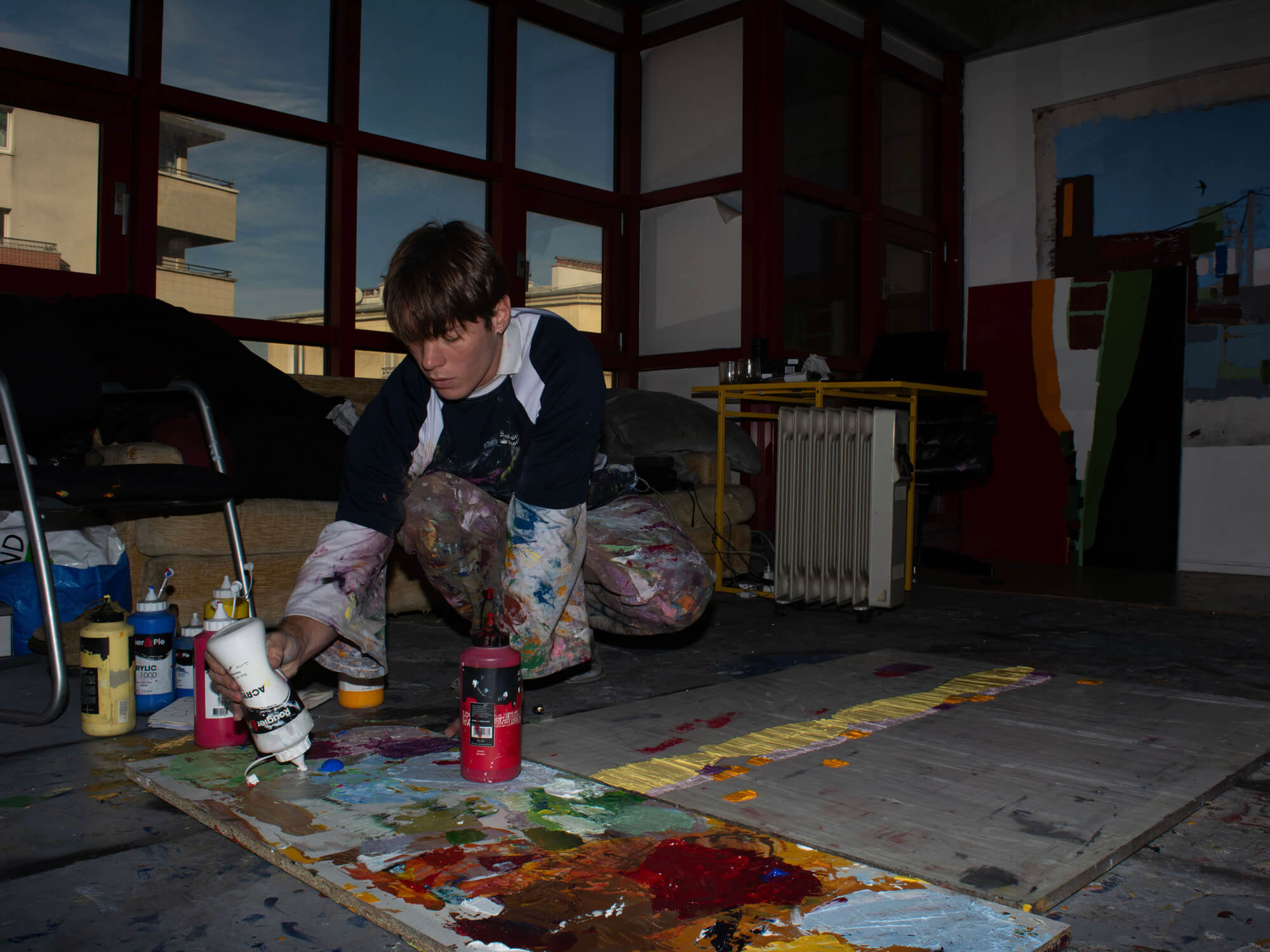
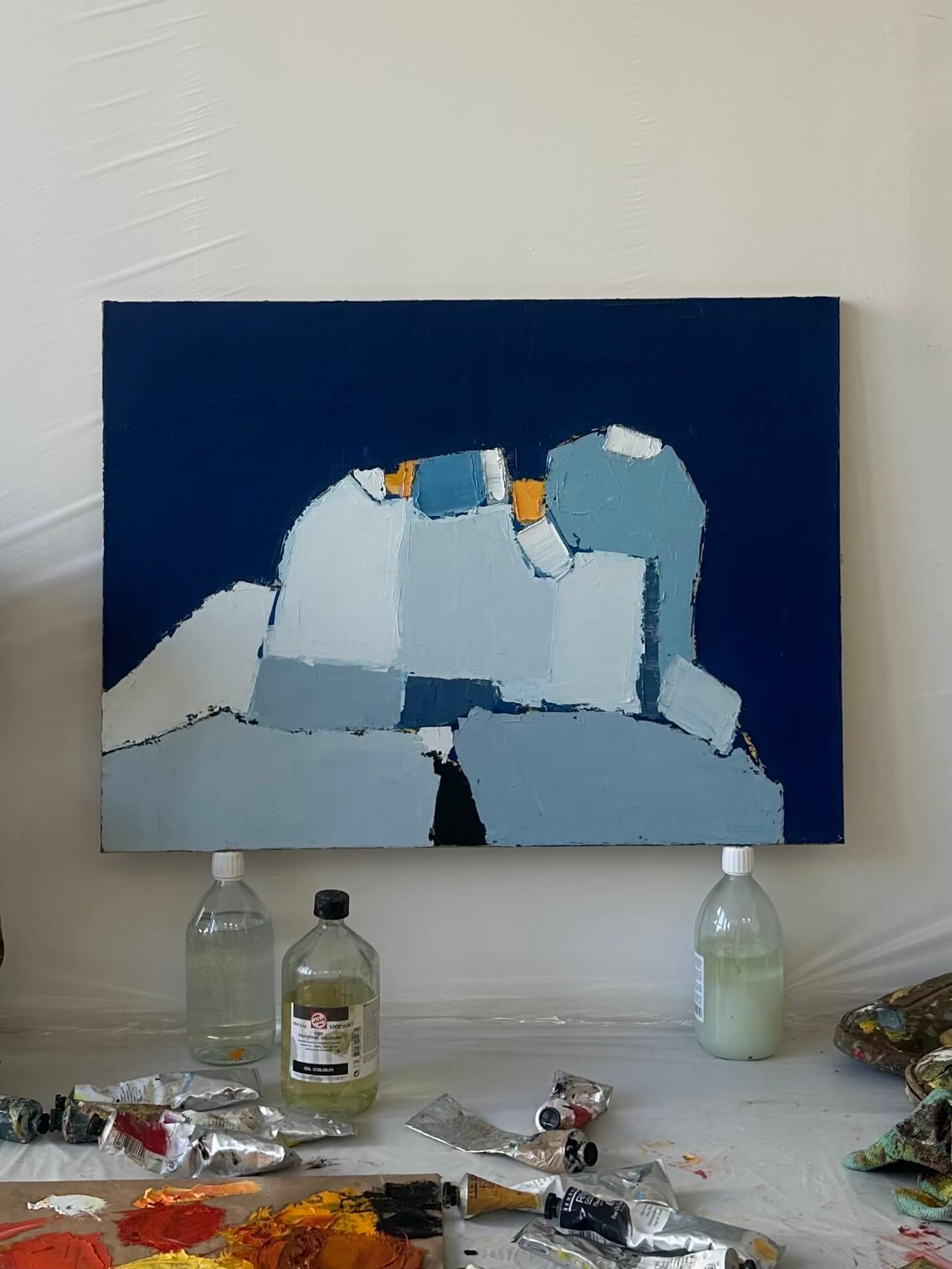
Look at the paintings and their physicality keeps interrupting the landscape. Kamonn works in oil with a palette knife, building layers until masses of colour begin to hold the image together. Ochres carry the weight of earth and heat, blues grow dense enough to feel almost material, while muted greens register less as descriptions of vegetation than as traces of having once stood somewhere and looked. In places the paint lies flat, elsewhere it rises from the surface, catching the light and preserving the movement of the knife. The surface never quite disappears behind what it depicts.
Accuracy isn’t particularly useful to him here. He is more interested in what survives after a place has passed through time, distance and memory. When I offered him landscape, memory and a convincing lie as three possible descriptions, he called what he paints his truest truth.
“I don’t try to remember anything. I simply paint what remains.”
“Memory never keeps the truth. Sometimes the detail. Often the colour.”
The paintings can feel strangely familiar while refusing to reveal a precise location. Place is only part of it. There is also the moment in which it was experienced and the person who happened to be looking. Go back later and the person returning is no longer quite the person who left.
His working rule is considerably less mystical: trust the process blindly, then look closely at the result. Instinct gets its freedom. Judgement comes afterwards.
A VERY EXPENSIVE SOFA IS STILL A SOFA
We source art, commission it, decide where it should hang, light it and eventually photograph the room from precisely the angle that proves everything belongs together.
Do architects actually understand art, or do we sometimes ask it to patch what the room itself failed to resolve?
Kamonn has little interest in judging them. Everyone understands art through their own senses, emotions, logic and impressions, and he has no intention of telling architecture what it should do. Art changes architecture, and architecture changes the way art is perceived. A collector can match a painting to a sofa. An architect can use one to sharpen a room. Once a work leaves the studio, the artist is no longer the only person deciding how it will be seen.
His line is simpler.
“When people stop looking at it. The work itself hasn’t changed.”
An important work can disappear in a perfectly resolved room if nobody really sees it anymore. Just as easily, a painting can take over an entire room simply because the eye keeps returning to it. Decoration begins when attention stops.
Architecture and art can converge, diverge, clash or coexist quietly. Harmony is not necessarily surrender, and friction isn’t automatically more intelligent. When I suggest that a brilliant interior might make mediocre art look important, he reverses the proposition:
“I’d rather say the opposite: a brilliant room can make an important work look mediocre.”
Given the choice between completing a beautiful room and ruining it, there isn’t much hesitation.
“Ruining it would be more fun.”
His illuminated works take things a step further. A conventional painting depends on the architecture around it, from the wall and its proportions to daylight and whatever artificial light someone decides to point at it. Once the work produces its own light, the painting begins to alter the conditions in which it is seen.
The idea of making something so bound to a particular piece of architecture that it could no longer simply be taken down and rehung elsewhere immediately appeals to him. A painting becoming a room doesn’t sound absurd.
“Absolutely.”
THE ROOM CAN LIE TOO
His paintings have travelled from studio floors to galleries, private interiors and the historic rooms of Château d’Asnières. The architecture changes. The work doesn’t. What changes is the way we look at it.
Architecture can tell us something is important before we have had time to decide whether we agree. A gallery can confer seriousness, a home intimacy, a château history and an auction room something more dangerous: a number. When I ask which space lies most convincingly about the value of art, he chooses the auction room. Obviously.
Given any building in the world for a single night, he would take the Louvre, although his reason has very little to do with curatorial prestige.
“Just so I could steal the crown.”
He takes the work seriously without needing to take himself seriously all the time. The same applies when money enters the conversation.
Ambition doesn’t embarrass him. He has always been ambitious and has never made much effort to hide it. He wants to remain curious, creative and free, and when asked to choose between instant recognisability and remaining difficult to categorise, he takes the latter. Freedom is the one thing he refuses to negotiate.
The art world has its own ways of manufacturing certainty, and price is one of them. He has no illusions that some people wouldn’t suddenly consider his paintings better art if they became dramatically more expensive tomorrow.
Would that bother him?
“No. Good for me.”
Damien Hirst is the famous artist he admits he doesn’t understand, while a lack of curiosity is what makes an artist boring to him. Beige currently has no chance either, which feels appropriate after spending so much of our conversation discussing interiors.
And how much bullshit can a genuinely good painting survive?
“At least one. That’s the bare minimum.”
Before we finished, I brought him back to the room that had been hovering around our conversation from the beginning, this time stripped of every excuse for art: perfect proportions, perfect light, perfect materials, an interior so completely resolved that the architect could leave without looking back.
Did a room like that need art at all?
He said no.
“But it could use a little humanity, error, chance. Maybe that’s what art is: what appears where it wasn’t needed.”