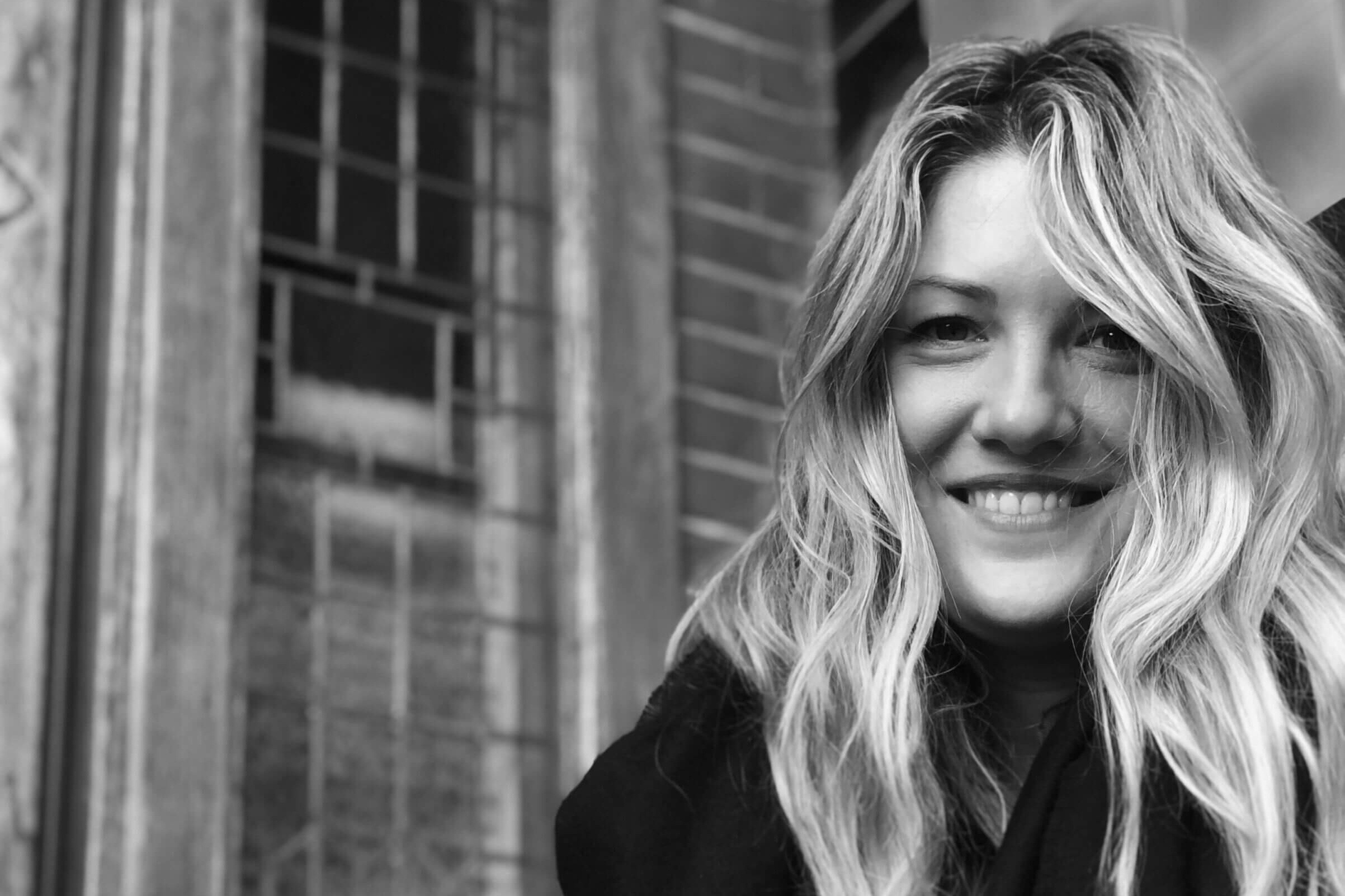
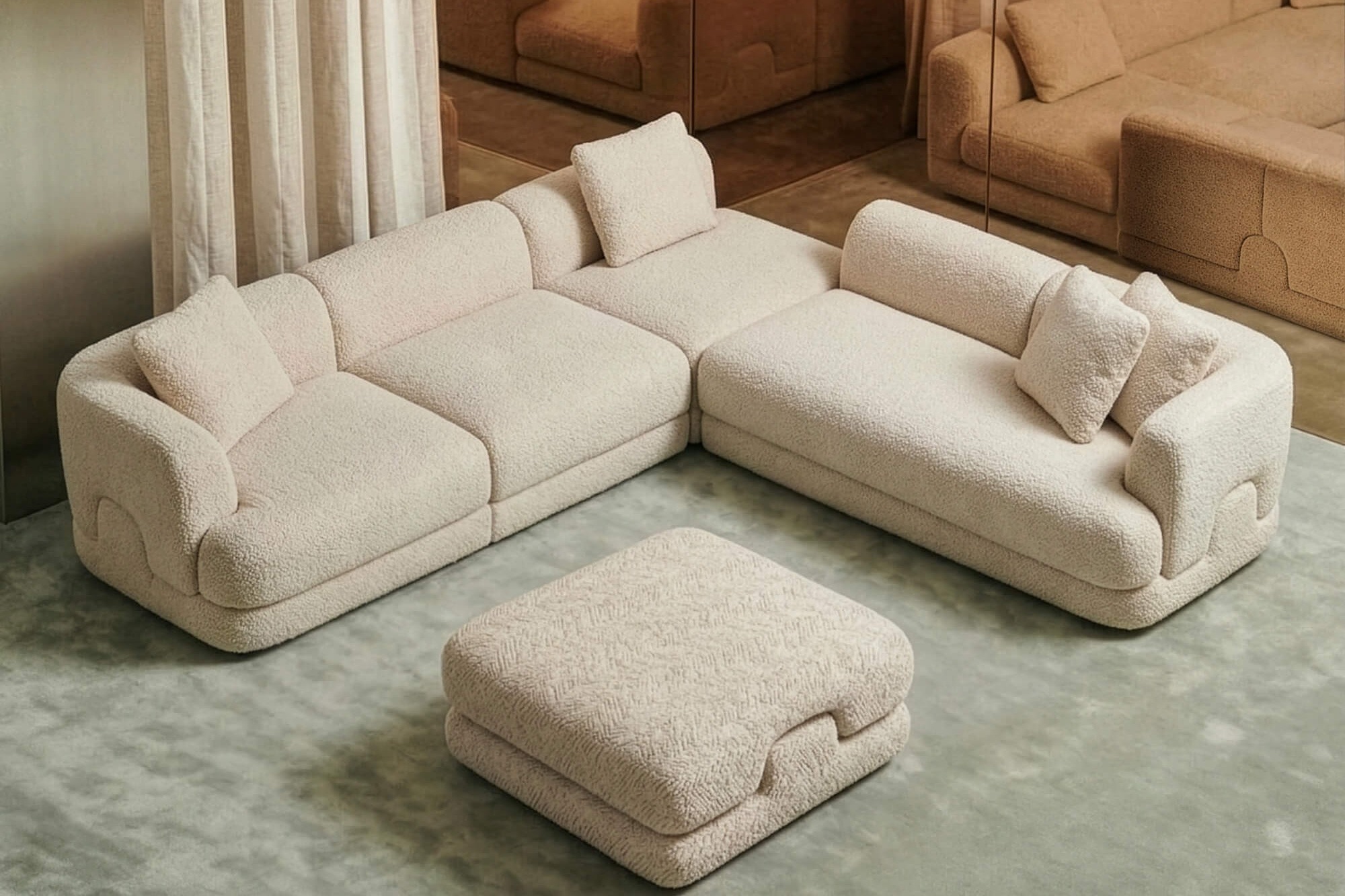
Kristina Kika Jovanović has worked in modelling for years and is the author of the blog napisalaKika, where she writes openly about the body, appearance, ageing and beauty from the perspective of someone whose own appearance has long been part of the job. We talk about the body as working material, an industry forever asking for one more revision, and the point at which a change stops being part of the process and becomes a question of authorship.
There is one sentence in the creative industries that almost never means what it promises: just one more revision. Architects hear it from developers, designers from clients, photographers during selects, writers from editors. In modelling, things are more complicated because the material being altered is not a file, a drawing or a frame. It is the body.
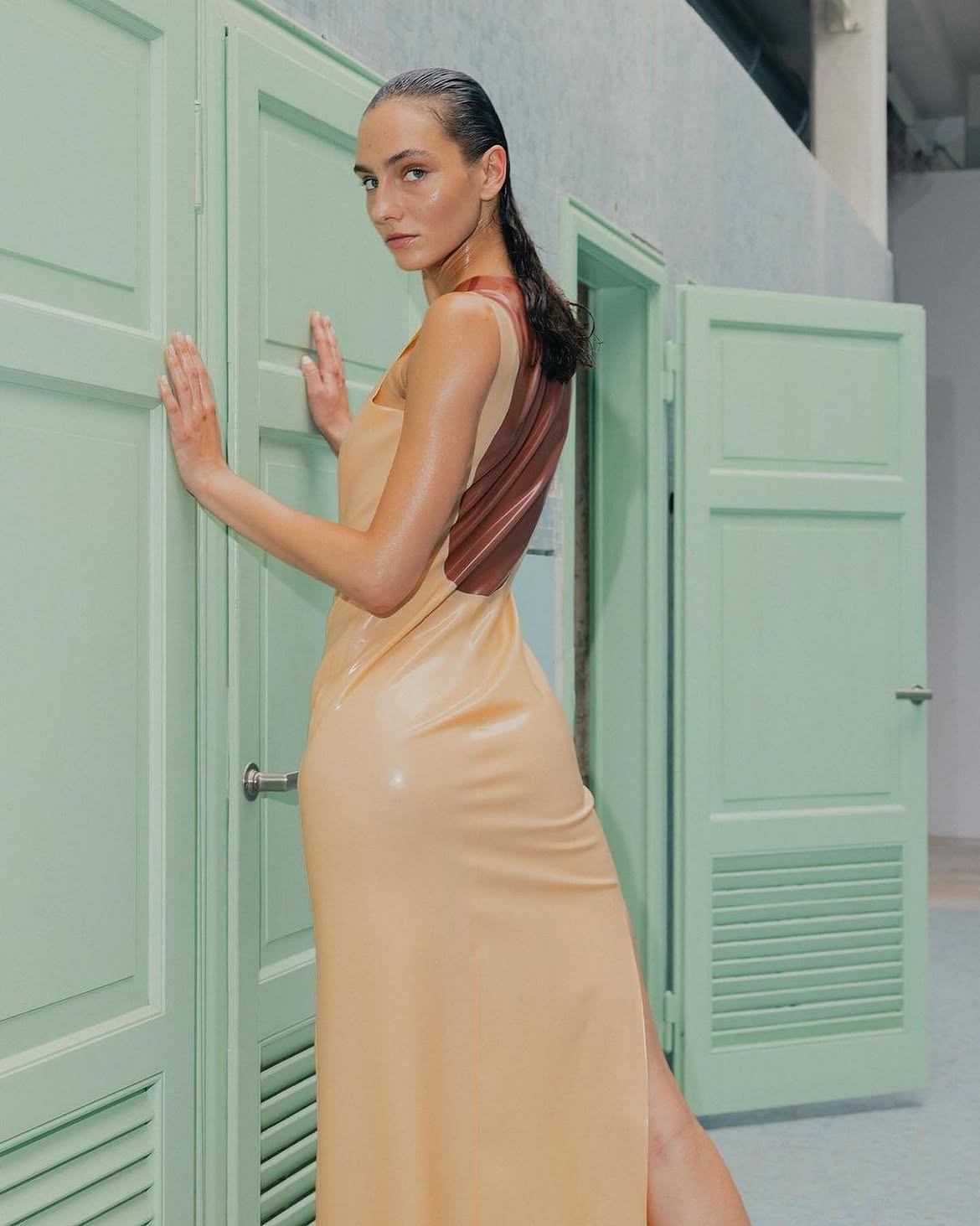
Kristina Kika Jovanović has known that system from the inside for years. She has moved through couture, fittings, shoots and shows, working within the worlds of houses such as Stéphane Rolland, Mugler and Zuhair Murad, while also beginning to document what happens backstage and write about appearance, the body, ageing, beauty and control. She has spent enough time inside that image to understand how it is made, and enough time observing the process to recognise the point at which a correction stops being merely professional.
When I ask what her body would be if it really were architecture, she answers without much theory:
“A house in the city that is occasionally rented out on Airbnb to selected guests.”
It is funny until it starts to sound like a perfectly serious business model. A house has doors, rules of entry, rooms that are not open to everyone, and someone who is supposed to decide who gets the key.



JUST ONE MORE REVISION
There is a peculiar fact about modelling that the final photograph makes very easy to forget: the person and the material being worked on are physically the same thing. The body is measured, dressed, moved and adjusted through light, make-up and cut, but it does not get left behind in the studio when the production ends.
After shoots lasting several days, the professional role can stay with her for a while. “The feeling that I am a model stays with me for longer, and the transition back into Kristina takes a few days.” That transition back into Kristina describes the effect of the job with unusual precision: the professional version of the self does not necessarily disappear when the lights go out.
With long fittings, she takes it further. “You learn to detach yourself from your body and hand it over to the professionals.”
That can mean experience, trust and the ability to collaborate. In that process, other people adjust the clothes, hair, make-up, posture and movement. That professional ease opens a more difficult question: how many times can you look at your own body as a project before you begin to see it that way when the job is over too?
With Stéphane Rolland, she describes the process almost in reverse, as a form of creative transformation. “I think it is incredibly difficult not to change your character when Stéphane Rolland dresses you.” She talks about strength, mystery and the embrace of beautiful fabric, about posture changing and the body becoming, for a few minutes, “an untouchable, elevated being.”
Sometimes the change is not metaphorical. Some pieces are constructed so that the seam and composition of the garment themselves allow you to move only in certain ways. Strip couture of the house name, the music and the spectacle, and she reduces it to a single word:
“Cut.”
Construction itself is not the problem. The problem begins when a person no longer knows how much of the change they are still choosing for themselves.
WHO REQUESTED THIS REVISION?
Every profession requires discipline, but modelling is one of the few in which the result of that discipline is visible directly on the body. That line is very clear for her today. If something presented as necessary for the season is something a person does not want, restricting food, excessive training or other forms of pressure stop being professional requirements.
“That is an act of violence against your own body.”
Not every change is violence, and not every correction is a problem. What matters more is who requested the revision, and when the person agreed to it. In creative work, feedback can very easily become an internal voice. Hear often enough that something should be moved, narrowed, cleaned up, sharpened or fixed, and eventually it becomes difficult to know whether you are still looking through your own eyes or through someone else’s notes.
Contemporary beauty culture makes that process even harder to see. She does not look for a single culprit. When I ask who creates the average, she answers: “All of us.” Someone establishes the norm, someone accepts it, someone repeats it and then, as she puts it, the snowball becomes an avalanche.
If beauty is understood as symmetry, she believes that today “it is more radical to remain specific.” Fashion lives inside its own paradox here: it wants a face people will remember, then knows with remarkable precision what it would like to emphasise on that face. In her case, it is more pronounced cheekbones and a sharper jawline.
This is not only a fashion problem. Anyone working in a creative industry knows the moment when the thing that was once distinctive becomes an expectation. A designer is asked for another version of the same object, an architect for another house resembling the last one, a photographer for the same frame, a writer for the same voice. Success can turn style into a template very quickly.
Which is why how many revisions are enough? is ultimately less a question of appearance than of authorship.

THE BODY HAS ITS OWN BRIEF
The conversation changes weight when I ask what her body refuses to forget.
“The history of my body remembers unwanted touch, being taken without consent, and desires that should never have been voiced to a child.”
The body never arrives at work empty. It carries a history of touch, control, intimacy and fear, things that remain invisible to the people dressing, photographing or directing it that day. A professional relationship with the body can therefore never be purely technical. A fitting is not unwanted touch, just as collaboration is not possession, but the boundary between them has to belong to the person whose body is involved.
She does not frame recovery as some grand transformation. Old habits, she says, disappear more slowly than we expect: “Healing takes a lot of energy, but it is all in service of living better in your own body.”
A better stay inside your own body matters more than a perfect result. There is no final version of a person that can be approved once and sent into production. There is a sequence of changes, and the point at which we learn which ones are actually ours.
WHO SIGNS OFF ON THE FINAL VERSION?
Writing becomes an important part of her story, though not as an escape from appearance. On her blog napisalaKika, she returns to appearance directly, writing about the body, ageing, aesthetic standards and her own relationship with the image. She has not stopped talking about appearance; she has changed the position from which she talks about it.
“I needed somewhere to hide where I could be Kika as a word, rather than Kika as a photograph.”
Writing has not offered her an escape from the image. It has given her the possibility of deciding for herself how she wants to speak about it. When I ask what is harder for her to post, a photograph or a piece of writing, there is no hesitation: the writing. “I write so I can feel calmer. Something in me has something to say, and that is why I write.” The worst moments are the ones when she catches herself writing for the sake of a good reputation rather than for the satisfaction of doing it.
This is where the shift in her position becomes clearest. Years spent inside a system that constantly evaluates and corrects appearance have not given her complete control over the process, but they have given her a far more precise understanding of which part of that control she is no longer willing to hand over. Confidence here has little to do with refusing change; it looks more like knowing the difference between collaboration and giving yourself away.
In the end, she reduces it to a simple boundary: “If the vision is fundamentally against my values, then it is the photograph. If I cannot stand behind my own words, then it is the writing.”
The question, then, is not whether trauma is somehow foundational to the profession of modelling. That would be both too broad and too simple.
The far more interesting question is what happens when an industry built on revisions works with material that has a history of its own, boundaries of its own, and the right to refuse the next version.

Photo: Private archive