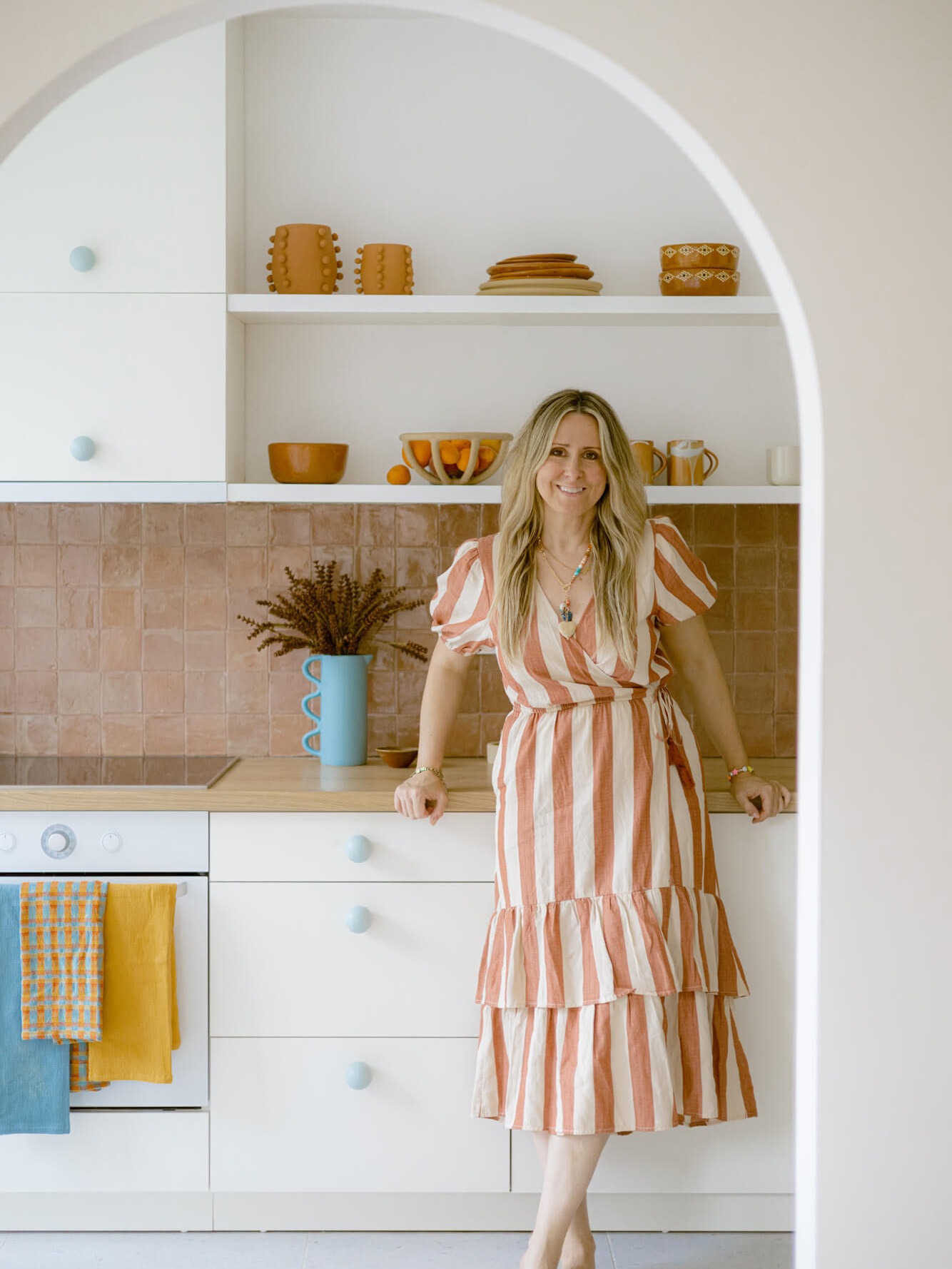
Open-concept kitchen. © Jovana Rakezić
Maja looks at the shelves first. They tell her where people have travelled, what they brought home, what they decided to keep and which bits of kitsch they somehow grew to love along the way. To her, a shelf is a far more honest place than a perfectly styled sofa or a painting hung exactly where it is supposed to be.
As an interior designer who lives and works between Serbia and the United States, she has spent years watching two cultures that can now share almost the same visual language while behaving very differently at home. The same kitchen, the same sofa, the same stone, but different rules, different rituals and very different ideas about what should be hidden, displayed, used every day or saved for a better occasion.
If an algorithm can teach us to want the same interiors, can it really teach us to live the same way?
“I want to see where they’ve travelled, where they’ve taken pictures and all the kitschy things they’ve collected. I say that with love!”
SHELVES AND NOSES NEVER LIE
I give her three options, a sofa, a fridge and a bathroom, and ask which tells her the most about a person. She chooses the sofa. When I ask which room most often lies about its owner, she shifts the question slightly and chooses a wardrobe instead. Her eye goes first to the places where our carefully constructed image begins to crack rather than those we have already prepared for other people to see.
Art quickly becomes evidence. “When someone buys an expensive car or watch, the message is crude: I have money. And that’s fine. But when someone hangs a painting by a well-known artist on the wall, the message is much more insidious: Not only do I have money, I also have taste, intellectual depth, education and sophistication. It becomes a status symbol masquerading as spirituality and social validation instead of a genuine connection with the work.”
Coming from someone who tells me early on that diplomacy is rarely what people get from her, nothing gentler should be expected. She applies the same scepticism to her own profession, particularly to rules that, after three months of certified confidence, begin to sound suspiciously like laws of nature.
“Rigid insistence on cohesion. Carrying the same colours and shades from room to room absolutely kills character before the space even gets a chance to breathe. Also the words we now use to define a good interior, things like bespoke and curated.”
Something ugly, on the other hand, can work perfectly. “Absolutely. It’s like someone with a big nose that somehow suits them perfectly.”
She has little interest in editing out everything that refuses to behave. An artificial plant can stay if its owner routinely kills the real ones, a vacuum cleaner can remain an object of genuine affection, and sooner or later the chair in the bedroom will become a wardrobe for clothes that are not quite dirty enough for the laundry. A home does not become less successful because someone has started living in it, and good taste survives a little mess far better than the constant need to prove itself.
THE GUESTS WHO NEVER COME
A huge kitchen in which almost no cooking takes place is America. Three sets of plates kept for special occasions are Serbia. A living room the family almost never uses is America again.
“I think that would be America too. The living room in America exists to be photographed when the house goes on the market, while the kitchen island is where people actually live, not cook. Formal living rooms in America have been sitting untouched for decades, saved for holidays or guests who never arrive. The kitchen island, meanwhile, has absorbed both the dining room and the living room. It’s a desk, a bar, a breakfast table and the epicentre of every house party.”
Square footage can easily begin performing a life that is not actually happening inside it. One room remains almost museum-like, another quietly takes on every function, and eventually the house gives itself away. Serbia has a different kind of excess, a need to store, preserve and keep things in reserve for their rightful moment. Certain glasses, plates or tablecloths can spend years waiting to be considered worthy of use, as though everyday life were slightly too ordinary to deserve them.
Her most Serbian habit has nothing to do with porcelain.
“Not having to pretend I’m happy to see someone when I’m not. I don’t fake an interest in what they did last weekend.”
America gave her something simpler: the air conditioning set to 17°C and never higher. She also identifies more with the American attitude to outdoor living, while Serbia, for her, is more closely associated with the need to find a place, drawer, cupboard or another pocket of storage for absolutely everything.
Open-plan kitchens and living rooms are considerably less appealing.
“Open concept living. I honestly can’t stand it. I prefer a separate or semi-separate kitchen and living room. Open concept gives me no peace. The kitchen constantly reminds me of three things: that I want to eat, that something needs cleaning or that there’s something I should be doing. For me, out of sight really is out of mind. I want a door I can close.”
Sometimes a door is not a barrier but the luxury of finally not having to look at something. Paradoxically, she likes the kitchen island. Walk-in wardrobes too. A guest room, to her, is hospitality, while the formal dining room can die. Bathrooms are underrated and decorative cushions have a remarkable ability to consume an entirely unreasonable amount of money. None of this adds up to a neat theory of the good home, only spaces that work and spaces that expect people to rearrange their lives around them.
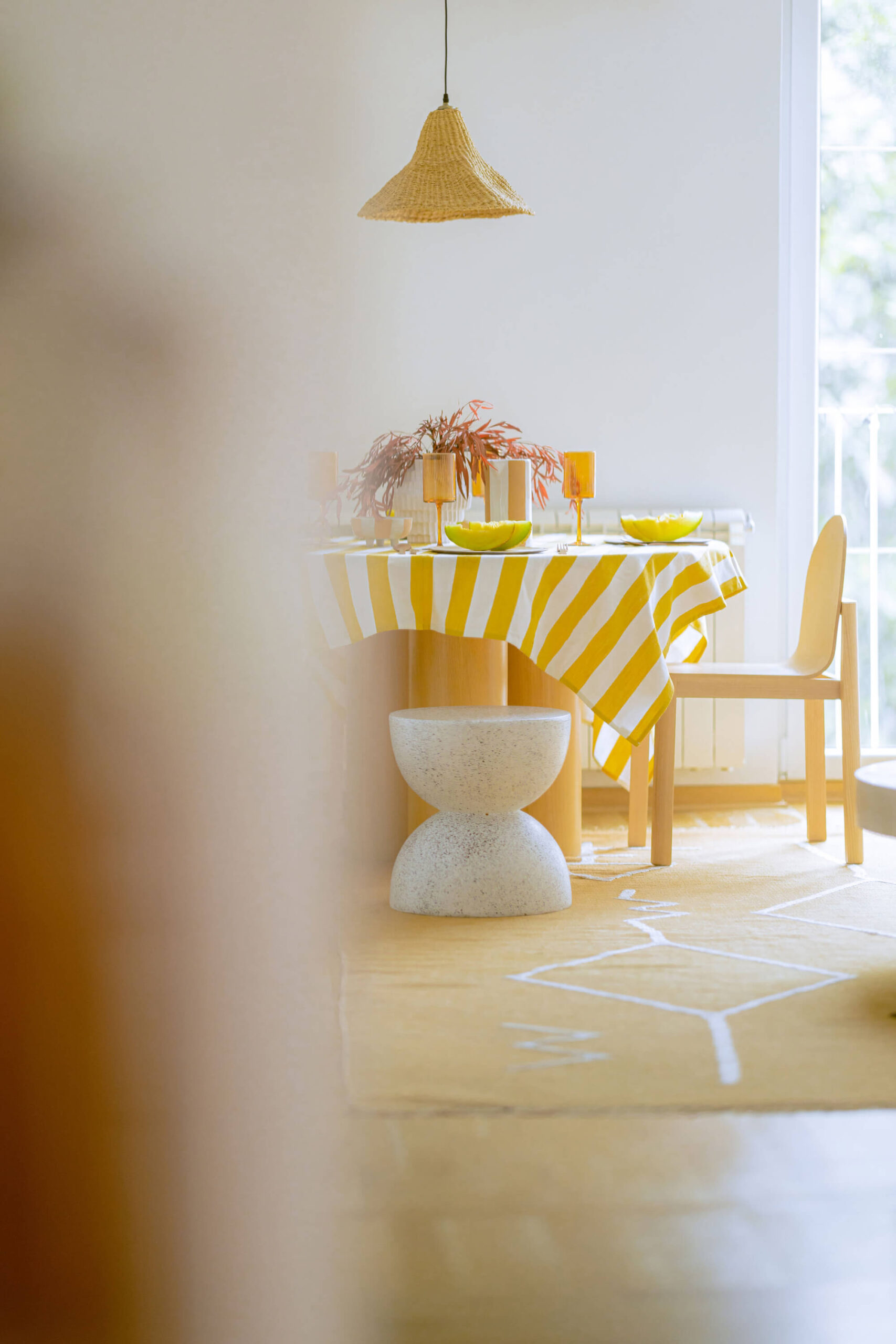
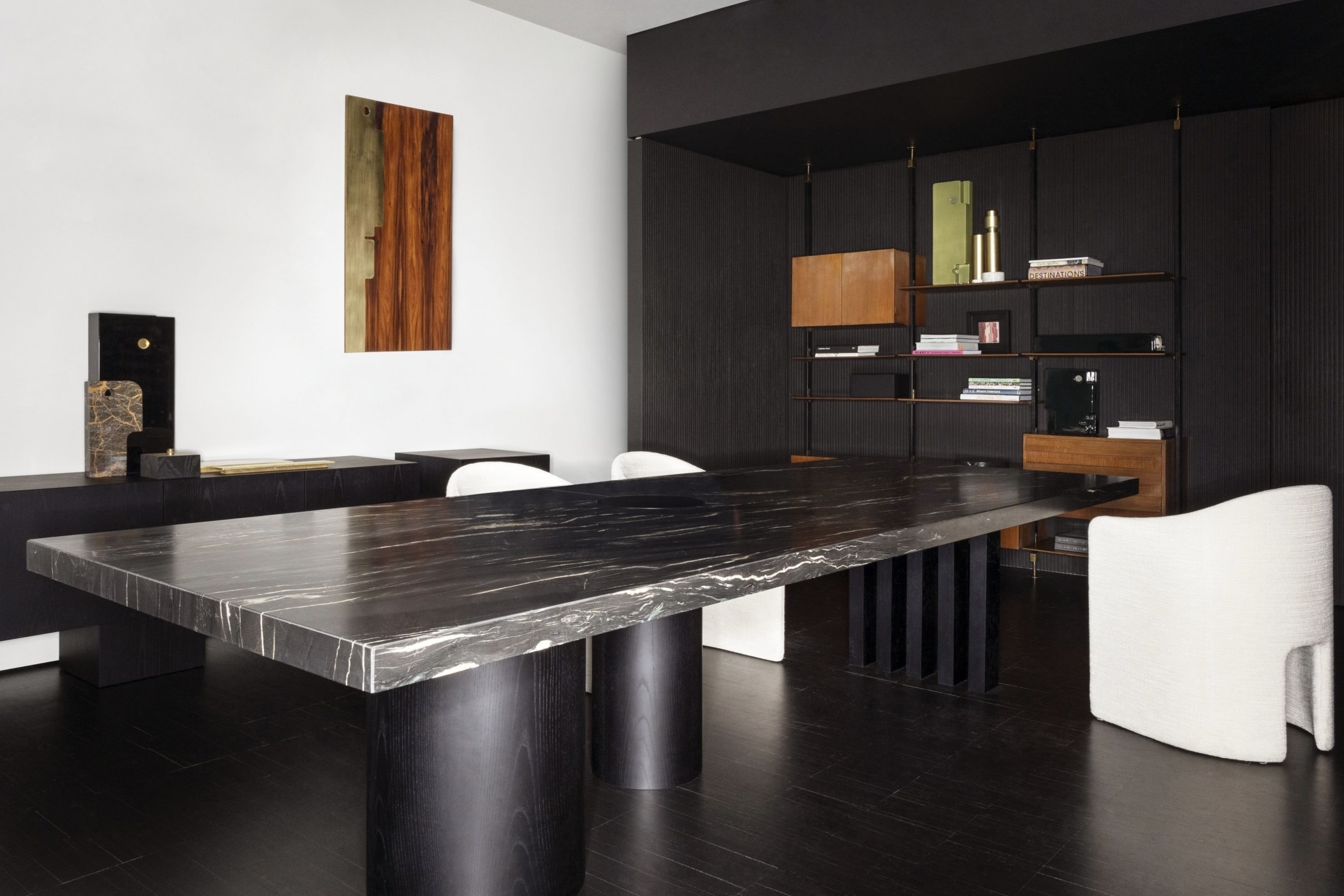
A corner of the dining room in warm, natural tones. © Jovana Rakezić

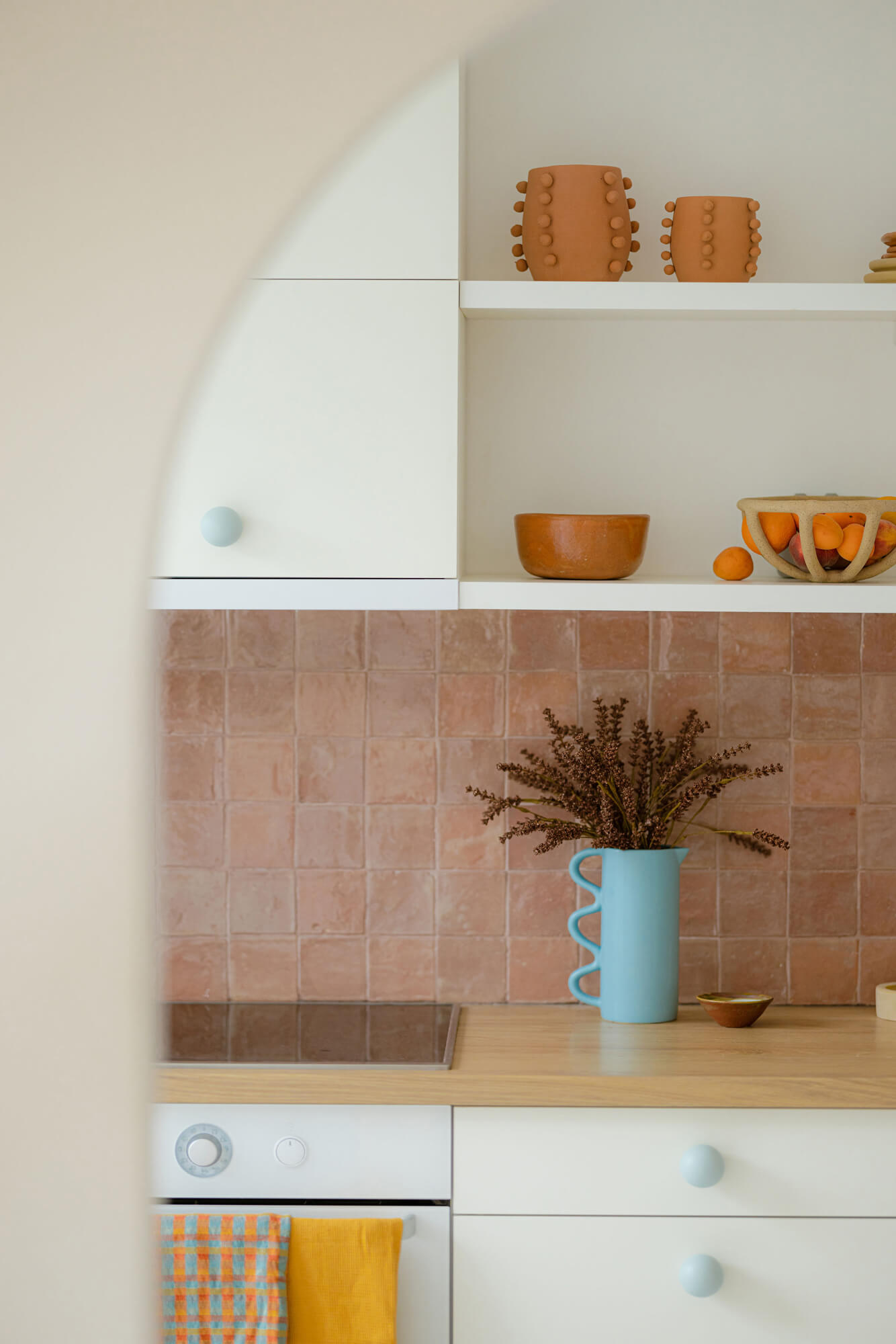
Decorative accents in the interior. © Jovana Rakezić
THE SURFBOARD THAT STAYED IN CHARLESTON
Her husband surfs, and in Charleston they have a beautiful wooden surfboard that lives in the dining room. When they considered bringing it to Belgrade, they decided against it.
“Surfboards. My husband surfs and has this beautiful wooden surfboard that normally lives in our dining room as a decorative piece as well, and we wanted to bring it to Belgrade when we moved. But however beautiful it is, it would look completely out of place here.”
Some things lose their meaning the moment they change postcode. Objects travel easily, images even more so, but context is far less mobile. Climate, she says, determines aesthetics 200 per cent, and she can distinguish almost instantly an English house from a French apartment, Bali from Los Angeles or Palm Springs.
The internet has produced a strange effect. We can now order the appearance of somewhere else with extraordinary precision without necessarily importing the reasons that appearance existed there in the first place. Style travels quickly, habits much more slowly.
Asked what Europe exported to America long ago, only to see it sold back as a distinct aesthetic category, she answers: “European oak floors. WTF is that?!”
WHITE BOUCLÉ FABRIC. STOP, JUST STOP.
There is one word she distrusts even more than European oak: timeless.
“I honestly don’t even know what that means anymore. I say exactly that to a client if they tell me they want something timeless. That’s why I communicate much more visually with clients now. My definition of timelessand their definition of timeless can be two completely different design concepts. If I simply nod and pretend I know what they mean, the project is already heading in the wrong direction before it has even begun.”
A handful of words now do half the work of taste for us, timeless, curated, bespoke, and they sound precise until two people are asked to draw what they mean.
She loves wallpaper and says she probably always will because she sits somewhere on the edge of maximalism, although clients tend to have an intense love-hate relationship with it. White bouclé is a much simpler matter.
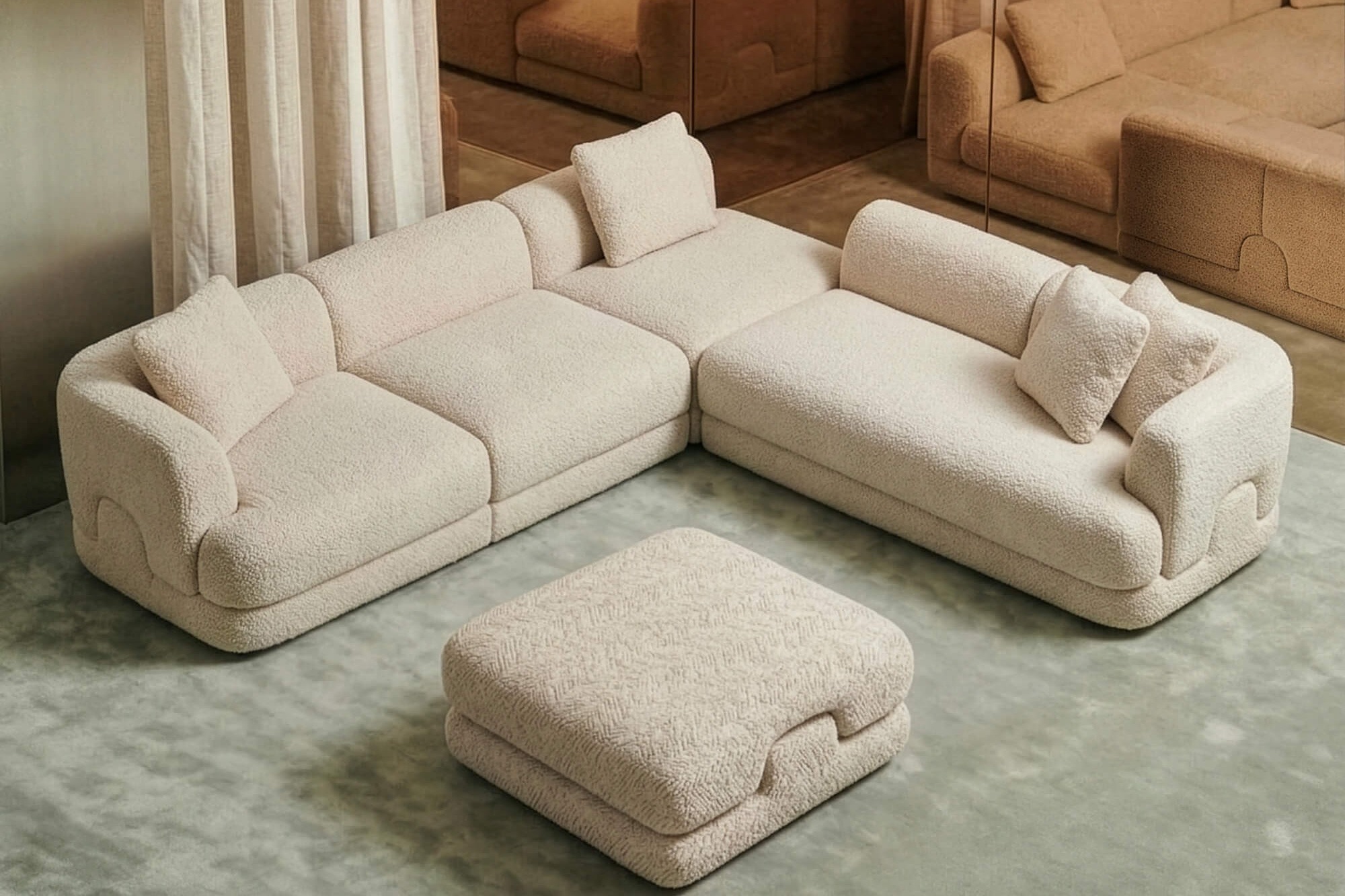
“White boucle fabric. Stop, just STOP.”
When I ask which element of today’s homes time will expose most quickly, she refuses to forecast trends.
“I don’t know. I genuinely don’t have a smart answer or a stupid one. Time has been on such a strange trajectory ever since AI entered the picture that I honestly have no idea!”
AI enters the conversation somewhere beyond the usual question of whether it will take designers’ jobs, because what is changing is the speed at which an image can be made, circulated, copied and exhausted. Until recently, we could look at an interior and place it within a decade with reasonable confidence; now it is becoming harder to guess how long today’s visual language will remain stable at all.
Timeless was never an especially precise word, and in a moment when AI can generate endless variations of familiar aesthetics in seconds, it becomes stranger still. It once took ten years for something to start looking distinctly 2016; now three months and a good algorithm can do the job.
Trends matter less to her than what remains once the photographer has left, how the room looks six months later, what people actually use, what ends up on the chair and whether someone can walk around their bed without climbing over it, or whether a developer has managed to sell another few square metres as a bedroom.
Her process begins neither with a material nor an image, but with an imagined life inside the space.
“It’s honestly always on my mind while I’m working on a project. I’m a huge advocate of self-hypnosis and meditation. My working day literally never starts without it. I enter that state and first visualise real life in the space in great detail: how the children move through the hallway, where they put down their morning glass of water, how they move around. Only once I can see and feel it do I start working. I use these techniques for everything in life, not just work, because you know what they say: how you do anything is how you do everything.”
By the end of our conversation, we are talking less about how a space looks and more about what the body does inside it without thinking, where a hand puts down a glass, how a child moves through a hallway and how good a design can really be if it requires us to become a tidier, more disciplined version of ourselves every single day. Every good interior eventually loses the battle with the bedside table.
“The bedside tables. Even though they probably have a drawer, nobody is going to use it. A little ecosystem will develop on top: glasses, medication, plastic water bottles and sleep masks.”
That small ecosystem may be closer to home than most things that ever make it into an interior photograph, because it needs no styling, only a habit repeated often enough to claim its own place.
In the end, it comes back to the shelves. Travel photographs, a gift we would never have bought for ourselves, something expensive sitting next to something completely worthless, a piece of kitsch that somehow became precious, all the things that are difficult to explain through style and even harder to standardise.
Perhaps we really are all looking at the same interiors, but we are not, at least not yet, living the same way.
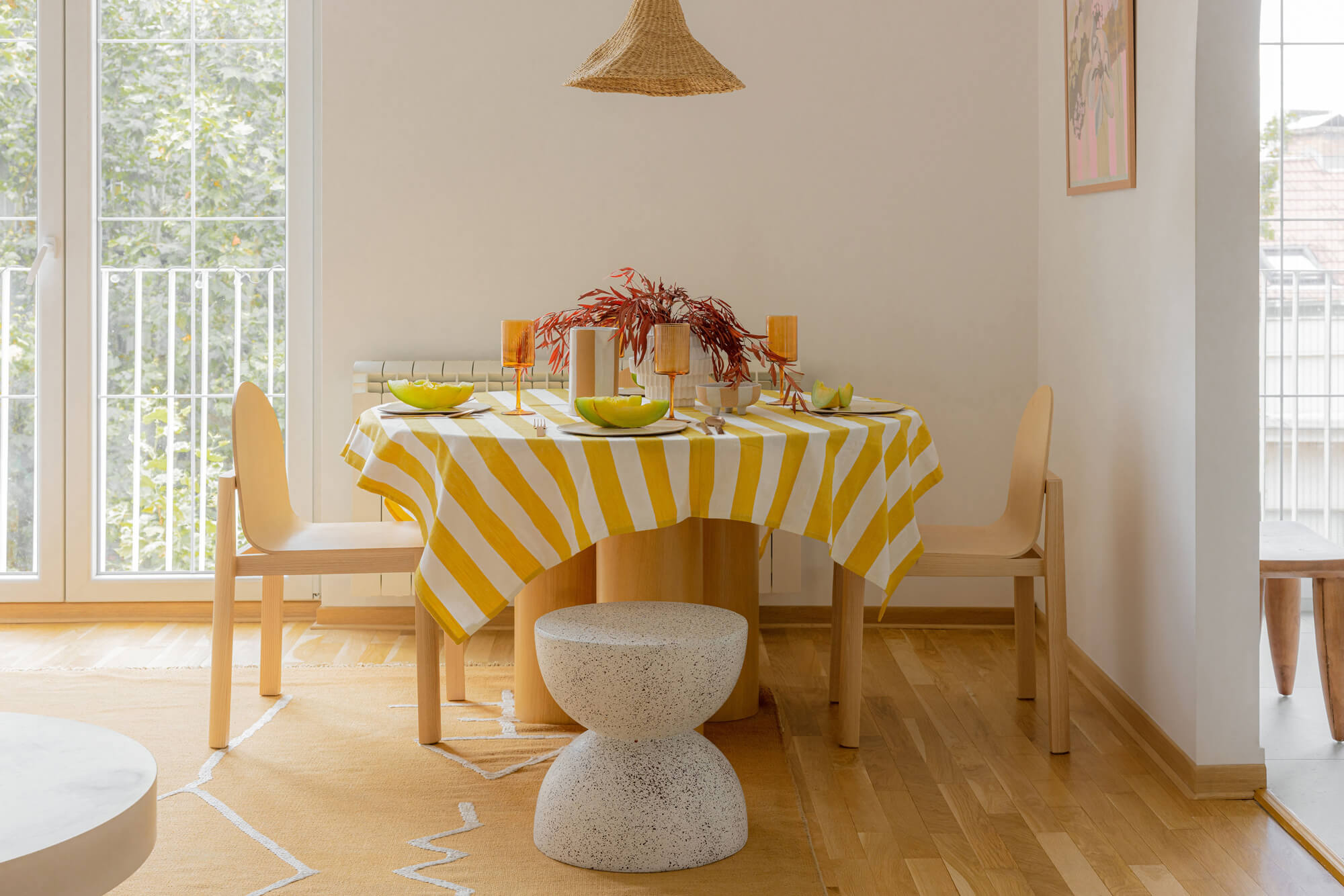
Carefully selected art pieces and textures in the dining space. © Jovana Rakezić