

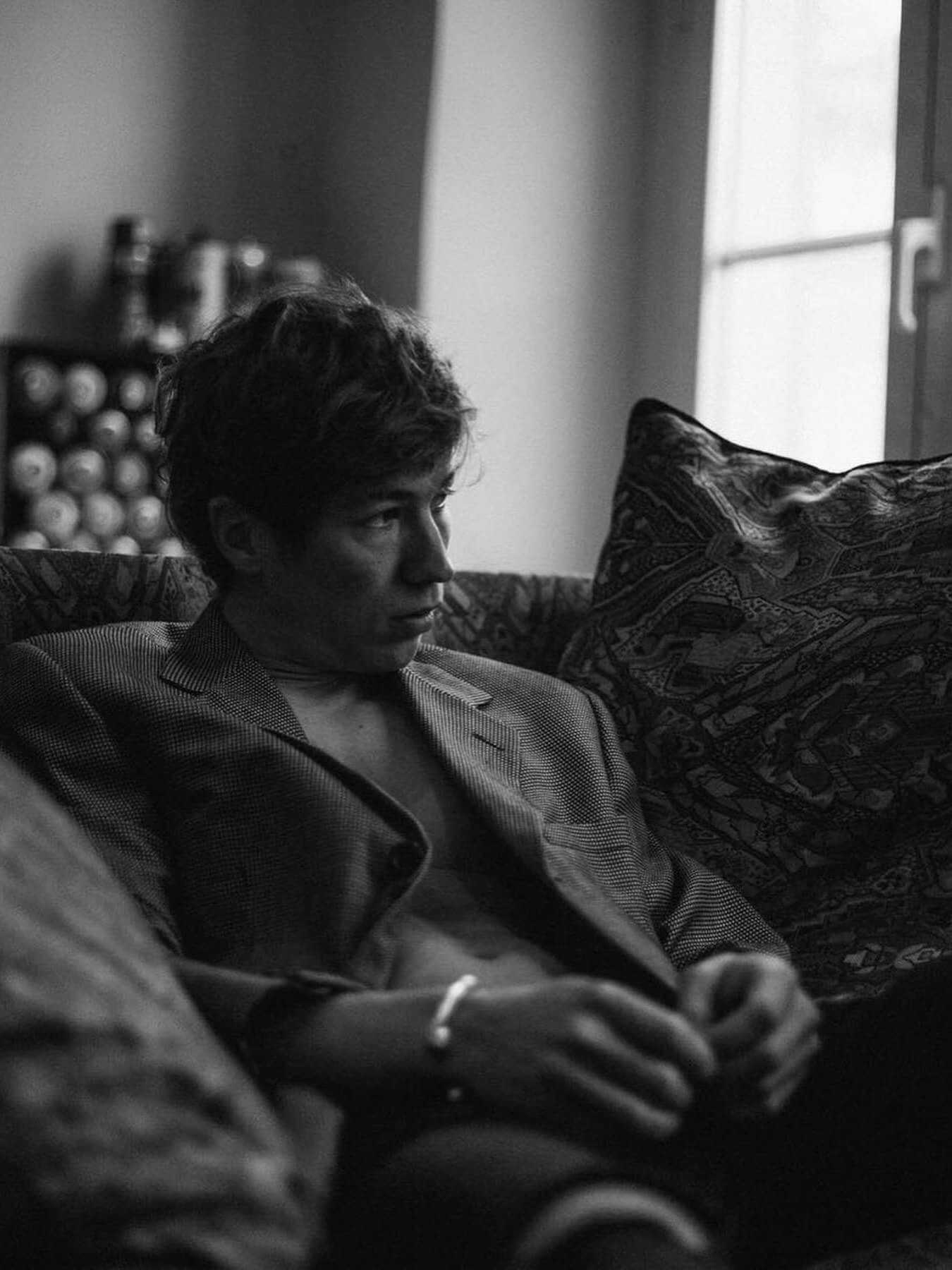
NICOLAS BLAŽIČEVIĆ: BELGRADE IS A STATE OF MIND (AND SOMETIMES IT LIVES IN NICE)
Nicolas Blažičević © cedou.cedou
There is a Belgrade people have been declaring dead for years. The old one, obviously. The one with better bars, stranger characters, less money and supposedly much better taste.
I never entirely bought it, because I keep finding pieces of it elsewhere. Whenever I travel, I look for Dorćol without actually looking for Dorćol. Not the cobblestones, the architecture or another carefully distressed café, but a certain urban instinct: good clothes without much effort, a little disorder, rooms that have already lived several lives and people who know things without constantly announcing that they know them. I found it once in Istanbul. This time, in Nice. Not on the Promenade des Anglais, but in Nicolas Blažičević.
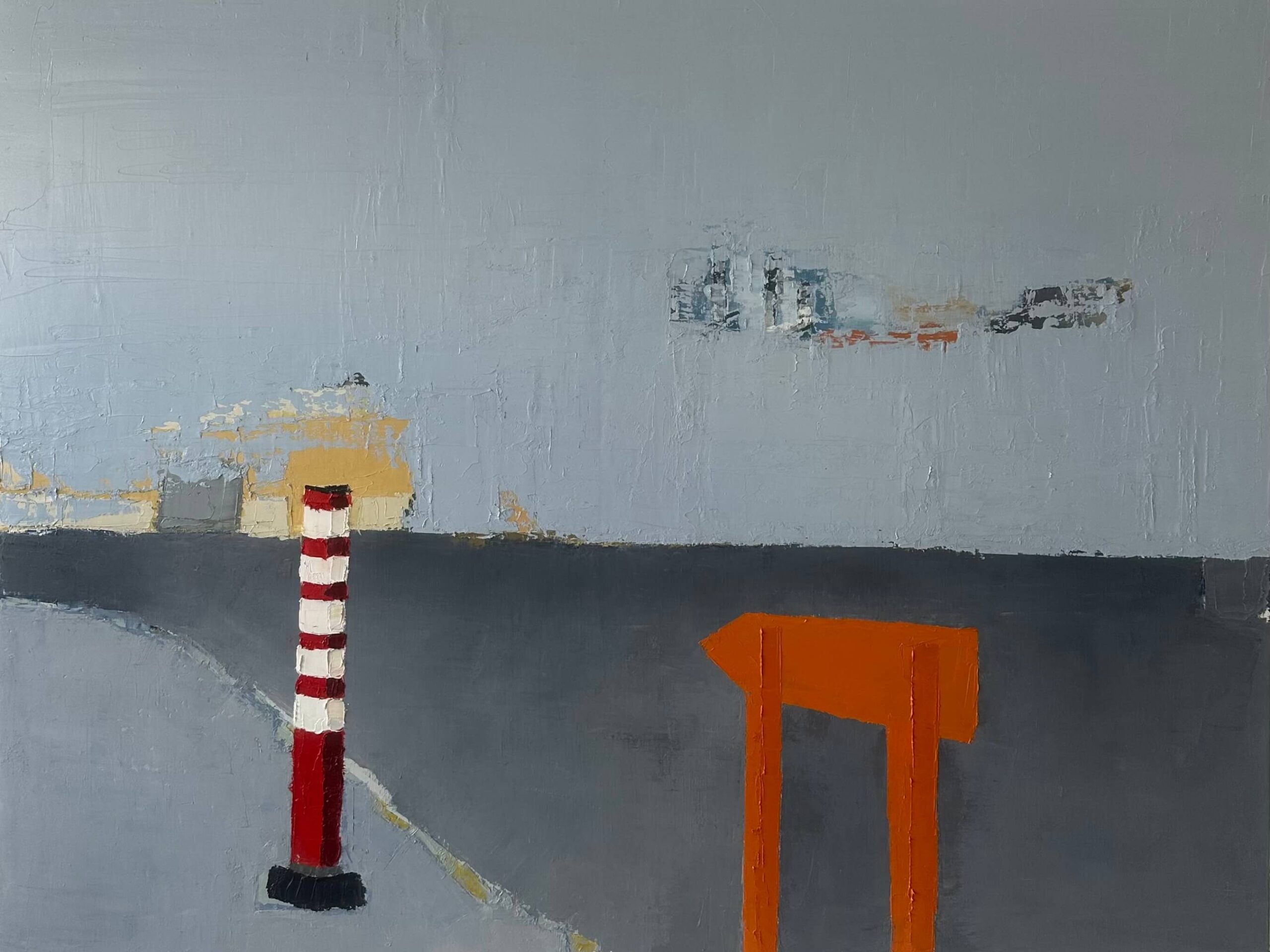
His Jour de pluie à Belgrade could be a still from a film about the city nobody ever got around to making. A red kiosk roof, a POP CORN sign, old Coca-Cola lettering, graffiti, wet asphalt, the kind of minor urban architecture we pass every day until we stop seeing it. The work belongs to a series of Belgrade scenes painted on cardboard, some of which he plans to turn into prints.
Nicolas was born and raised in Nice, but his connection to Belgrade predates him. His father was born and raised here before moving to Nice as a young man. So his Belgrade is not quite an outsider’s view of the city, nor an attempt to return to something that was once his. He notices surfaces already marked by other hands, objects from the street, temporary structures, things ordinary enough to escape attention until someone looks at them long enough to make them worth painting.
Sometimes I think Nicolas is the version of me who, in another life, picked up a brush instead of a keyboard. What draws me in is his relationship with work, that street instinct disciplined enough to master a craft and loose enough never to turn it into a uniform. His practice already says something about that: stencils, classical imagery, pop references, paintings on cardboard, dozens of square metres of hand-painted canvas that eventually become part of an interior. He does not seem particularly interested in the borders between those worlds, as long as he knows why he is crossing them.
Old Belgrade used to produce people like that: people who could mix high and low, serious work and a good joke, taste and a small dose of bad behaviour, without needing a manifesto to explain themselves. They say that Belgrade is gone. I keep finding it, this time in Nice.
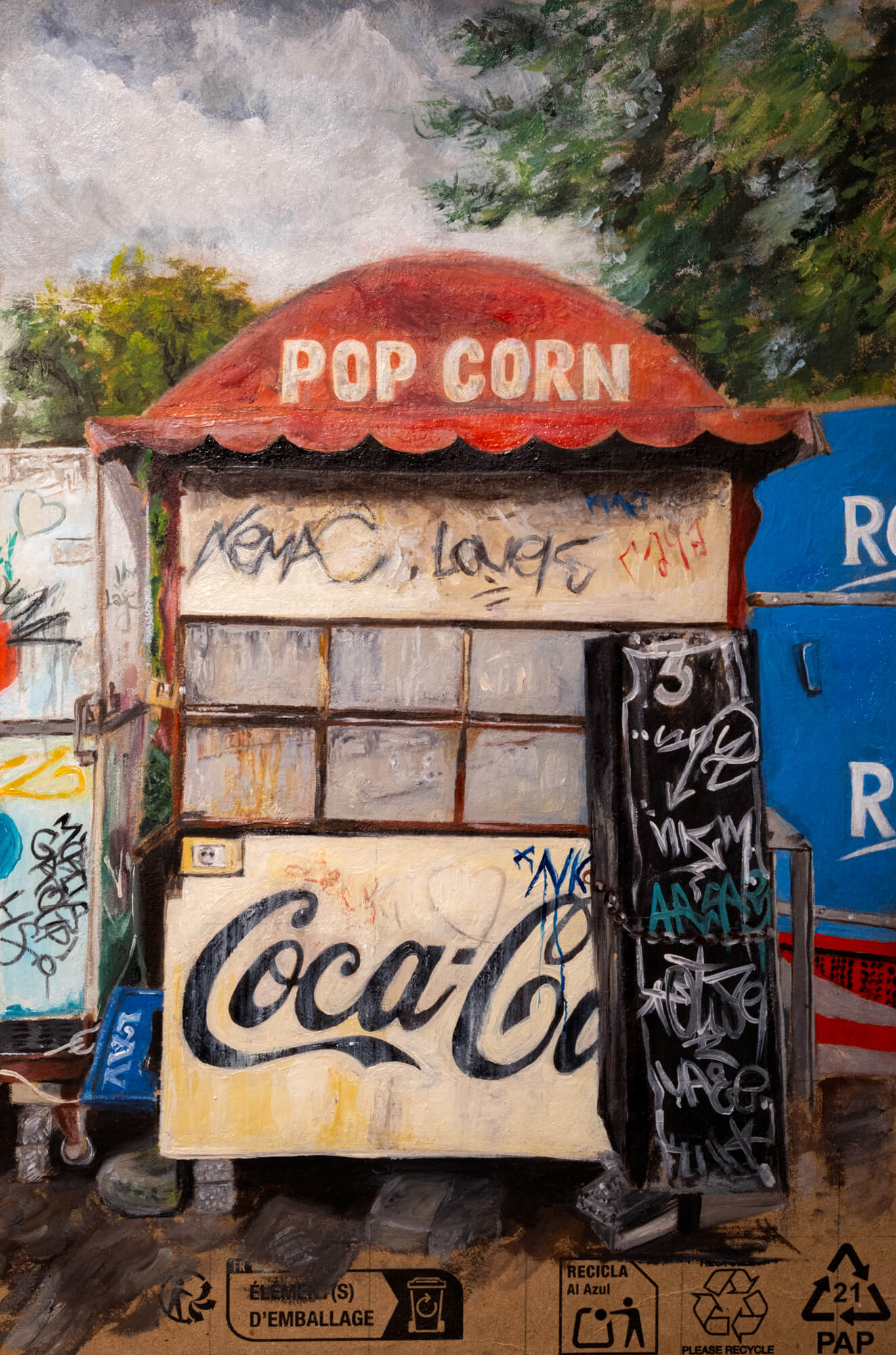
Belgrade un jour de pluie
LEAVE YOUR EGO OUTSIDE THE STUDIO
The art world still likes the idea of the autonomous artist, alone in a studio, far enough from clients, budgets and other people’s requests for a personal vision to remain untouched. The word commission has carried the smell of compromise for long enough that money entering the room can still make everyone slightly uneasy. Nicolas sees it differently.
“For me, commissions are what make my work rich. Every project pushes me towards techniques, materials or worlds I wouldn’t necessarily have chosen on my own, and that’s how I’ve ended up being able to do almost anything technically. It means I can bring ideas to the table and never feel stuck when faced with a request.”
There is a less romantic part of the equation too. A commission meets two needs: the chance to make something with his own hands and, on top of that, to be paid for it.
“I think it’s wise to keep ego out of the process.”
That does not mean it makes no difference who brings the idea. The question becomes more complicated when the client is not simply commissioning his hands. What, in the end, are you buying when you commission an artist?
“Probably all of it. When I work with architects, for example, it’s mostly my ability to bring their ideas to life. When people come for my own world, it’s something else: my taste, a memory, a message, deliberate or not, taking shape in colour.”
The boundary between collaboration and service exists. He just does not find it particularly troubling.
“Yes, definitely, and it’s not a bad thing. It’s precisely through my collaborations that I get to show my expertise. But honestly, I never really ask myself that question.”
Art history makes our contemporary anxiety around commissions look slightly strange anyway. Renaissance masters worked for churches, courts, merchants and powerful families, while Nicolas locates one of the important shifts much later, with the Impressionists.
“They were among the first to move away from expectations, to paint what they wanted rather than what they were asked to, and to build their own audience. Times change, and that’s a good thing. Today an artist can choose not to answer a specific request and build their own audience instead.”
He has no interest in choosing between the two positions.
“For me, the two aren’t opposed. Commissions and free creation feed into each other.”
Nor does he assign some magical creative value to constraint. When I ask whether he has ever made a better work precisely because he did not have complete freedom, he says probably not, or at least he is not sure. The result may be better for the person receiving it or for the viewer. That does not necessarily make it better for him. For himself, the answer is easy.
“Go for it, you’ve got carte blanche!”
That says more about his relationship with work than any theory could. A commission is not the enemy of freedom, and freedom is not proof of artistic purity. One expands his repertoire. The other gives him room to see what he can do with it.
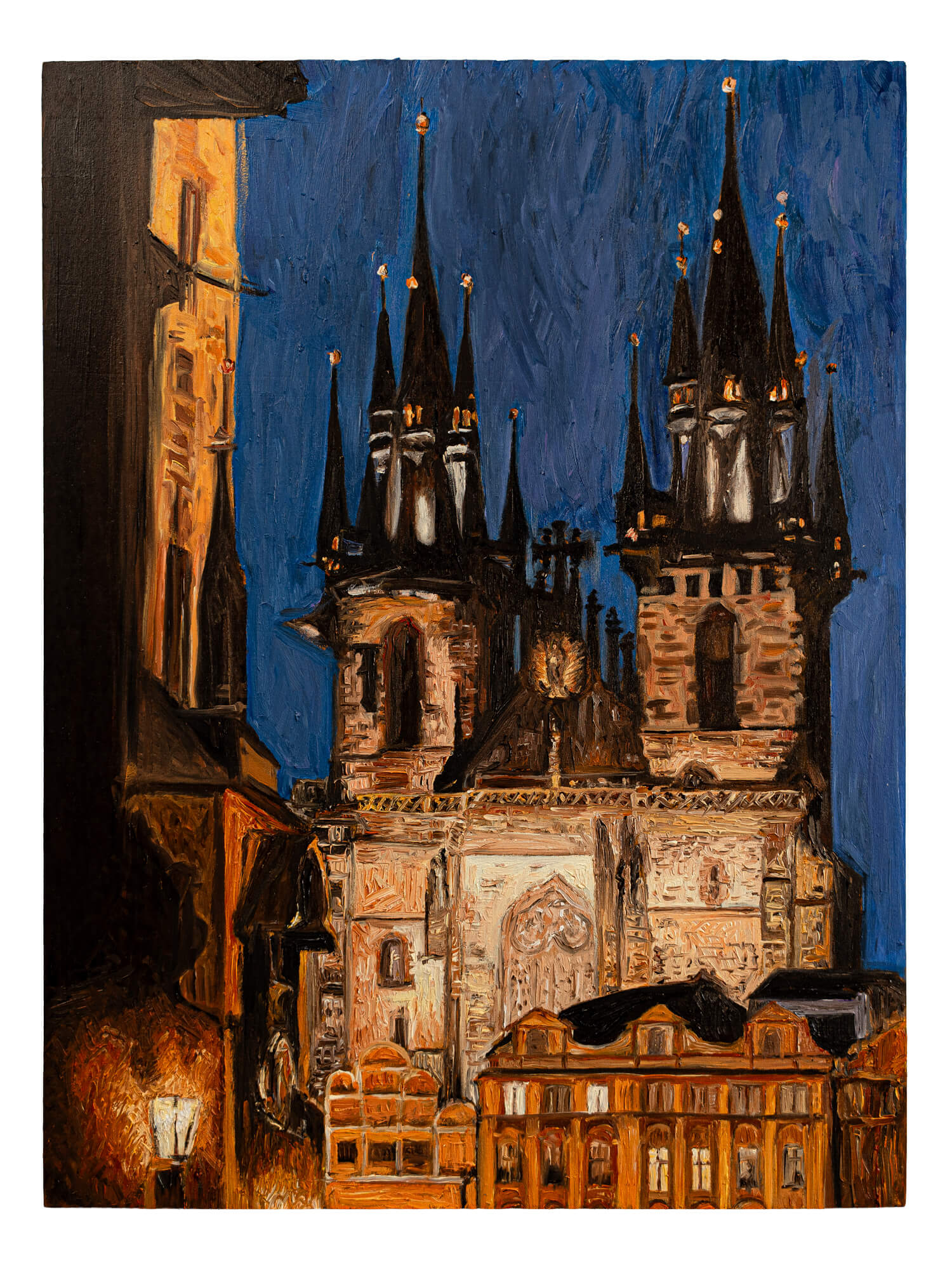
Our Lady before Tyr
WHEN ARCHITECTS COME KNOCKING
At Boccaccio in Nice, all of this becomes physical. Nicolas hand-painted more than fifty square metres of cotton canvas before the works were mounted onto the walls almost like wallpaper. Painting becomes part of the interior, tied to its proportions, furniture, light and the way people move through the room. Fine art, decoration and interior design stop behaving like separate disciplines.
“That’s exactly the question that has always driven me. I love playing with that contradiction. I keep asking myself how to build bridges between distinct worlds, sometimes far apart.”
“What would a traditional studio painter do if architects came knocking?”
The wall provides its own answer. Light changes, furniture appears in front of the work, people walk past it, the architect has an idea, the client has a budget and the room has a function. A painting acquires neighbours and enters a life the artist can no longer fully control.
Historically, none of this is radical. Fresco belonged to architecture for centuries before we became accustomed to the idea of art as an autonomous object on a white wall under controlled light. Nicolas does not approach that history as theory. If a project requires a new technique, he learns it. He changes material and scale, tests what he can do and allows somebody else’s idea to take him somewhere he might never have reached alone.
That openness was not always the goal. His earlier work moved through stencils, classical imagery and pop references while he searched for a fixed visual world that could be immediately associated with his name.
“Looking back, I was always searching for a defined style. I wanted to build a set visual world, even a repetitive one, so I’d be more easily recognisable.”
“It’s only very recently, especially through this first exhibition, that my style has started to grow out of my real-life experiences. The medium and the end result now come second.”
That is a bigger shift than it might sound. If experience comes first, a painter no longer has to know in advance what “a Nicolas Blažičević” is supposed to look like.
Recognisability is a strange currency in contemporary art. A gallery wants a signature, an audience wants to recognise it, and one successful form can easily create demand for another version, then another, until the artist becomes the most efficient manufacturer of his own signature.
With Nicolas, things are moving in the other direction. Commissions expand his technical repertoire while his personal work becomes more intimate. A stencil, a pop reference or a cotton canvas no longer has to function as an identity to be maintained. The medium can change when what he wants to say changes.
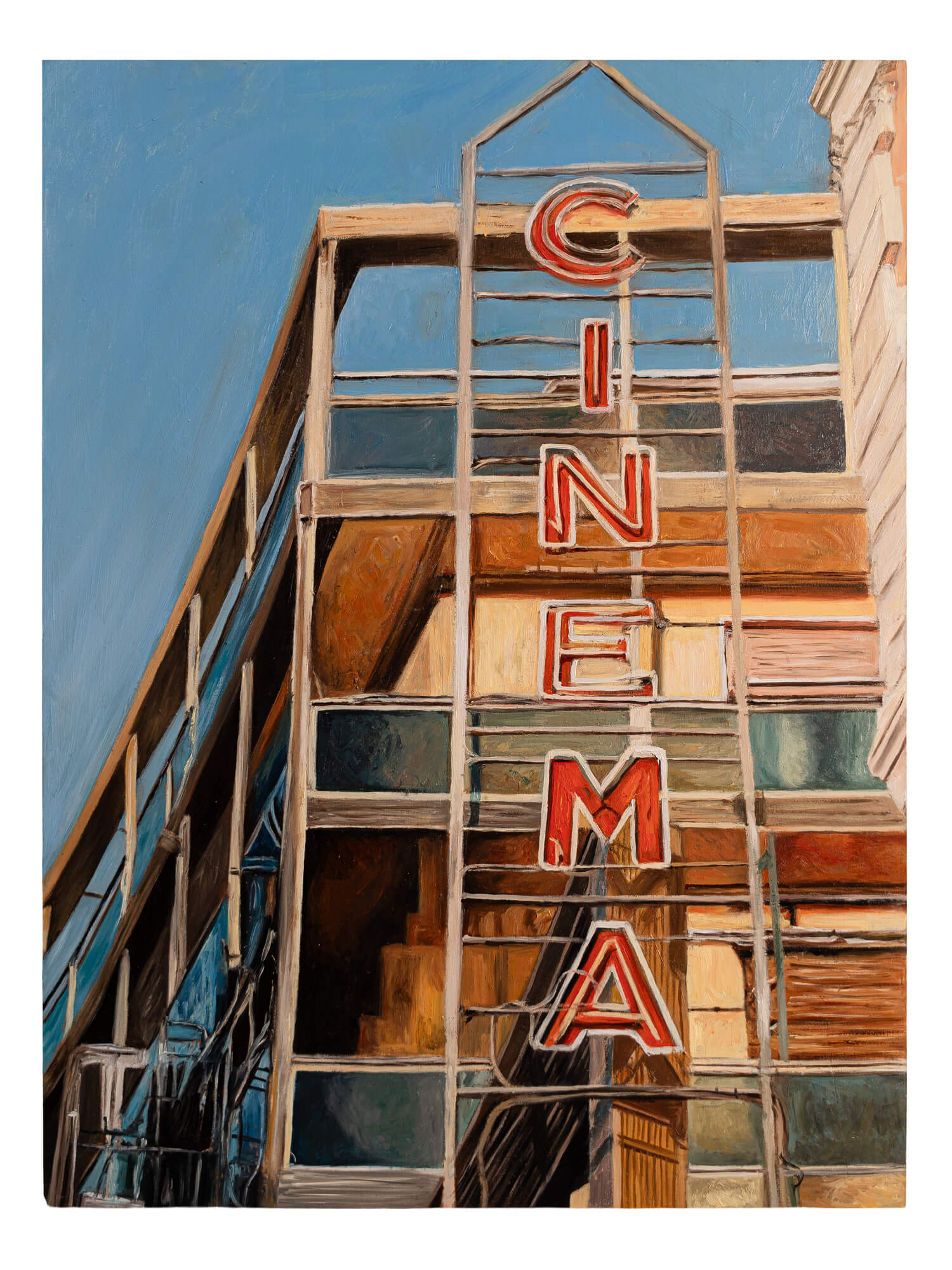
Cinema Paradiso
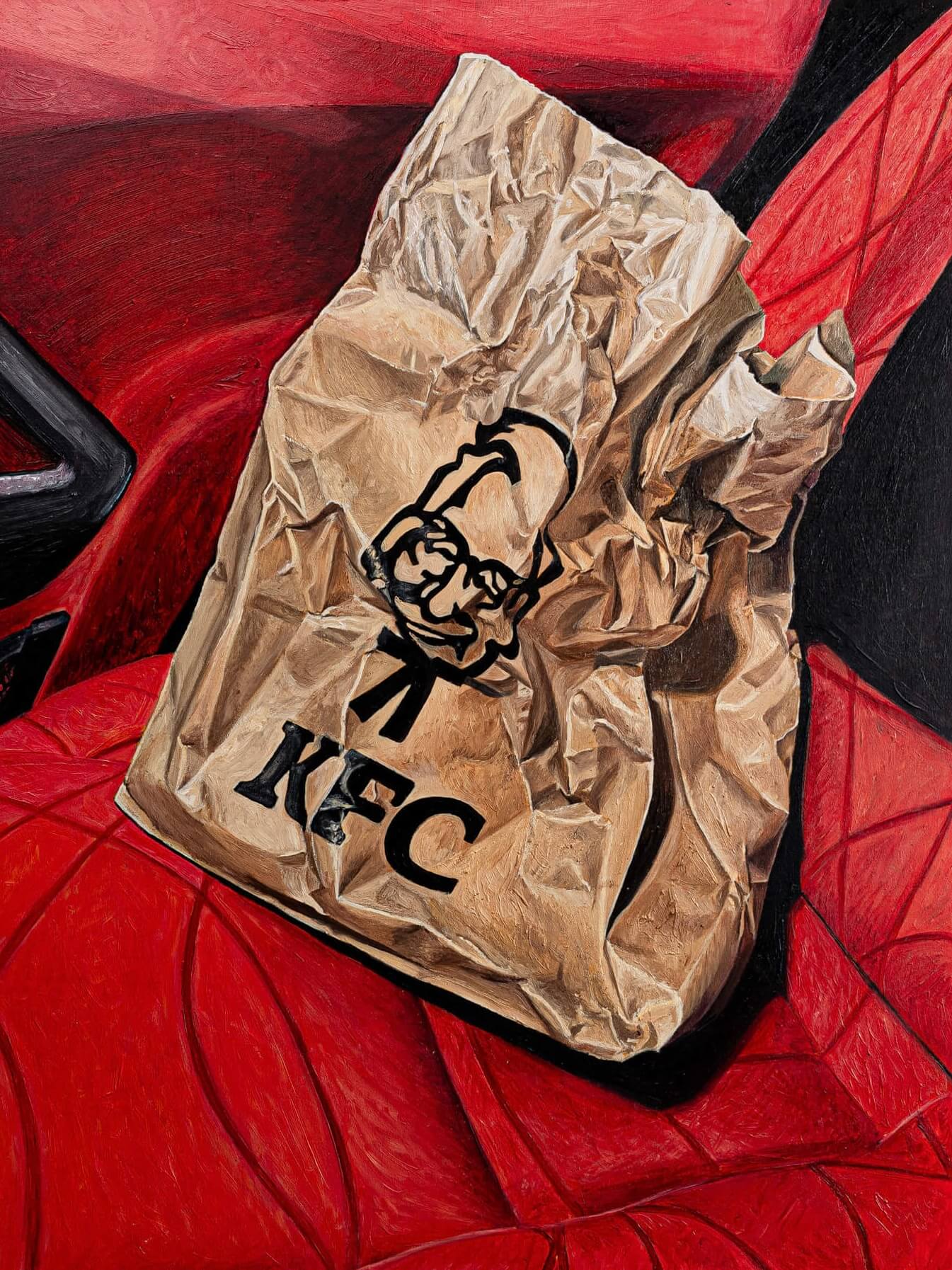
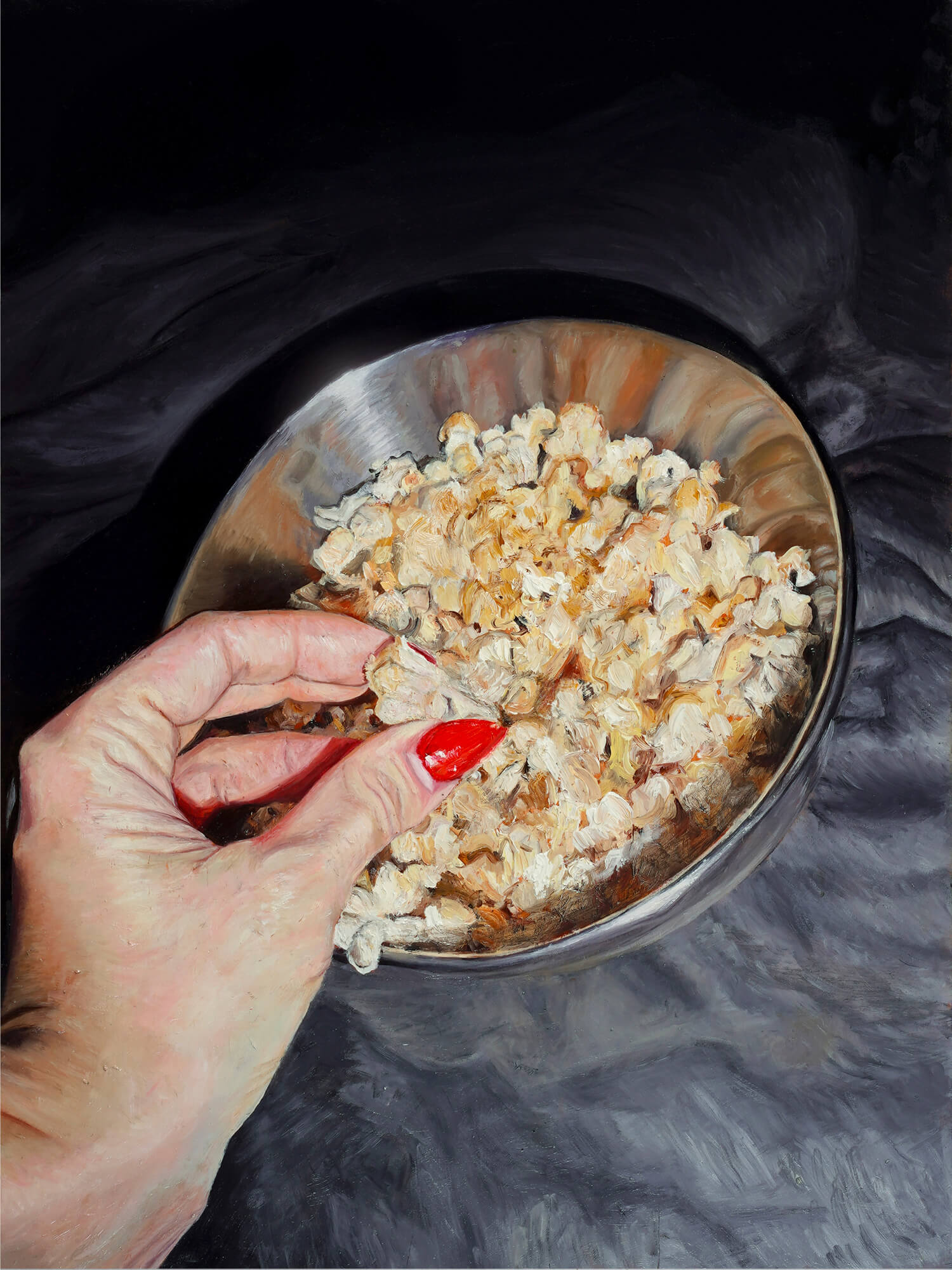
Parking lot Thougts, Enjoy the Show
NICE PEOPLE
Nice comes with considerable visual baggage for a painter. Matisse, Cocteau, Klein, the Mediterranean, hotels, palm trees, sun and that particular blue known equally well by art history and the tourism industry. The city has been painted so many times that growing up there requires a certain resistance to its own scenery.
Nicolas makes no secret of that distance.
“The South has a rich heritage, from today’s talents to those who shaped its culture. But I have to admit I’ve always felt a certain distance from the Riviera’s own symbolism, maybe because my tastes are so eclectic.”
It is not a rebellion against where he comes from. He does not need to escape Nice in order to resist it, nor does he need to paint what Nice is already known for in order to belong to it.
Cities with powerful myths eventually become strange for the people who live in them. What others cross the world to see becomes scenery. Nice has the Riviera. Belgrade has brutalism, kafanas, rivers, nightlife and an entire catalogue of images repeated so often that the city begins to resemble its own souvenir.
Nicolas chooses a kiosk in the rain. There is no representative skyline or heroic architecture. Sheet metal, an advertisement, graffiti, wet asphalt and a small structure nobody intended to represent the city do the job better. Jour de pluie à Belgrade tells me more about the way he looks than any attempt to cast him as an artist caught between “two cultures”. The point is not how much Belgrade there is in him, or how much Nice. It is what he chooses to see in both.
A city also travels through the people it produces, through the way someone works, the worlds they mix, their humour, their relationship with craft and the amount of importance they assign to themselves. The old Belgrade I keep looking for in other cities was never only a collection of streets. It was a type of person: urban enough not to keep proving it, curious enough to cross disciplines and secure enough not to turn everything they do into an identity. I recognise some of that in Nicolas.
When I asked which of his paintings he would never sell, he did not need time to think. None.
“Once a piece is finished, I quickly accept that it no longer belongs to me. It holds sentimental value for me at two moments: while I’m making it, and when I step back to take it in once it’s done. But I let go of it quickly.”
Sometimes quite literally.
“Sometimes I’m not satisfied with a work and simply feel the urge to get rid of it. I either give it to a friend or actually throw it away.”
One of those works was a large-scale painting in shades of pink depicting an intimate part of his then-girlfriend. He had begun it while they were still together, long before the idea of his first exhibition. By the time the exhibition began to take shape, the painting no longer fit what he wanted to make, either in scale or subject.
“So I got rid of it.”
That might have been the end of the story had he not discovered that he is not always the best judge of his own work.
“The most underrated works are often the ones I don’t think are good enough, and those are usually the ones my friends like most.”
Apparently, his friends occasionally have better taste in Nicolas Blažičević than Nicolas Blažičević. So there is a new rule.
“From now on, I’m keeping everything. You never know, I might find myself looking for one of them years later.”
Nice people, then. With people, the method does not work.
“I can’t say the same about my relationships, though, whether with friends or in love.”

SOMASCHINI: KNOWLEDGE YOU CAN BRING INTO A ROOM
Somaschini
When we talk about Italian design, we tend to talk about designers, houses and pieces that made it into books. Far less often do we talk about the infrastructure that made all of it possible. Brianza is exactly that: a region where furniture manufacturers, woodworking shops, upholsterers, inlay specialists, lacquerers and metalworkers developed alongside a network of suppliers and craftspeople without whom much of what we now understand as Italian furniture would look very different.
The brand comes out of that production culture without turning it into a stylistic theme. Craft remains a tool rather than a decorative footnote. Knowledge of materials works quietly in the background, strong enough to determine the quality of the making, but restrained enough to let the form remain its own.
Somaschini
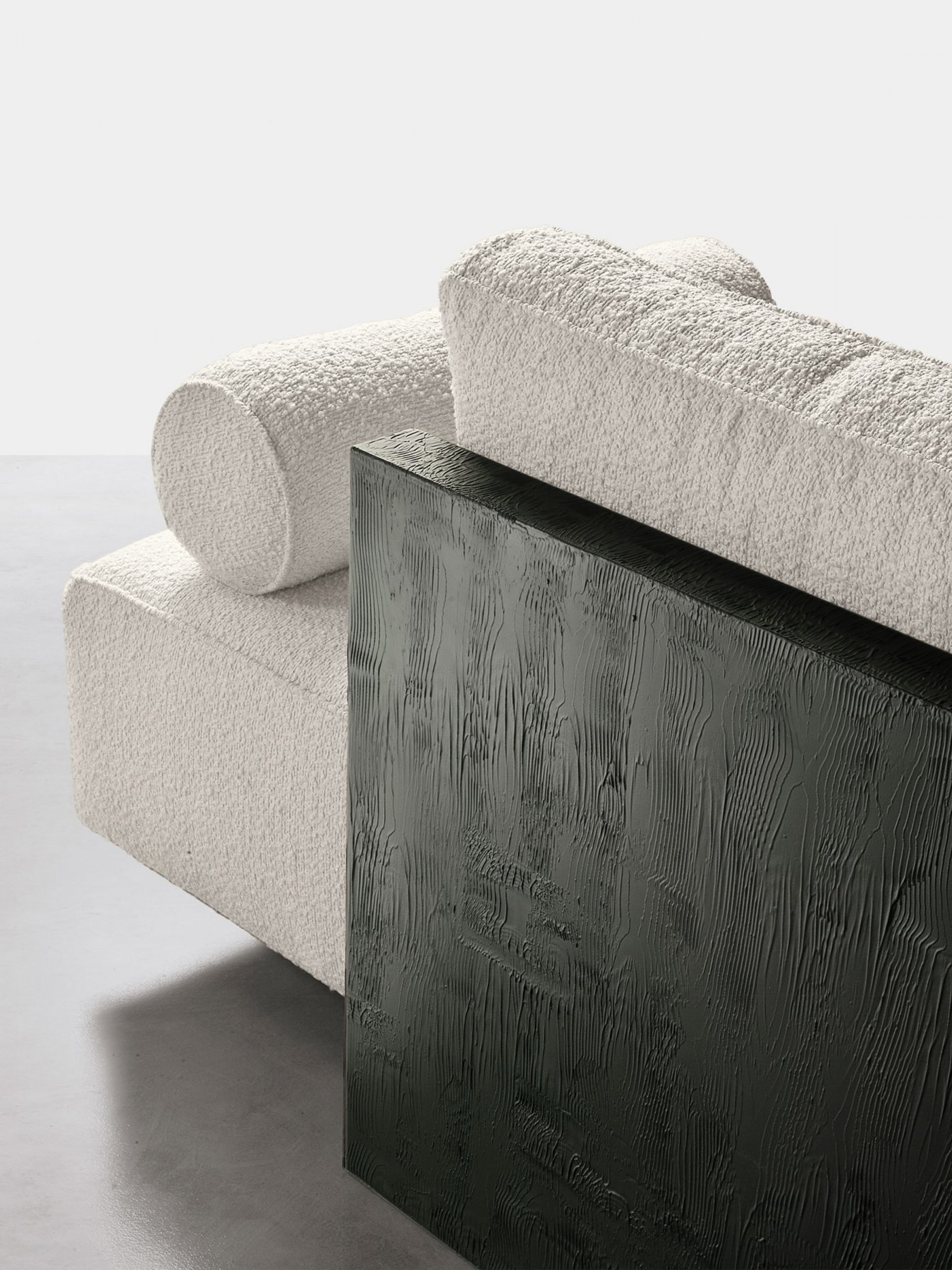

Zelig love seat.
The design is inspired by a historic club in Milan. Dainelli Studio, based in the Lombard city, has decided to refer to one of its iconic venues as well as to the Italian cabaret tradition and seeks a composition that invites imaginative ways of seating capable of facilitating conversation and exchange.
BRIANZA REVEALS ITSELF UP CLOSE
There is a certain immediacy to the collections. The pieces are not made complicated in order to prove how difficult they were to produce. Their strength lies in how clear they feel, while the seriousness of the making only becomes apparent once you get closer.
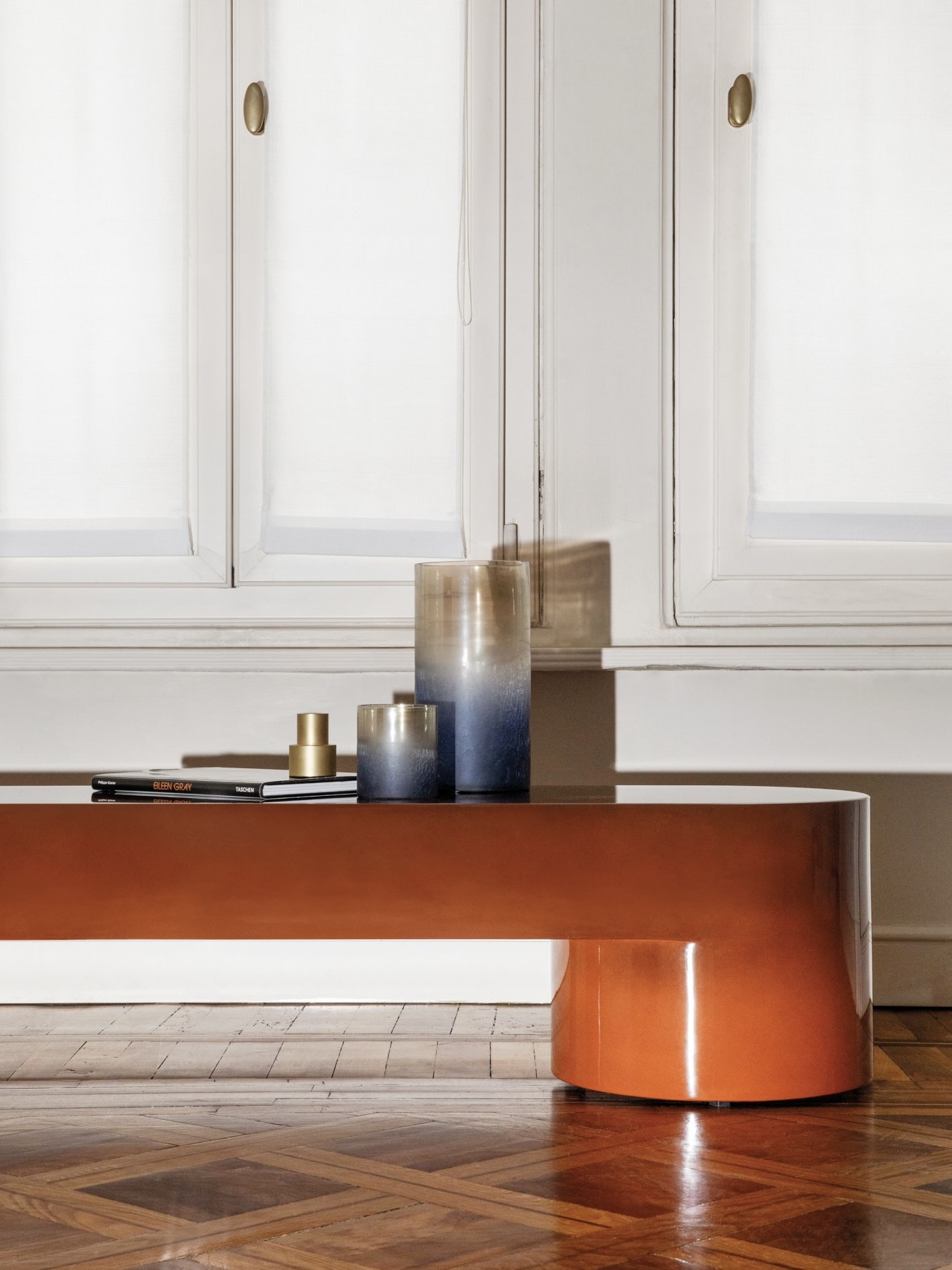
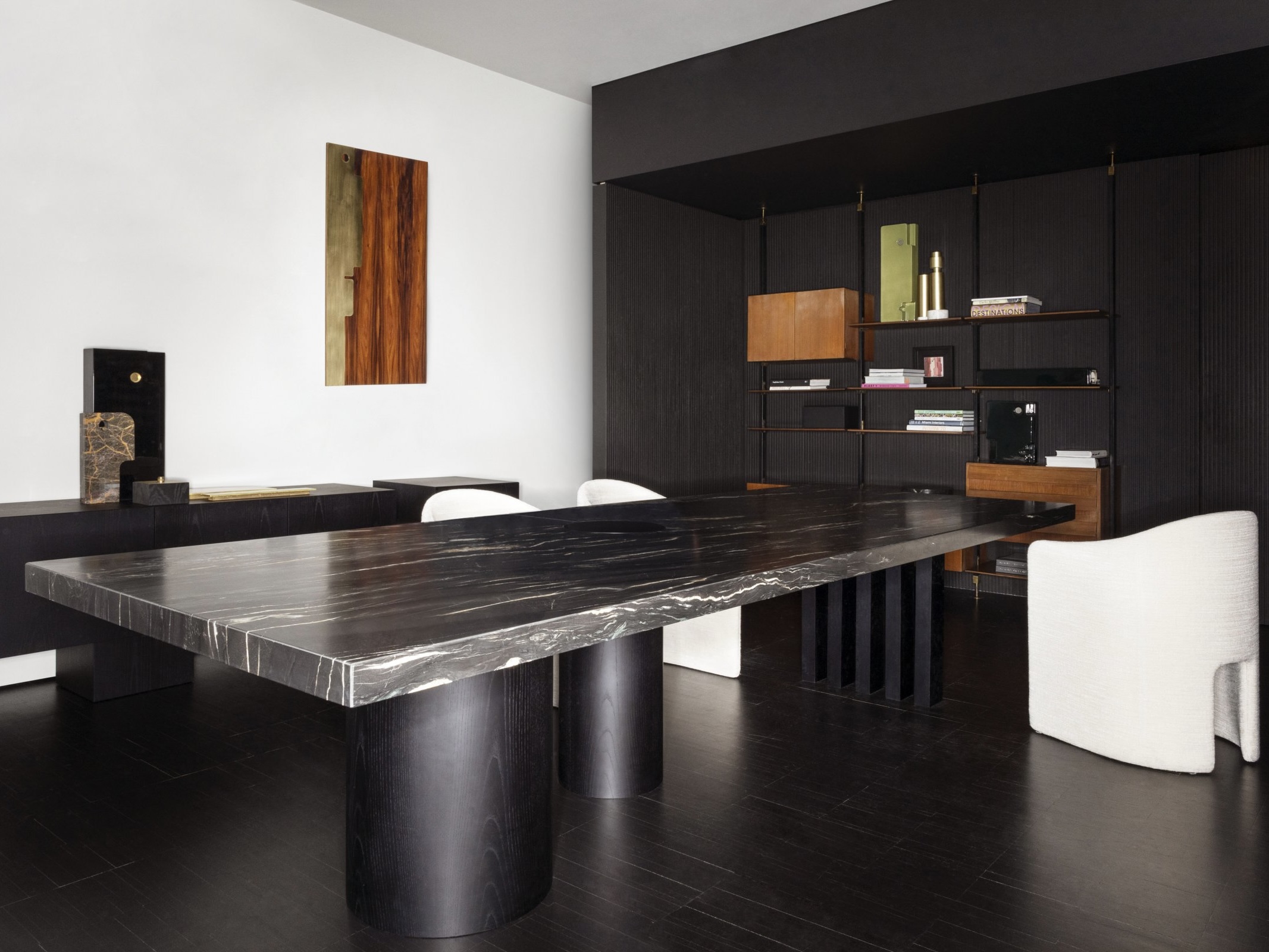
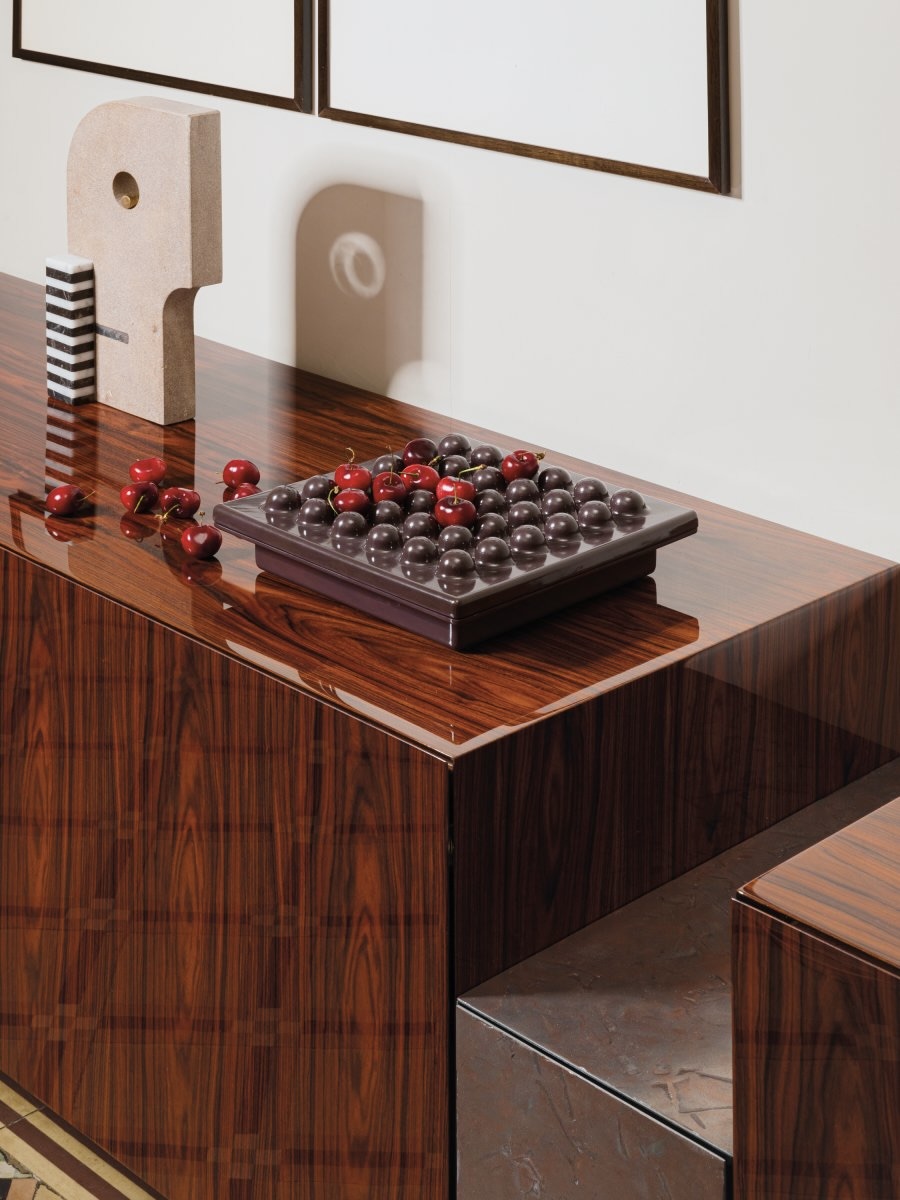
The Lazy O console is one of the clearest examples. A thin horizontal plane rests on large rounded volumes, and it is precisely that disproportion that gives the piece its character. Hunt revisits the three-legged chair, a familiar historical typology, and brings it into a contemporary context through a softer silhouette and carefully chosen finishes. Roma approaches the bookcase almost architecturally, built around a strong vertical element from which shelves extend in different directions, allowing function to take on the presence of an object.
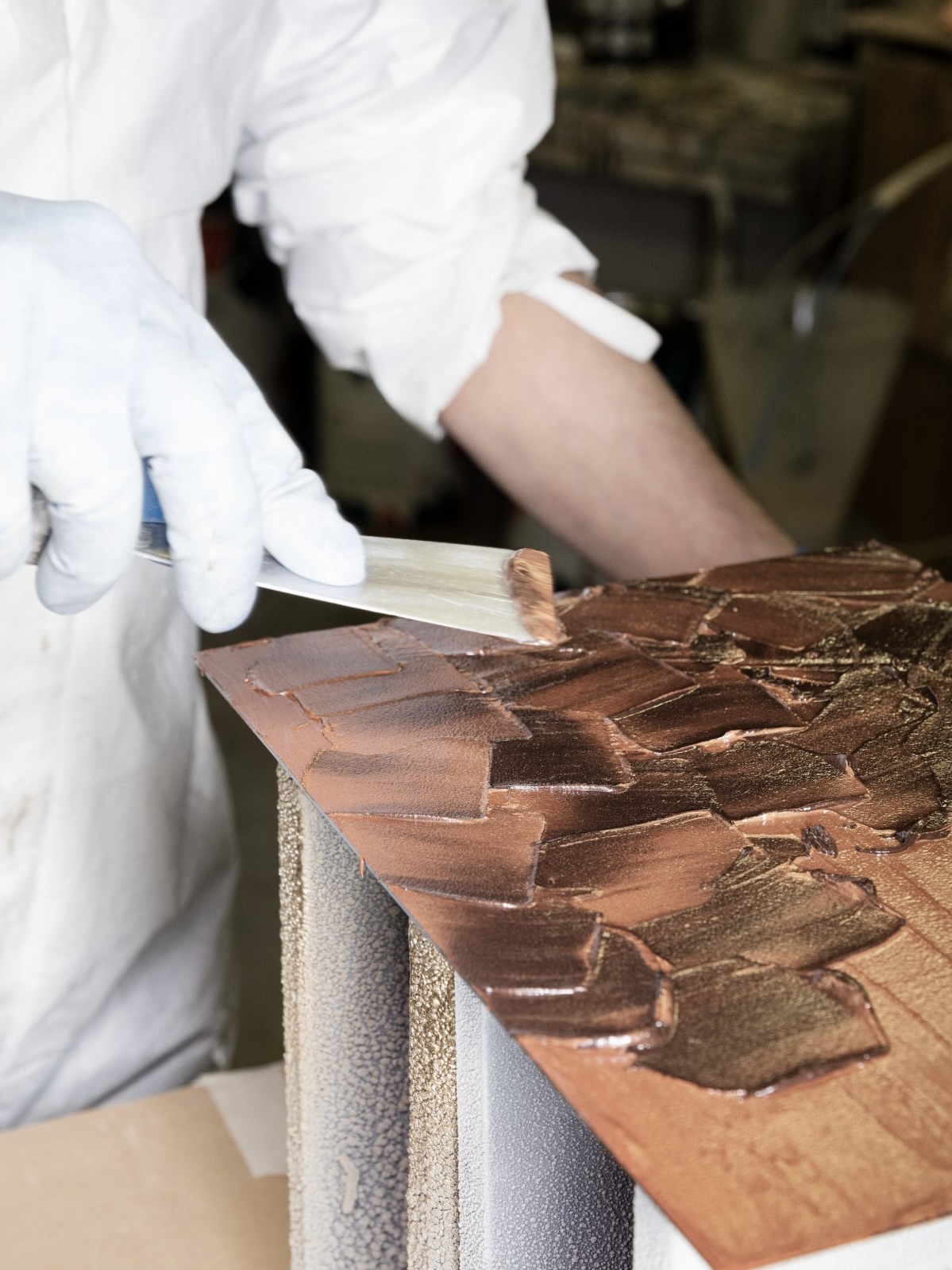
Behind those apparently simple gestures is a great deal of work that does not announce itself immediately. Woodworking, inlay, lacquer, upholstery, metal, glass, leather and textiles are not layers added afterwards, but part of the form itself. This is where Brianza becomes most legible. Not as an aesthetic code to recognise, but as the ability to execute an idea precisely without losing its character along the way.
A photograph can show the silhouette. In person, you understand how well it has actually been made.
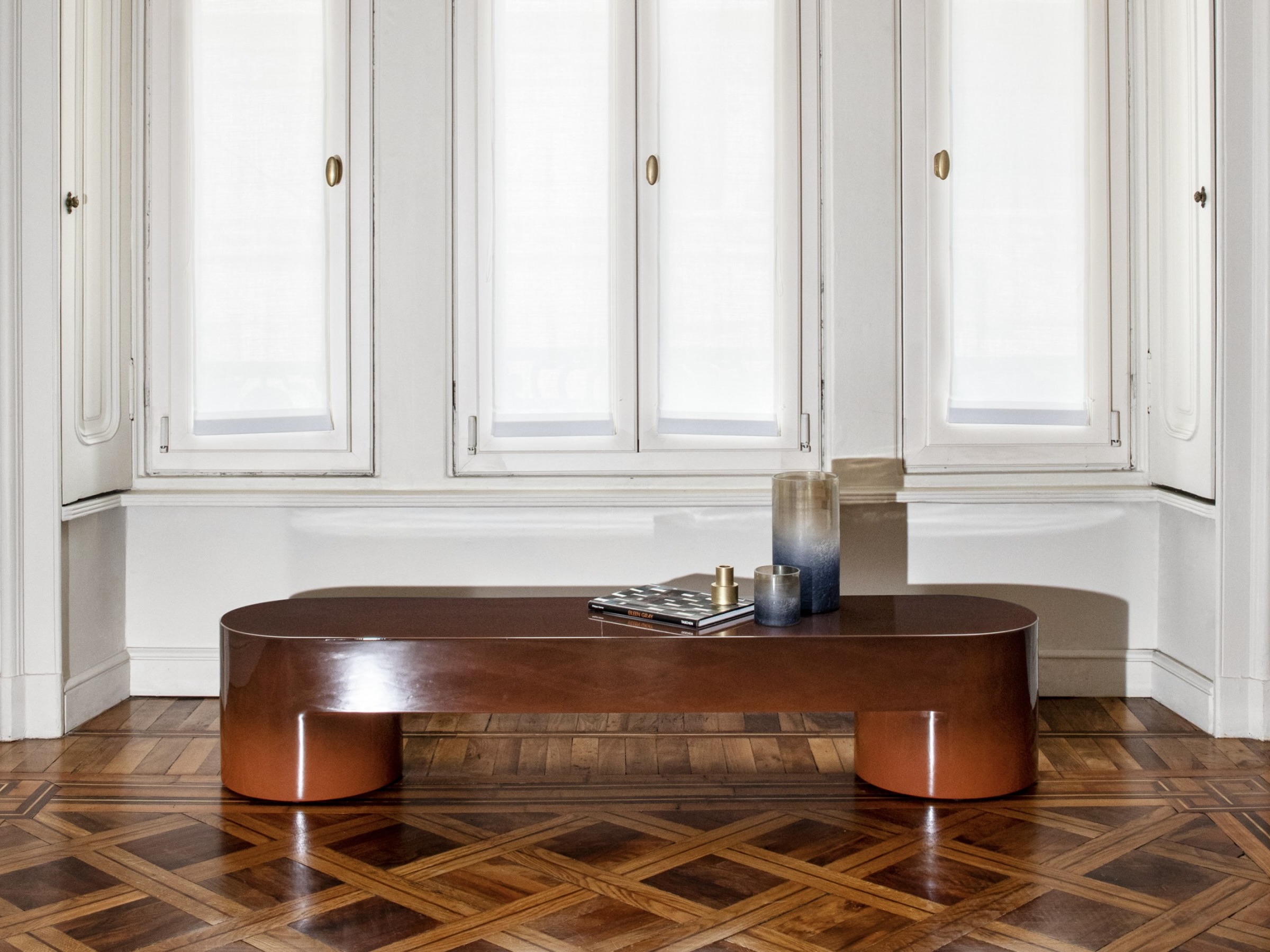
Lazy O bench, boccaccio

Roma bookshelf
FURNITURE HAS TO SURVIVE A REAL INTERIOR
The collection is visually strong enough to work beautifully in a campaign, but the real test begins once the furniture leaves the studio image.
The Saturnia table takes its cue from the organic shapes of Tuscany’s thermal pools and translates them through travertine and metal. The Amazonia side tables build their identity through surface and texture, while Lazy O and Roma use volume in completely different ways. In one, mass becomes an almost sculptural gesture; in the other, structure begins to organise the space around it.
These pieces do not require the entire room to speak the same language. They can sit alongside art, older furniture, restrained architecture or things with no connection to the collection whatsoever. That is much closer to the way good interiors actually come together.
Rarely does everything arrive at once. There is already a table that stays, a painting that changes the balance of a wall, a chair nobody wants to throw away, or something brought back from a trip that may have no market value but every reason to remain. A new addition has to enter that conversation without taking control of the entire room.
This is where the collection becomes particularly convincing. An armchair can introduce a different proportion, a table can shift the centre of the room, and a bookcase can establish a new vertical where the wall had previously been little more than background.
The question is not how much you bring into an interior, but how precisely you choose.
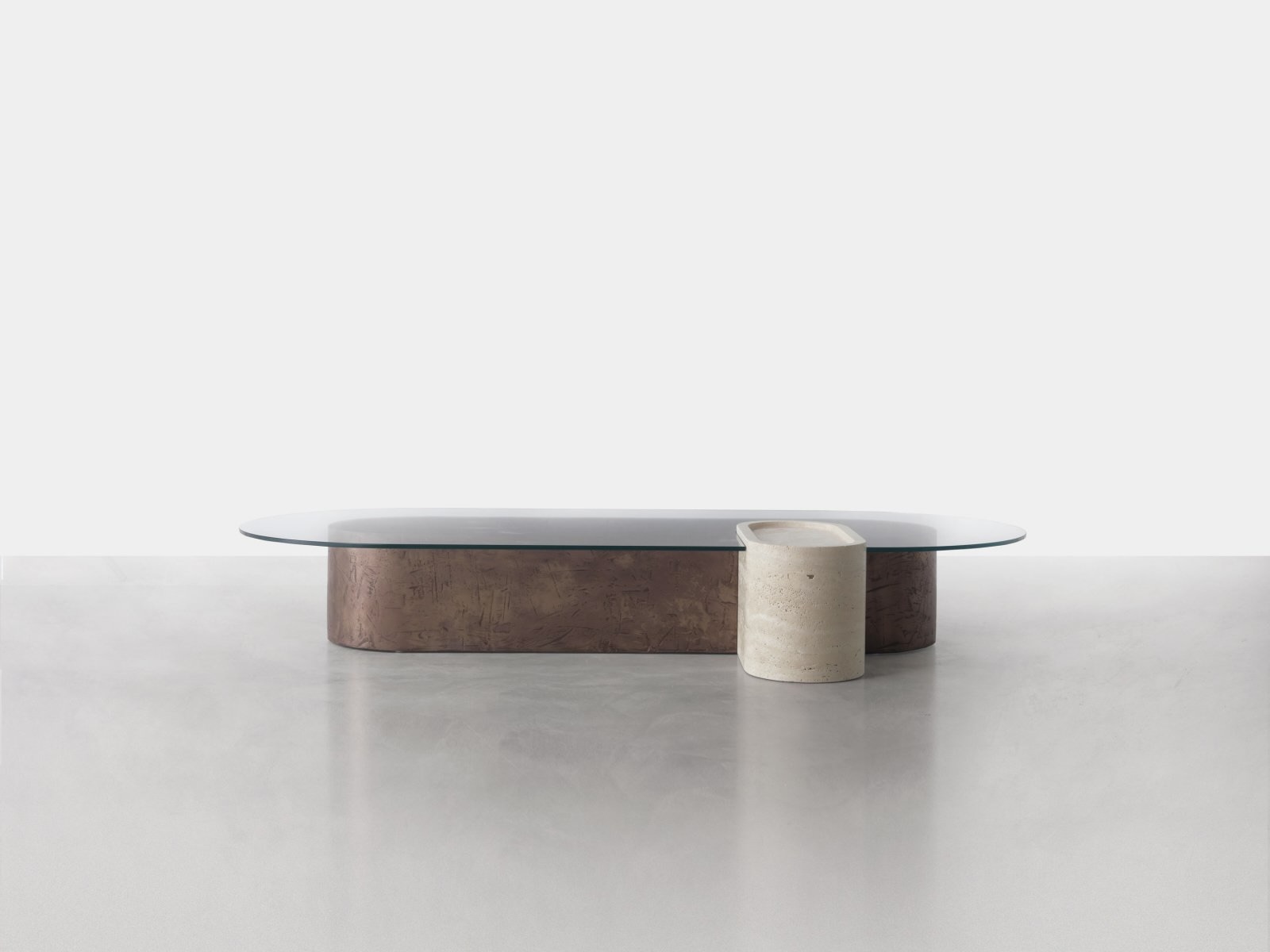
Saturnia coffee table
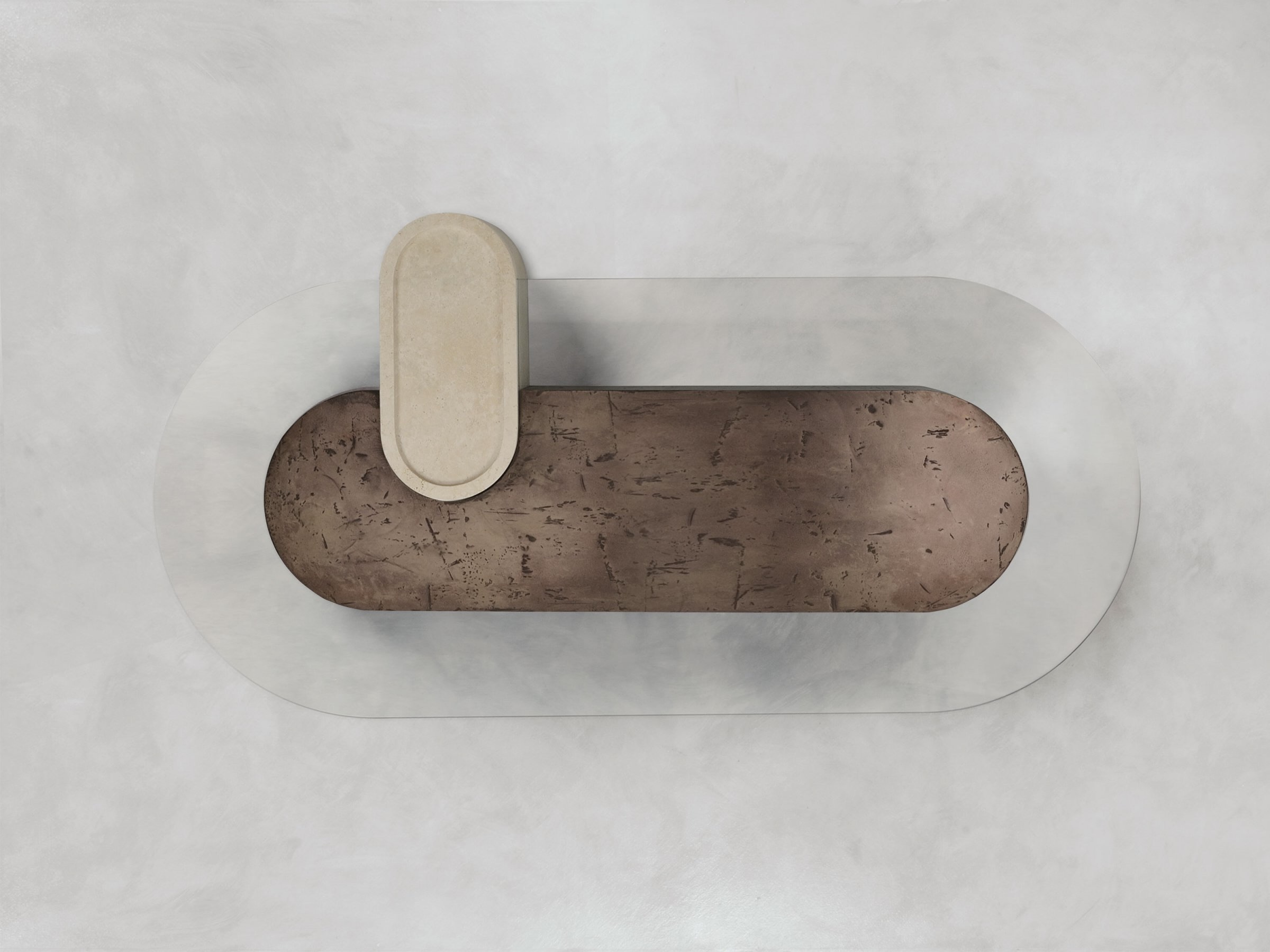
Saturnia coffee table
BESPOKE STARTS BEFORE THE ORDER IS PLACED
With furniture like this, choosing the model is only the beginning.
A different timber, upholstery, lacquer or metal can pull the same form in a completely different direction. Scale changes its relationship with the room, the finish changes the way the surface responds to light, and the choice of material alters its visual weight. Customisation, then, is not an extra option added after the purchase. It is part of the project itself.
This is where the relationship with NOT A STUDIO. begins.
Discover presents selected models and collections, while individual interiors extend the process through dimensions, upholstery, finishes and other details considered in relation to the space. A direct relationship with the brand means the decision does not end with what is shown in the catalogue, but can develop around the interior it is meant to live in.
That is why this relationship matters to us.
Not because the world needs another beautiful piece of Italian furniture, but because there is enough knowledge behind this one to ask more of it.

Rubik bookcase black ash
Ozark rectangular table

Labium side table
BRAND PORTFOLIO
KAMONN, SHOULD ART RUIN THE ROOM?
A good interior can be dangerously efficient. The proportions work, the light falls exactly where it should, the materials have been carefully chosen, the furniture is precisely where it belongs. Then the art arrives, often last, when the room is practically finished.
A work that felt difficult, strange or disruptive in the studio can become remarkably well behaved within minutes. The right wall, precise lighting, enough breathing room above a very expensive sofa, and even resistance can start to look as though it had been planned all along.
We know the ritual well. I work alongside someone who designs interiors, and together we run a platform that writes about art while also bringing it into spaces. We choose works, decide where they will live, watch them alter a room and, whether we mean to or not, alter them every time we place them somewhere new. Art acquires architecture around it, while architecture borrows some of its character.
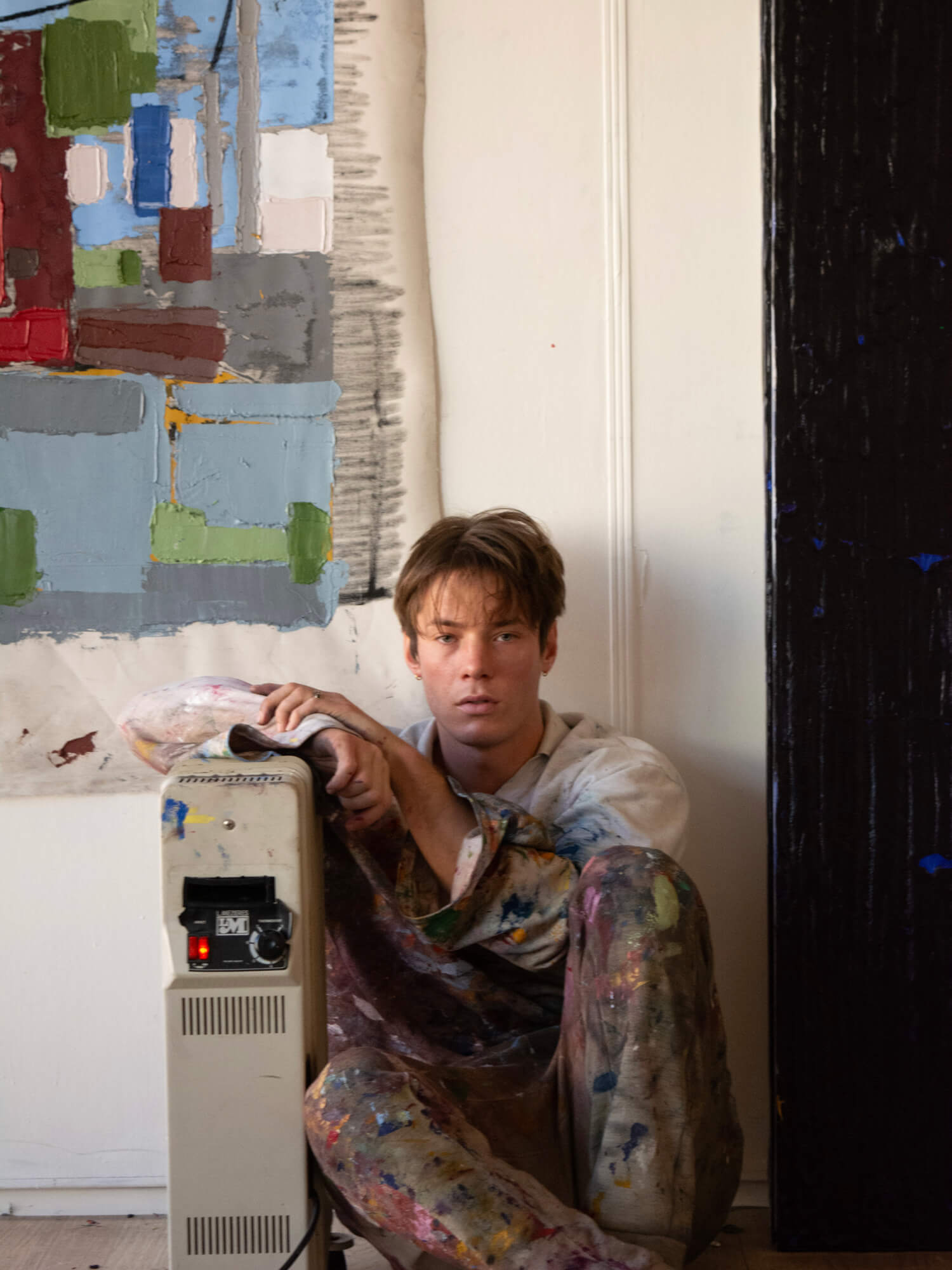
In recent years, Kamonn’s paintings have moved away from something darker and more enclosed towards landscapes with more air, while some of his works have begun to produce their own light. At that point, a painting is no longer simply an object brought into an already finished room. It changes the light, the wall and the space around it.
I was less interested in how Kamonn became an artist than in what happens when his work leaves the studio and finds itself among architects, collectors, galleries, auction houses and very expensive sofas.
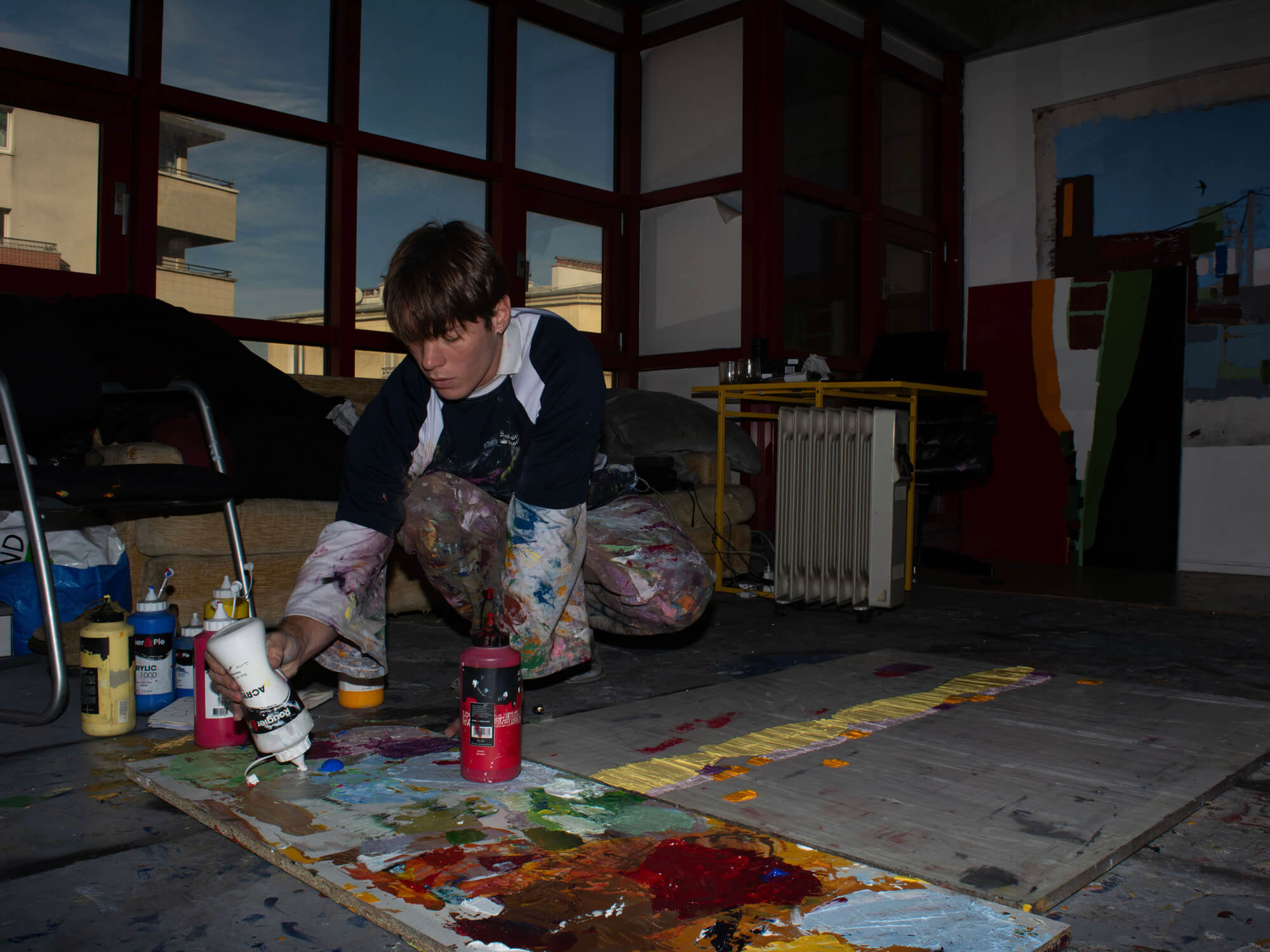
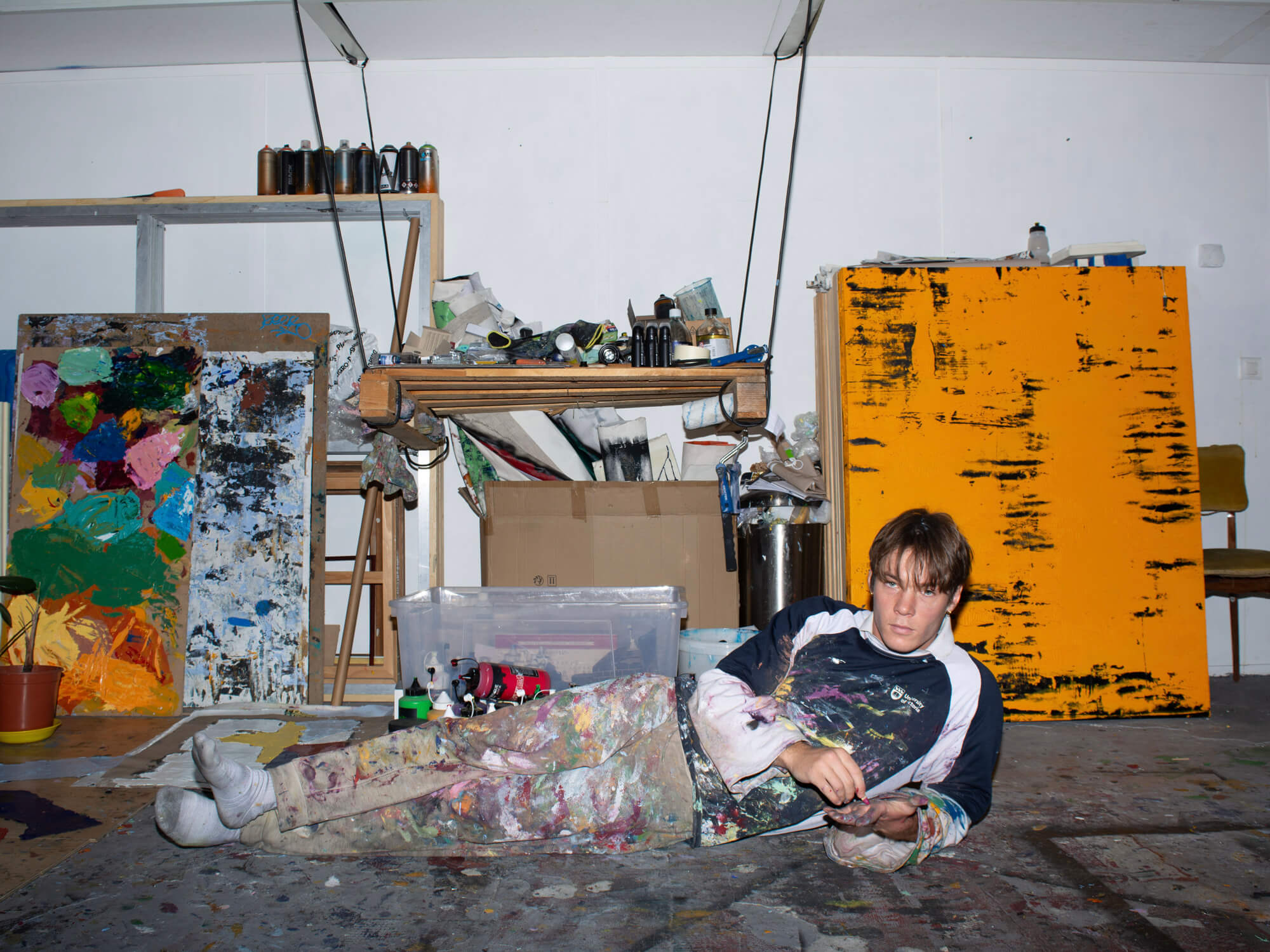
FREEDOM LOOKED BETTER FROM THE OTHER SIDE
For years, painting existed alongside another professional life. Then the company he worked for offered him the CEO position, the sort of promotion usually delivered as proof that all the sensible decisions have finally paid off. He saw something rather different.
“I simply saw it as a choice between confinement and freedom. I’ve always been drawn to freedom, so the choice made itself. I chose life.”
He neither rejects the label that still follows him, self-taught artist, nor treats it as an awkward footnote to his biography. Not arriving by the prescribed route had its advantages: experimentation and curiosity remained central because nobody handed him the correct sequence in which an artist was supposed to develop. He also understands the less romantic function of labels. A biography can grant credibility just as efficiently as it can withhold it.
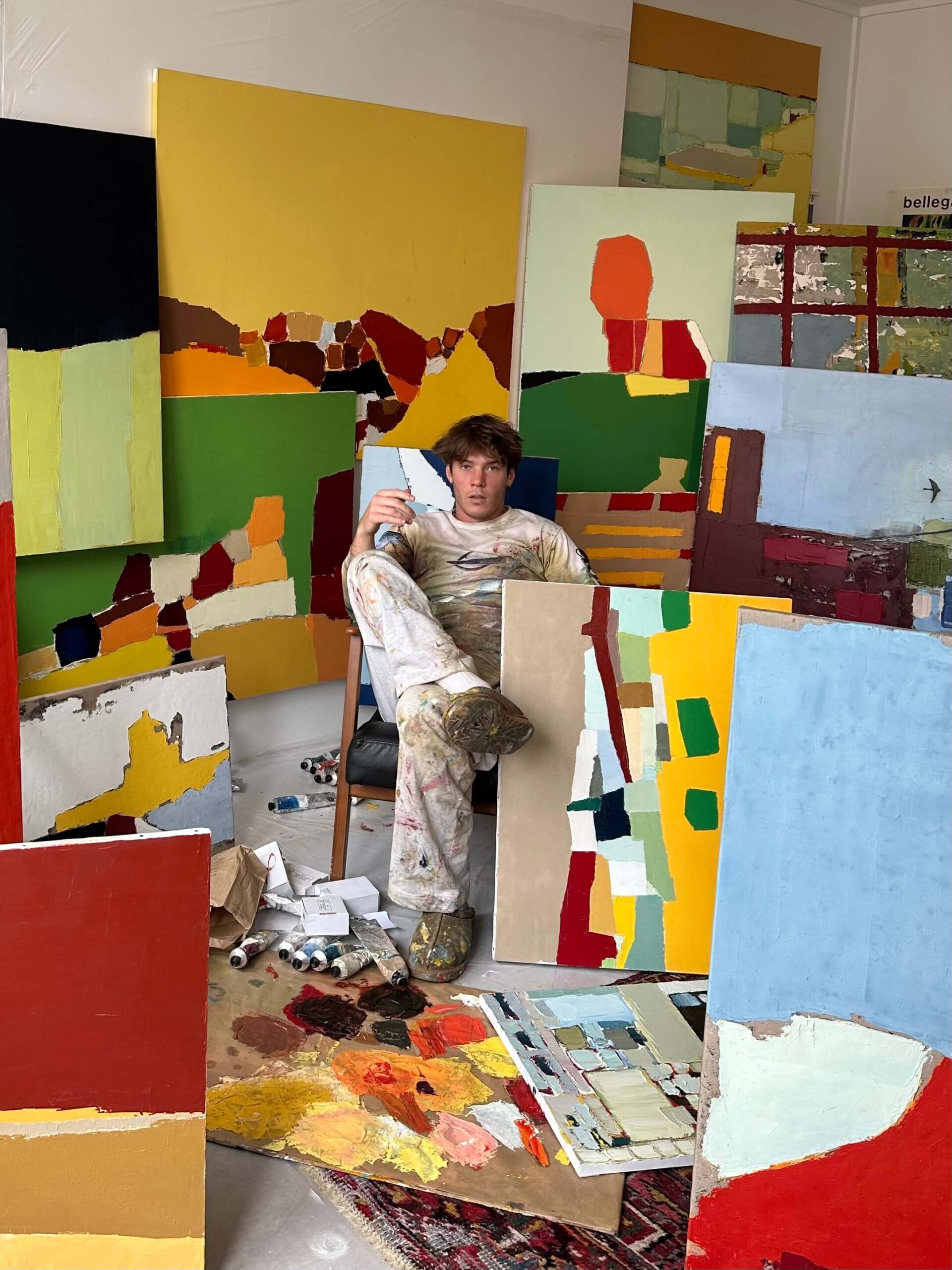
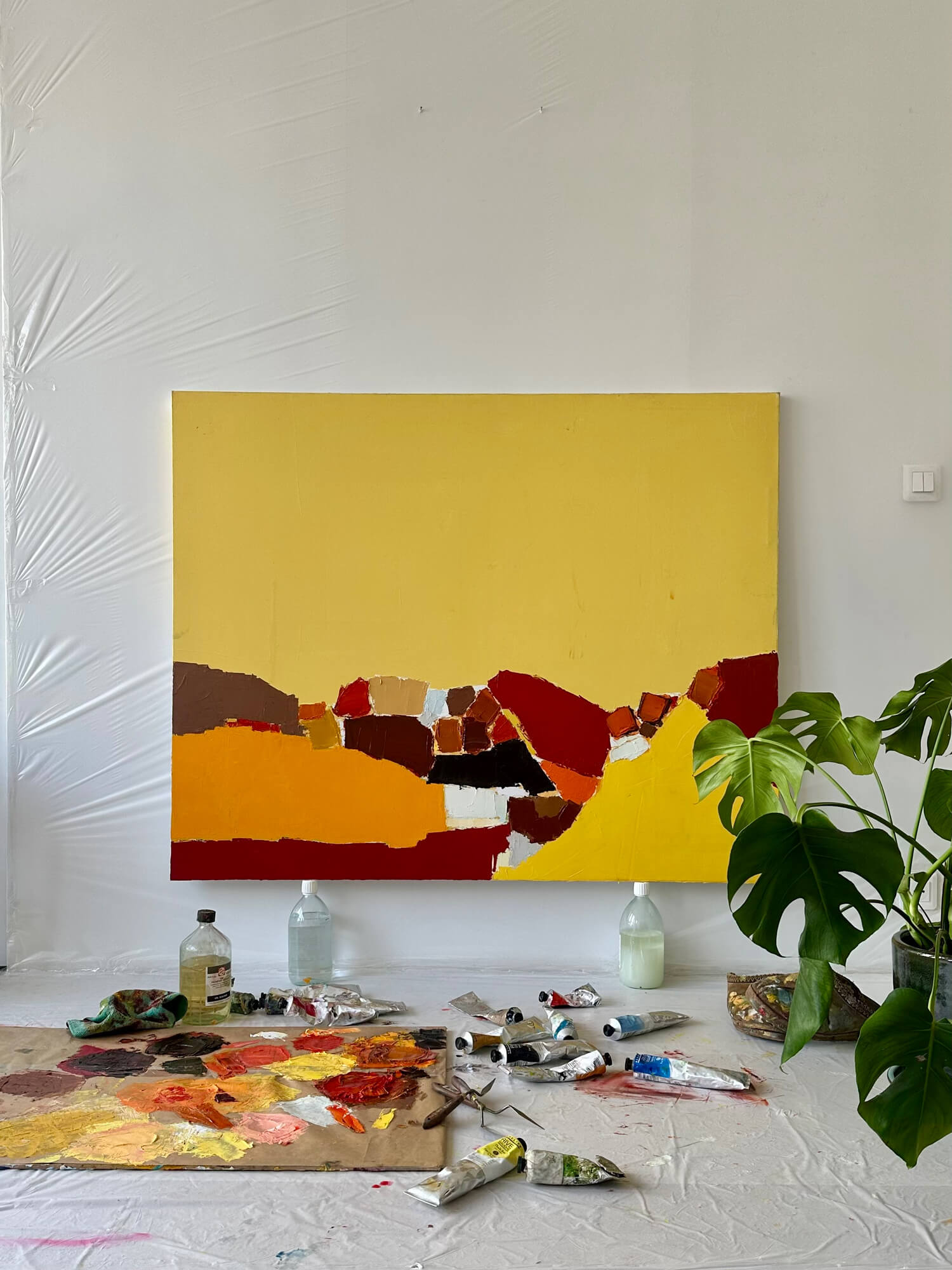
The paintings haven’t followed a particularly obedient route either. Earlier works felt darker and more enclosed, with an almost physical density. The newer landscapes breathe differently. The colour has shifted, the space has opened up and the work has grown quieter without becoming any tamer.
That shift carries particular weight in an art market reassured by a recognisable hand. If you want to make a living from art, the market is there. What Kamonn refuses is to let consistency harden into repetition. Desires change, people change, and he sees no reason the work should be denied the same freedom.
The way he describes the difference between then and now says more than any chronology could.
“My earlier paintings held me. Today’s walk beside me. Perhaps they’ve forgotten how to take the hit.”
MEMORY HAS TERRIBLE MANNERS
Landscape is a fairly unreliable witness in Kamonn’s work.
He doesn’t need to stand in front of a place to paint it. Distance is part of the process. He sees a landscape, leaves it behind and gives memory enough time to erode it before it returns to the canvas. By then the facts have begun to disappear, replaced by something far harder to verify.
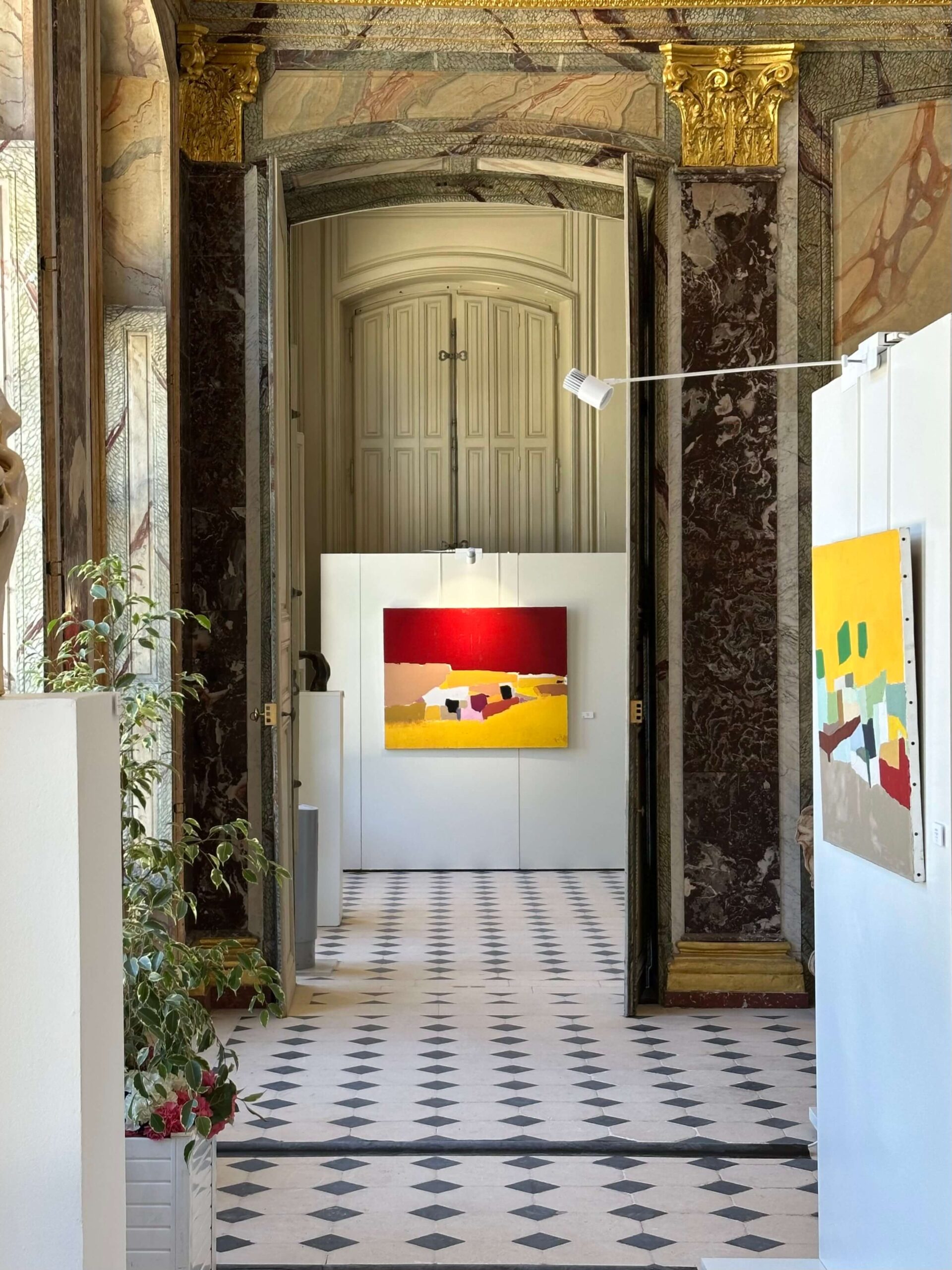
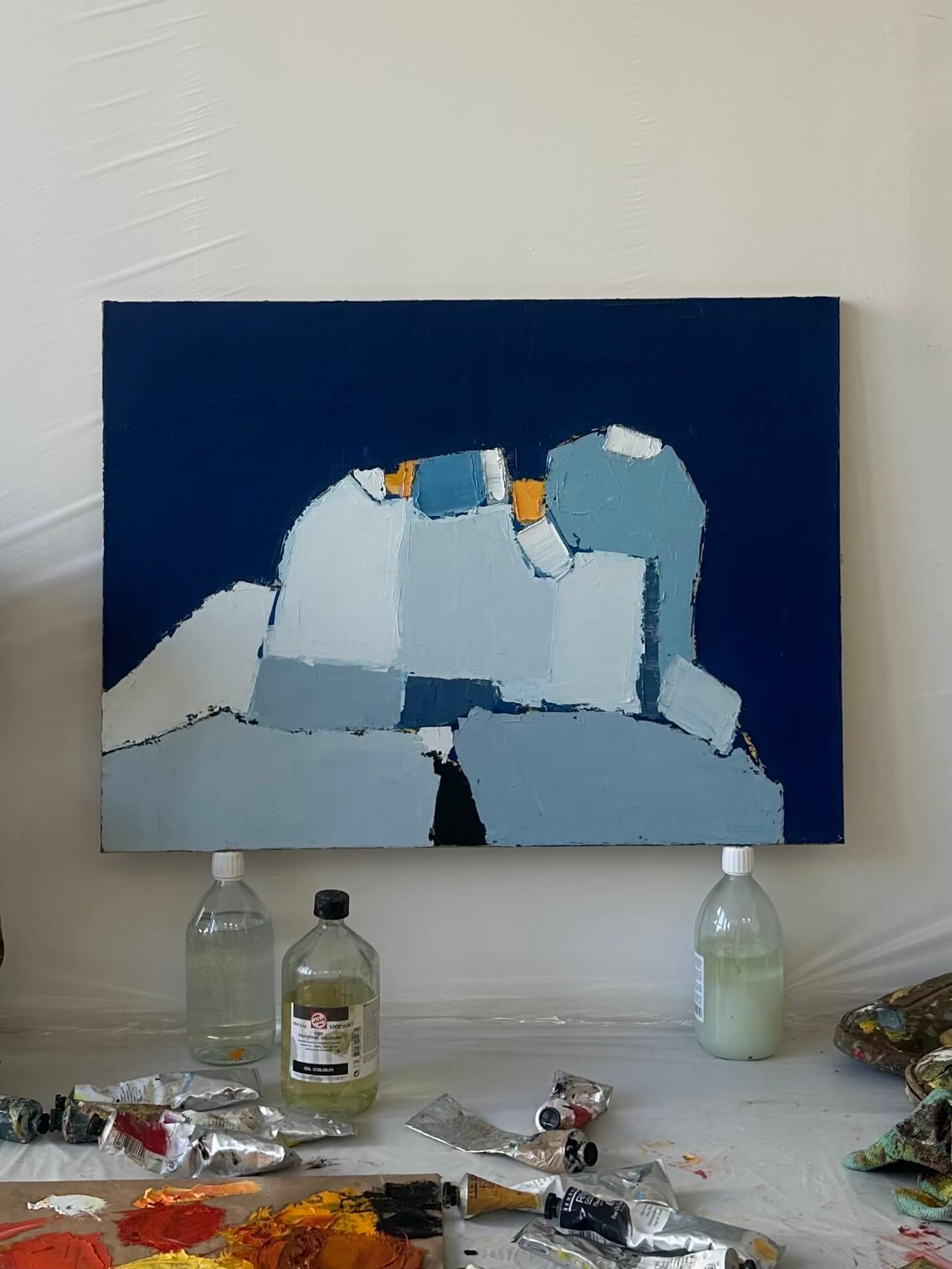
That tension runs through Sédiments — paysages. None of the thirty paintings shown at Château d’Asnières was made in front of its subject. Brazil’s north-eastern coast, the ochres of the Luberon, winter in Vienna and the plateaux of Aubrac appear only after time and distance have already done their work. Geography is the starting point, not the finished image.
Look at the paintings and their physicality keeps interrupting the landscape. Kamonn works in oil with a palette knife, building layers until masses of colour begin to hold the image together. Ochres carry the weight of earth and heat, blues grow dense enough to feel almost material, while muted greens register less as descriptions of vegetation than as traces of having once stood somewhere and looked. In places the paint lies flat, elsewhere it rises from the surface, catching the light and preserving the movement of the knife. The surface never quite disappears behind what it depicts.
Accuracy isn’t particularly useful to him here. He is more interested in what survives after a place has passed through time, distance and memory. When I offered him landscape, memory and a convincing lie as three possible descriptions, he called what he paints his truest truth.
“I don’t try to remember anything. I simply paint what remains.”
“Memory never keeps the truth. Sometimes the detail. Often the colour.”
The paintings can feel strangely familiar while refusing to reveal a precise location. Place is only part of it. There is also the moment in which it was experienced and the person who happened to be looking. Go back later and the person returning is no longer quite the person who left.
His working rule is considerably less mystical: trust the process blindly, then look closely at the result. Instinct gets its freedom. Judgement comes afterwards.
A VERY EXPENSIVE SOFA IS STILL A SOFA
We source art, commission it, decide where it should hang, light it and eventually photograph the room from precisely the angle that proves everything belongs together.
Do architects actually understand art, or do we sometimes ask it to patch what the room itself failed to resolve?
Kamonn has little interest in judging them. Everyone understands art through their own senses, emotions, logic and impressions, and he has no intention of telling architecture what it should do. Art changes architecture, and architecture changes the way art is perceived. A collector can match a painting to a sofa. An architect can use one to sharpen a room. Once a work leaves the studio, the artist is no longer the only person deciding how it will be seen.
His line is simpler.
“When people stop looking at it. The work itself hasn’t changed.”
An important work can disappear in a perfectly resolved room if nobody really sees it anymore. Just as easily, a painting can take over an entire room simply because the eye keeps returning to it. Decoration begins when attention stops.
Architecture and art can converge, diverge, clash or coexist quietly. Harmony is not necessarily surrender, and friction isn’t automatically more intelligent. When I suggest that a brilliant interior might make mediocre art look important, he reverses the proposition:
“I’d rather say the opposite: a brilliant room can make an important work look mediocre.”
Given the choice between completing a beautiful room and ruining it, there isn’t much hesitation.
“Ruining it would be more fun.”
His illuminated works take things a step further. A conventional painting depends on the architecture around it, from the wall and its proportions to daylight and whatever artificial light someone decides to point at it. Once the work produces its own light, the painting begins to alter the conditions in which it is seen.
The idea of making something so bound to a particular piece of architecture that it could no longer simply be taken down and rehung elsewhere immediately appeals to him. A painting becoming a room doesn’t sound absurd.
“Absolutely.”
THE ROOM CAN LIE TOO
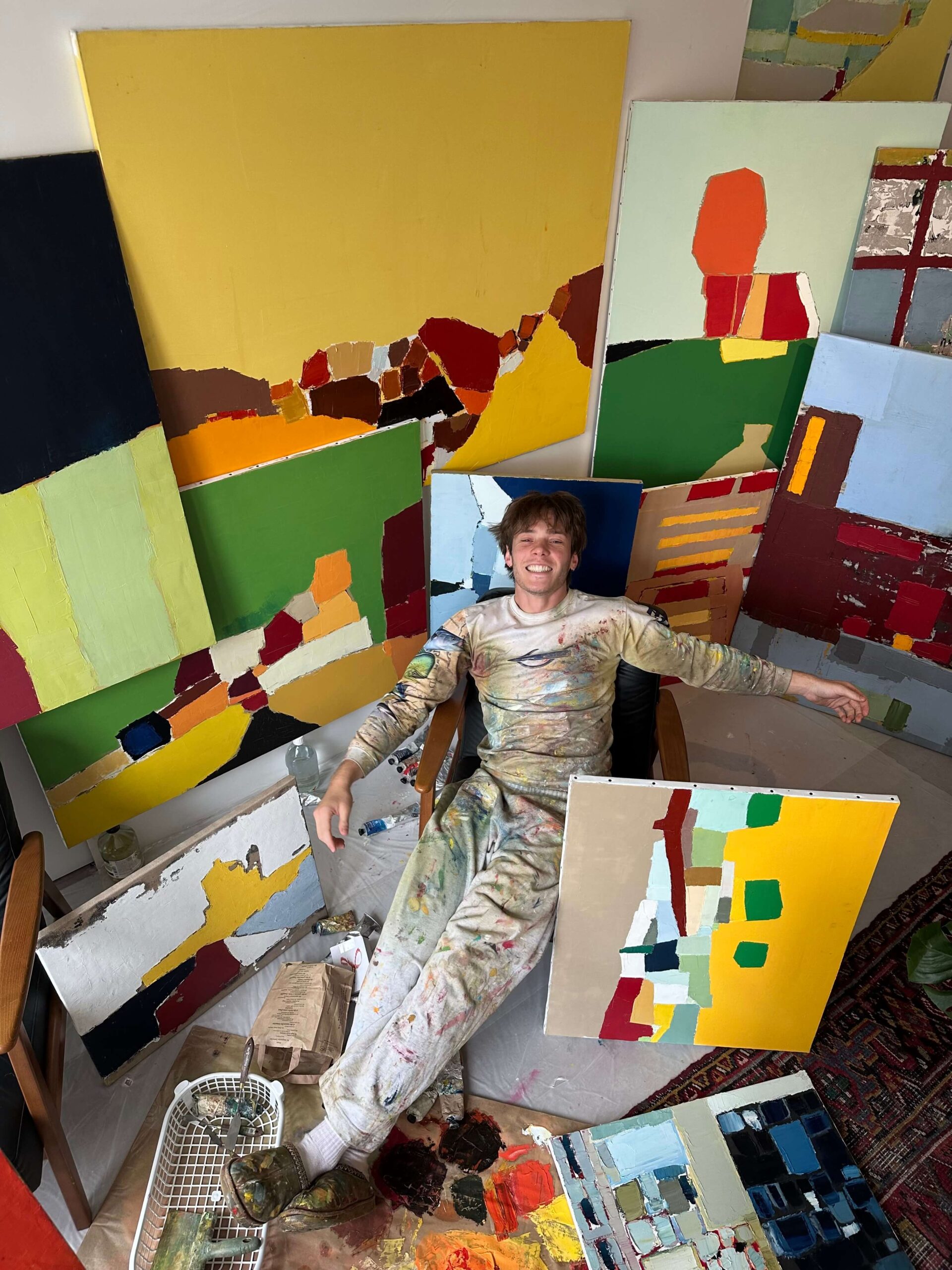
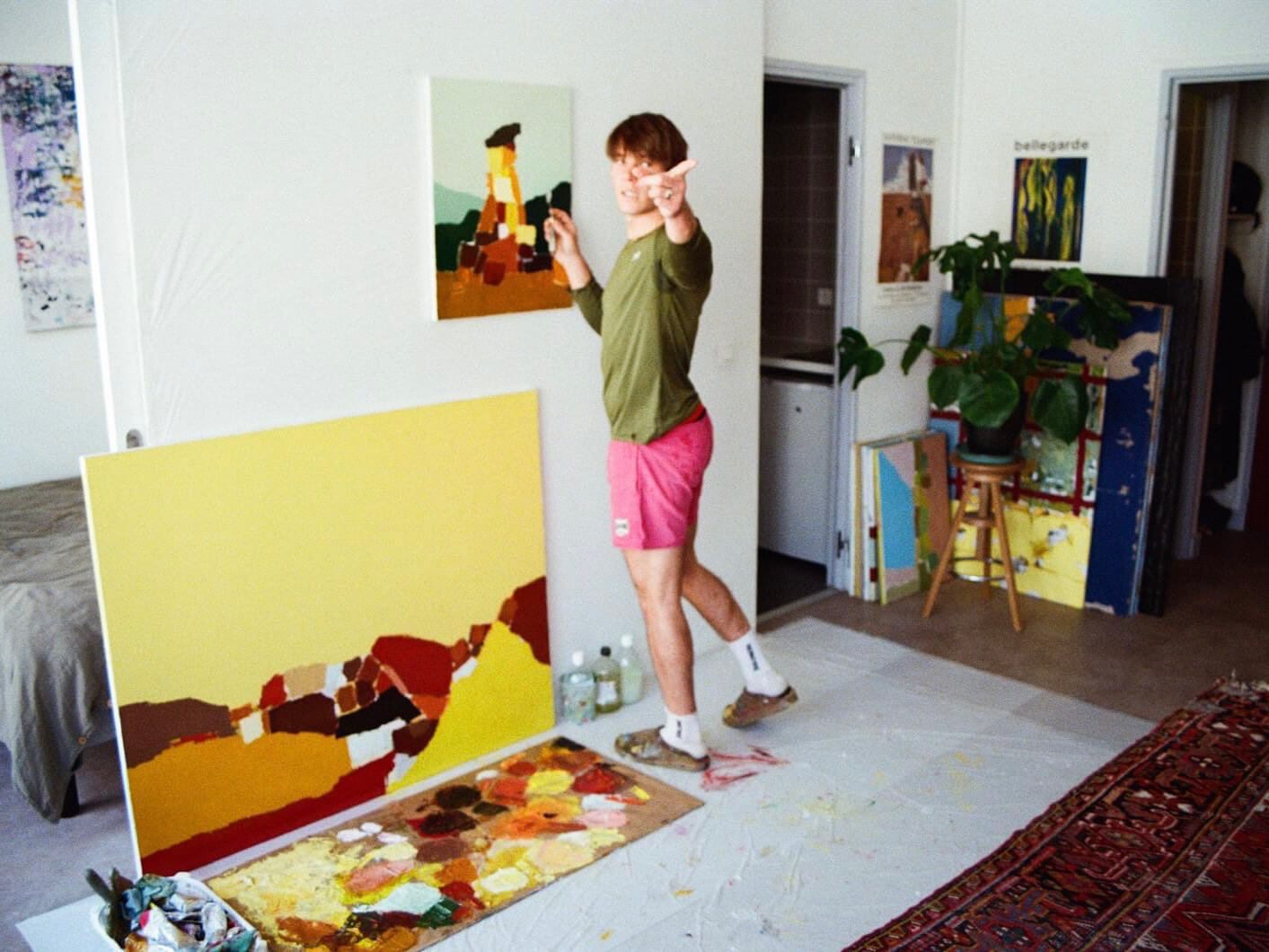
His paintings have travelled from studio floors to galleries, private interiors and the historic rooms of Château d’Asnières. The architecture changes. The work doesn’t. What changes is the way we look at it.
Architecture can tell us something is important before we have had time to decide whether we agree. A gallery can confer seriousness, a home intimacy, a château history and an auction room something more dangerous: a number. When I ask which space lies most convincingly about the value of art, he chooses the auction room. Obviously.
Given any building in the world for a single night, he would take the Louvre, although his reason has very little to do with curatorial prestige.
“Just so I could steal the crown.”
He takes the work seriously without needing to take himself seriously all the time. The same applies when money enters the conversation.
Ambition doesn’t embarrass him. He has always been ambitious and has never made much effort to hide it. He wants to remain curious, creative and free, and when asked to choose between instant recognisability and remaining difficult to categorise, he takes the latter. Freedom is the one thing he refuses to negotiate.
The art world has its own ways of manufacturing certainty, and price is one of them. He has no illusions that some people wouldn’t suddenly consider his paintings better art if they became dramatically more expensive tomorrow.
Would that bother him?
“No. Good for me.”
Damien Hirst is the famous artist he admits he doesn’t understand, while a lack of curiosity is what makes an artist boring to him. Beige currently has no chance either, which feels appropriate after spending so much of our conversation discussing interiors.
And how much bullshit can a genuinely good painting survive?
“At least one. That’s the bare minimum.”
Before we finished, I brought him back to the room that had been hovering around our conversation from the beginning, this time stripped of every excuse for art: perfect proportions, perfect light, perfect materials, an interior so completely resolved that the architect could leave without looking back.
Did a room like that need art at all?
He said no.
“But it could use a little humanity, error, chance. Maybe that’s what art is: what appears where it wasn’t needed.”
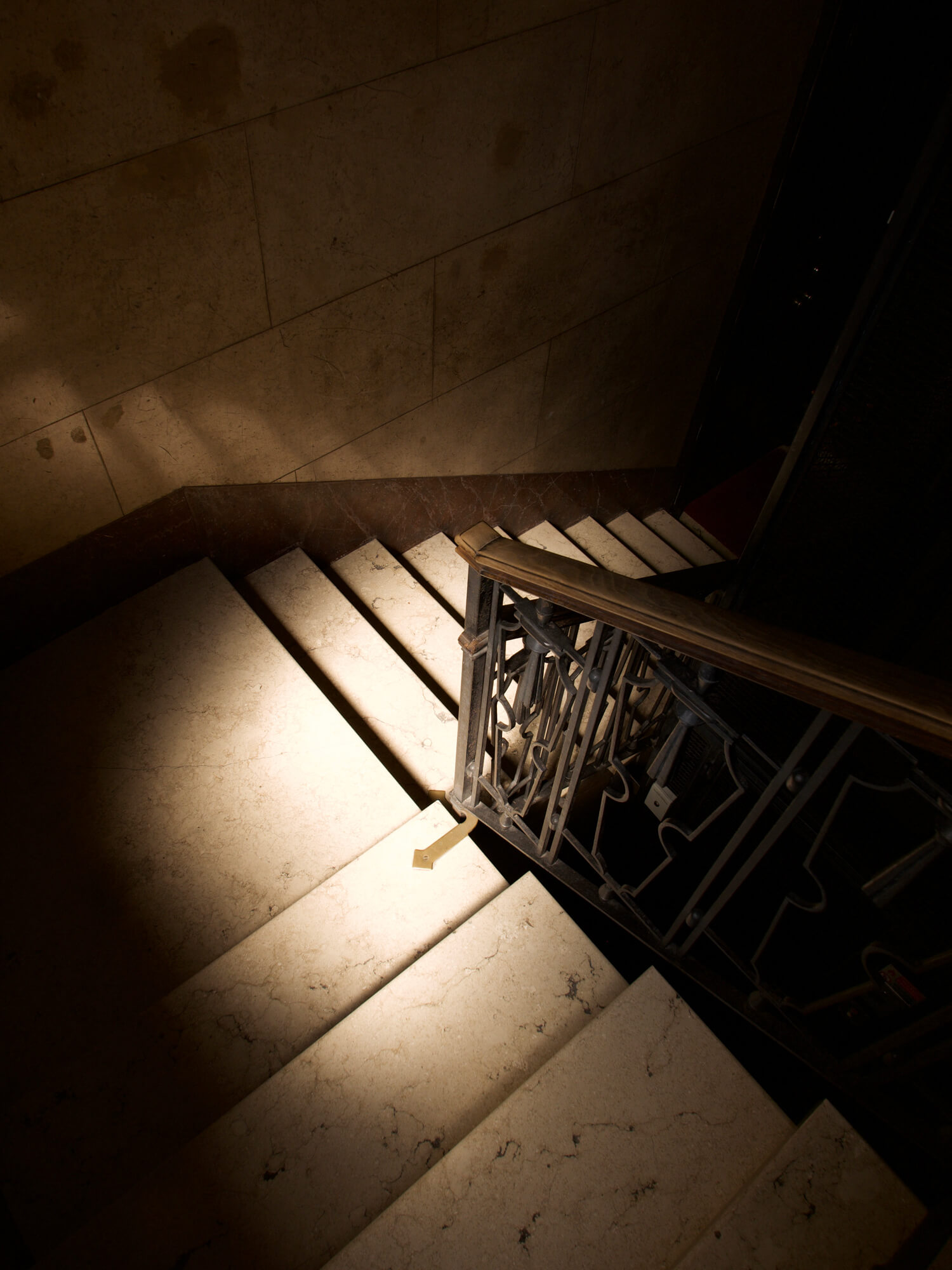
GATE 58: WE OPEN THE DOORS, YOU SET THE CIRCLE IN MOTION
There hasn’t been much order on our table lately. A catalogue from an Italian factory lies across an open book, a timber sample next to a laptop; somewhere there is a key from a project, a camera, notes from a conversation, the business card of someone we met while travelling, and an object we objectively did not need but brought home because it said something about the place it came from. That is, more or less, what our way of working has come to look like too.
For years, we kept trying to answer two simple questions: what are we, and what do we do? Studio, interior design, photography, media, creative direction, commerce, content. Each word described one part of the picture. None of them described the whole thing.
This year, we received media accreditation for Salone del Mobile.Milano. We applied with a website and Instagram account that still presented us primarily as an interior design and architecture studio. When the accreditation came through, it simply confirmed something that had already been taking shape for some time.
In Milan, the idea of not a studio. finally came into focus. That was where we realised it was time to give it form.
THE STUDIO BROUGHT US HERE
DANILO: We used to spend a lot of time trying to explain what we were and what exactly we did. I think this is the first time we have an answer that does not need to fit inside a single profession.
STEFAN: I love interior design and everything it has brought into my life over the years. Through it came manufacturers, materials, photography, real estate, architects, investors, travel, markets, people. After all of that, it makes no sense for those things to keep living separately. The moment came to bring the knowledge, experience and network together and take them somewhere bigger.
DANILO: So you’re saying “studio” has become too small a word?
STEFAN: More or less. The studio is what brought me here, but it no longer contains everything I want to do next.
That is where NOT begins for us.
We very quickly realised that what we were building was not something only we needed.
The creative industries are full of brilliant architects, designers, photographers, artists, writers, manufacturers, dealers and smaller brands who know exactly what they are doing, but often lack an environment that understands how their work should be presented, who it should reach, and how a strong idea finds the right people.
Traditional marketing agencies may understand marketing, but they do not always understand the way this industry works. These are not products moving down a conveyor belt. A space, an object, an image or a piece of furniture enters someone’s home, daily life, taste, intimacy and, eventually, the things they are willing to spend money on.
DANILO: That is why the editorial side matters so much to me. Not just advertising something, but building a story that understands the object, person or brand before trying to present it.
STEFAN: And then the platform becomes a shortcut between those who should perhaps already know one another, but have not met yet. Brands, architects, writers, manufacturers, investors, photographers, artists.
DANILO: Across the region and beyond it.
STEFAN: Exactly. A circle that can extend far beyond one project or one country.
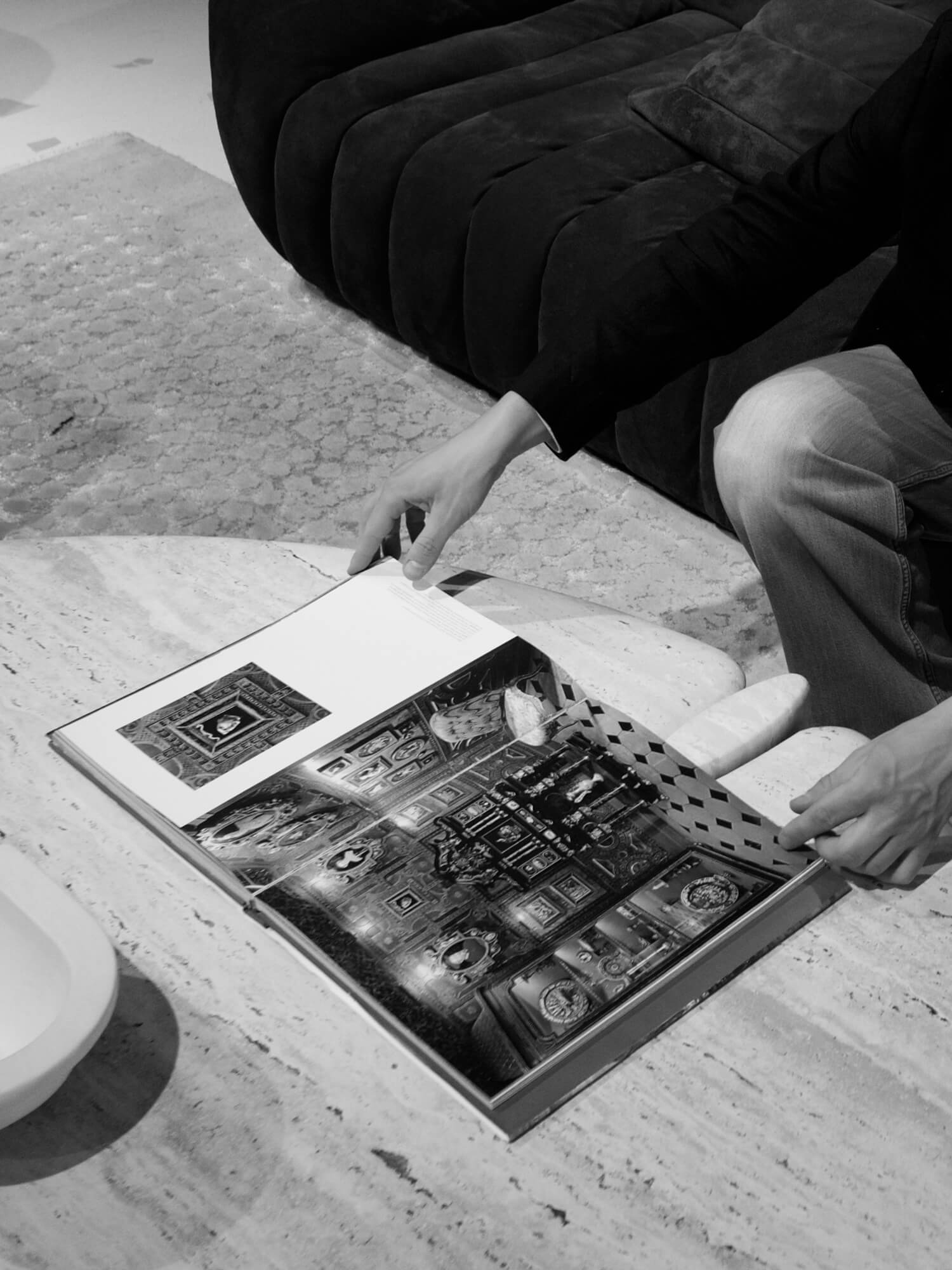
CREATIVE WORK NEEDS A DIFFERENT MODEL
DANILO: We both learned a lot about authorship the hard way. There is still this idea in creative professions that you should already be grateful simply because someone gave you space.
STEFAN: Often, the question is not what someone’s work is worth, but what it costs. Everyone else in the chain usually knows the price of their part.
Visibility, prestige, access and presence can be genuinely valuable. We have both consciously accepted those exchanges many times. The problem begins when they become an assumption.
DANILO: If I choose to write something without a fee because I believe in the subject or the person, that is my choice. The same applies to any creative work. What matters is that there is an agreement rather than an assumption.
STEFAN: That is exactly why I wanted us to build a place where those questions do not constantly hang in the air. Where the terms are clear and authorship is respected from the beginning.
But this platform was not built simply so that we could have more control over our own work. What matters far more is opening that space to others.
Not automatically to everyone, but not according to the logic of a closed club either. The criterion exists to give the platform meaning, not to keep the circle small.
not a studio. therefore brings together things that have often existed separately: editorial content, creative direction, products, brands, markets, people and the relationships between them.
DANILO: On paper, someone might say that sounds like five different companies.
STEFAN: Only if you look at every part in isolation. To me, it is one ecosystem. You can approach it from different sides, but the pieces only make full sense once they connect.
A manufacturer may need an architect. An architect may need a product that has not yet reached this market. An artist may need someone who can place their work in the right space. A brand may need a story that does not sound like an ad. An investor may need someone who understands both the space and the people it is intended for.
NOT exists between those points.
ATTENTION IS A TOOL, NOT A METRIC
For years, Stefan’s photographs, opinions and posts have often travelled much further than the projects themselves. Some reached tens or hundreds of thousands of people and led to connections a conventional portfolio would struggle to create.
That experience matters to us, but it also taught us something else: views on their own guarantee almost nothing.
STEFAN: Virality can be useful, but it is not a measure of success. I care much more about who saw something, who saved it, shared it, reached out, or whether it led to a real connection.
DANILO: We are not speaking to the mass audience in the same way as someone whose job is to entertain millions of people.
STEFAN: Our audience is smaller and more precise. Ten right people can matter far more than a hundred thousand random views.
So we treat attention as a tool. It can create a connection, bring someone into a new network or take a product somewhere it could not reach before. Only then does the number begin to mean something.
There is Metamorphosis, our magazine, with stories about architecture, design, taste, products, travel, money and markets. Within it are Talks, conversations with people who do not need to belong to the same profession, generation or circle.
STEFAN: I’d like there to be pieces I disagree with.
DANILO: There will be.
STEFAN: Bold.
DANILO: I don’t want a magazine where everyone simply reassures one another that we all have good taste.
STEFAN: That would be unbearable.
Then there is Discover, our curated selection of brands, products, people and places. Sometimes a brand will remain an editorial recommendation. Sometimes we will connect it with a market, represent it or sell it. We see no reason to pretend those things cannot coexist.
STEFAN: If there is a commercial relationship, people will know there is one.
DANILO: And a recommendation will still have to earn its place.
To me, independence does not mean the absence of money. It means money does not determine the criterion.
THE CIRCLE IS NOT AN AUDIENCE
In the end, everything comes back to the circle.
We make content. It attracts attention, attention connects people, and from those encounters come new relationships, partnerships, products, ideas and markets. For someone, the region opens up. For someone else, another country. Sometimes it is simply the one introduction that was missing before the next step became possible.
STEFAN: I’d like an architect to discover a manufacturer here they did not know before. A brand to meet a photographer who understands it. An artist to find a space, or a person, with whom something new can happen.
DANILO: For someone to come because of a chair and stay because of a text.
STEFAN: Or the other way around.
DANILO: I like that even more.
not a studio. is therefore not a new name for the old studio. It is an ecosystem built from everything we have spent years learning, making and connecting, now brought together in one place and opened to the community we belong to.
The studio brought us this far. NOT begins with everything we learned along the way.
We open the doors. Who walks through them, who meets inside, and how far that encounter can travel is no longer entirely up to us. It also depends on the people who step into that circle with us.
The doors are open. Time to set things in motion.
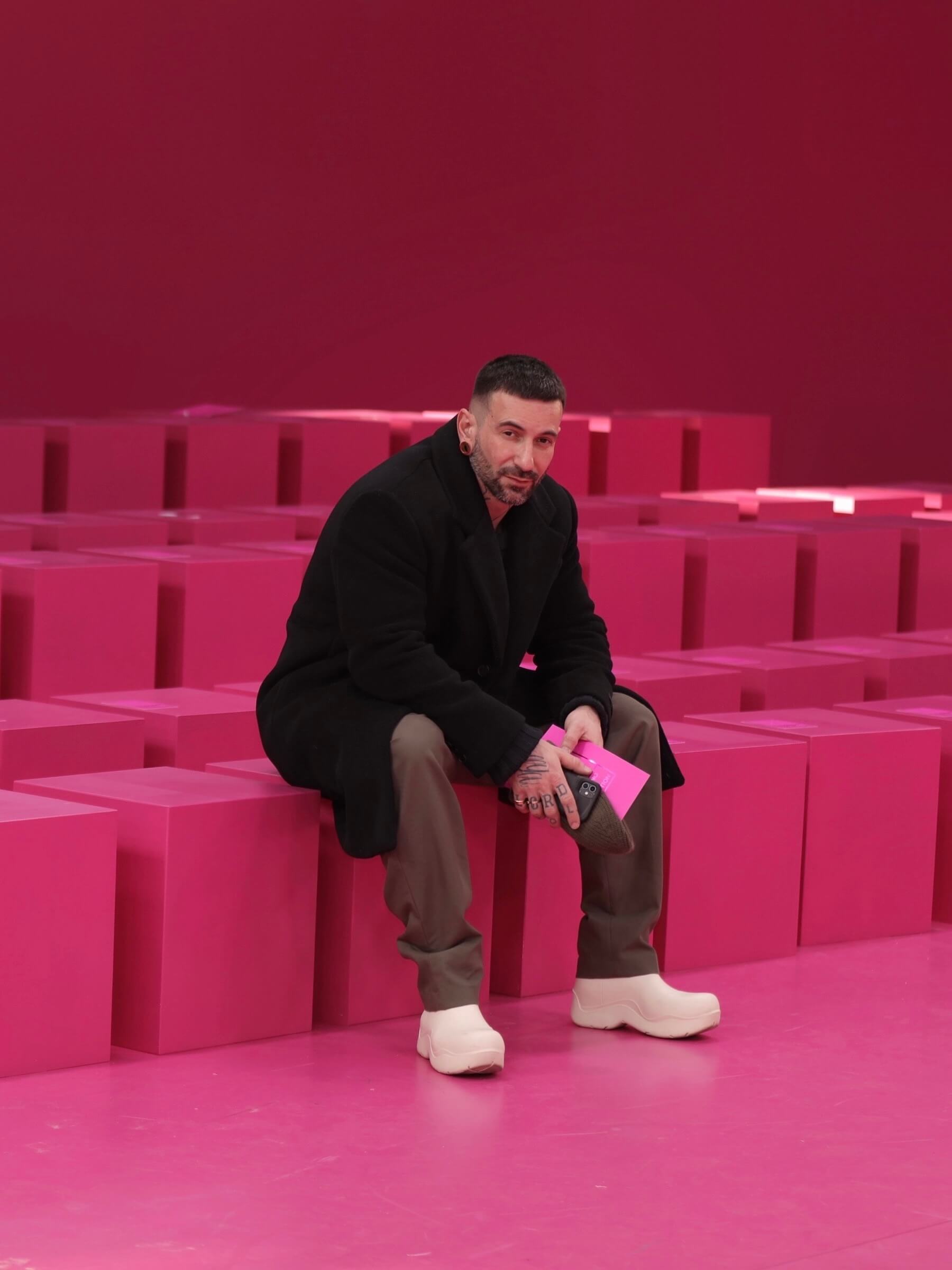
ARMANDO CONDEMI DECODES THE ARCHITECTURE OF DESIRE
The hot pink world of Valentino, Paris Fashion Week. Photo: Private archive.
I met Armando, at least in the version of the story I prefer, at an airport somewhere in the Eternal City. We were both going somewhere, which now feels like a fairly accurate beginning to a story about a man permanently caught between two places, two roles, a serious business conversation and a fitting-room selfie. Professionally, he moves between consulting, buying, merchandising strategy and design, occupying that particular corner of the fashion industry where taste is no longer a private matter. It has to become a decision, a product, a market and, eventually, somebody else’s desire.
I have followed his voice because he does not talk about that machine from a safe distance. He knows its mathematics and knows creativity has to survive a balance sheet, but he has also been inside it long enough to notice the moment the industry became better at producing product than producing ideas. So this is not a conversation about what we will be wearing next season. I was more interested in why we want anything in the first place, who manufactures that desire now, and what happened when fashion became a businessman.
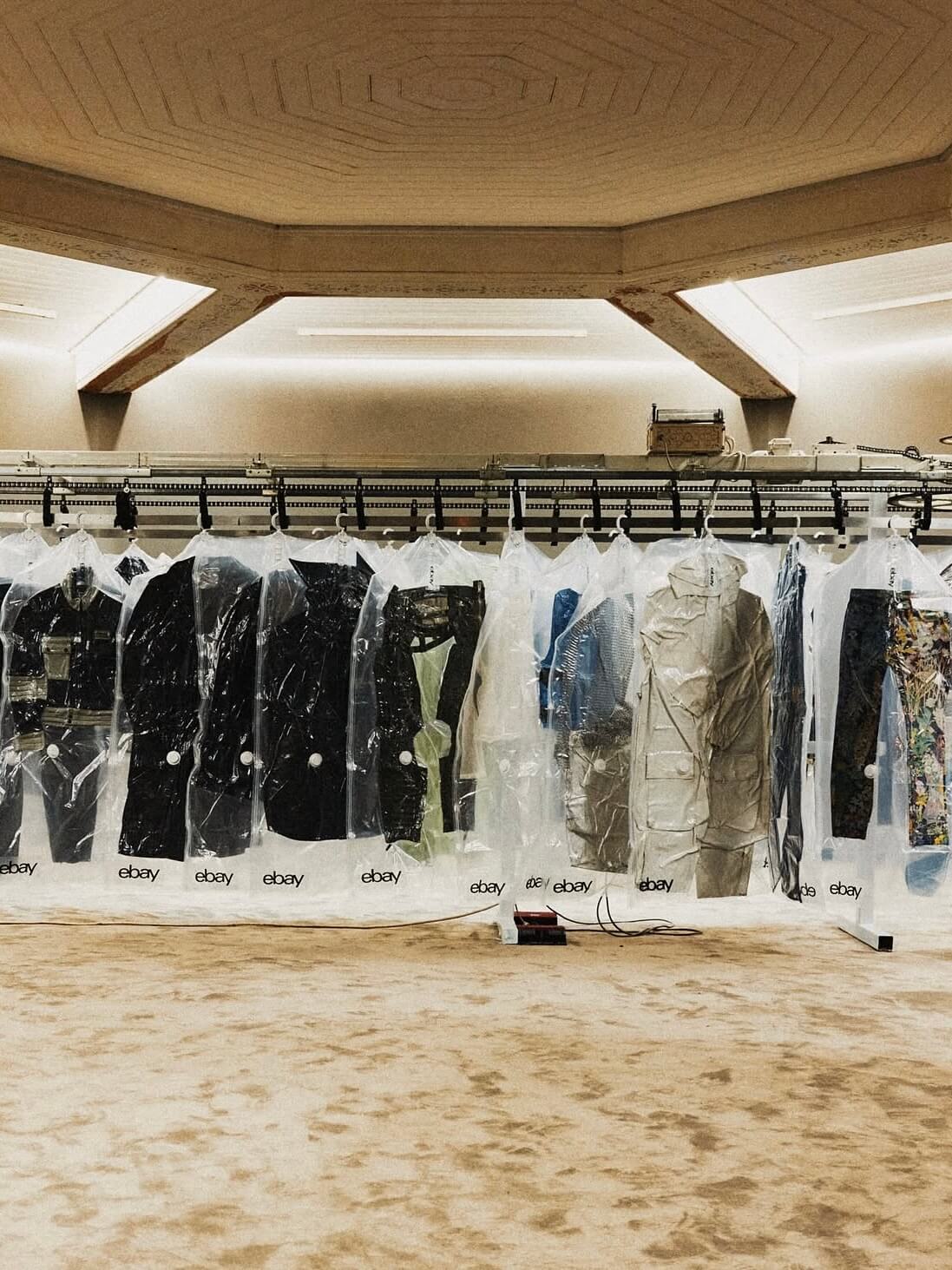
Inside the “MUSEUM” archive exhibition, Shayne Oliver Group x eBay, Berlin, 2026. Photo: Private archive.
ACT I: THE DOLLHOUSE
When asked which of his many professional definitions best describes what he does, and which describes who he is, he rejects the distinction itself. He turns to Italian writer Michela Murgia and a sentence that has stayed with him for years: “I wouldn’t want what I do to define who I am. I would rather be who I am in everything I do.”
That sentence explains quite a lot.
“I don’t really mind moving from something very serious to something completely frivolous. In fact, I quite enjoy the fact that I can go from discussing a serious business strategy to obsessing over a fitting-room selfie five minutes later. I think that duality is actually quite healthy. Especially when you’re lucky enough to turn your passion into your work and therefore, in some way, into your life, I think it’s important not to let the ‘professional’ part swallow everything else. I find it incredibly sexy when someone is confident enough in who they are that they don’t have to take themselves too seriously all the time. Life is already serious enough; I don’t see why we should help it.”
The first thing he remembers wanting simply because he found it beautiful was not an item of clothing. It was a dollhouse, minus any real interest in the dolls. What fascinated him was the possibility of creating a domestic environment of his own, a small ideal world where he could decide how everything looked, where everything belonged and, perhaps most importantly, how he wanted that world to feel.
“Looking back, it’s almost embarrassingly obvious. Apparently, I was already trying to control my environment and create my own little version of reality long before I had any idea what that meant. Some things never change, I guess.”
The man who now chooses, evaluates and professionally tries to understand what other people might want clearly started early, just not where one might expect.
Before clothes, there was space.
His taste, he says, has not changed dramatically since his twenties. What remained was an almost obsessive need to experiment and occasionally question his own decisions. Now in his early forties, it is precisely that doubt he considers healthy.
“I still don’t think it’s necessarily a good thing to have very clear ideas about what you like and what you don’t. This applies to music, to work and to life in general. I actually like having a certain amount of doubt. Whatever I’m doing professionally, I usually have some doubt about the final result. And I’ve come to think that doubt is a fundamental part of research and growth, both professionally and personally. It doesn’t mean I’m rejecting what I’ve done. Quite the opposite. Sometimes doubt is what allows you to understand why you did it in the first place.”
He has a less philosophical piece of evidence too. Doubting whether skinny jeans were going to look good on him, he says, probably saved his image.
One thing took him much longer to understand: fashion is not the privilege of a particular status, class or price point. It is a vehicle for saying something about yourself, an extension of personality that can come from a luxury boutique just as easily as a vintage shop, a market or somewhere nobody thought to look.
“The size, the price, whether it comes from a luxury boutique, a vintage shop, a market or somewhere completely unexpected, none of that is really the point. The idea is the point. Because, ultimately, fashion is about ideas.”
Sooner or later, the idea has to meet the market.
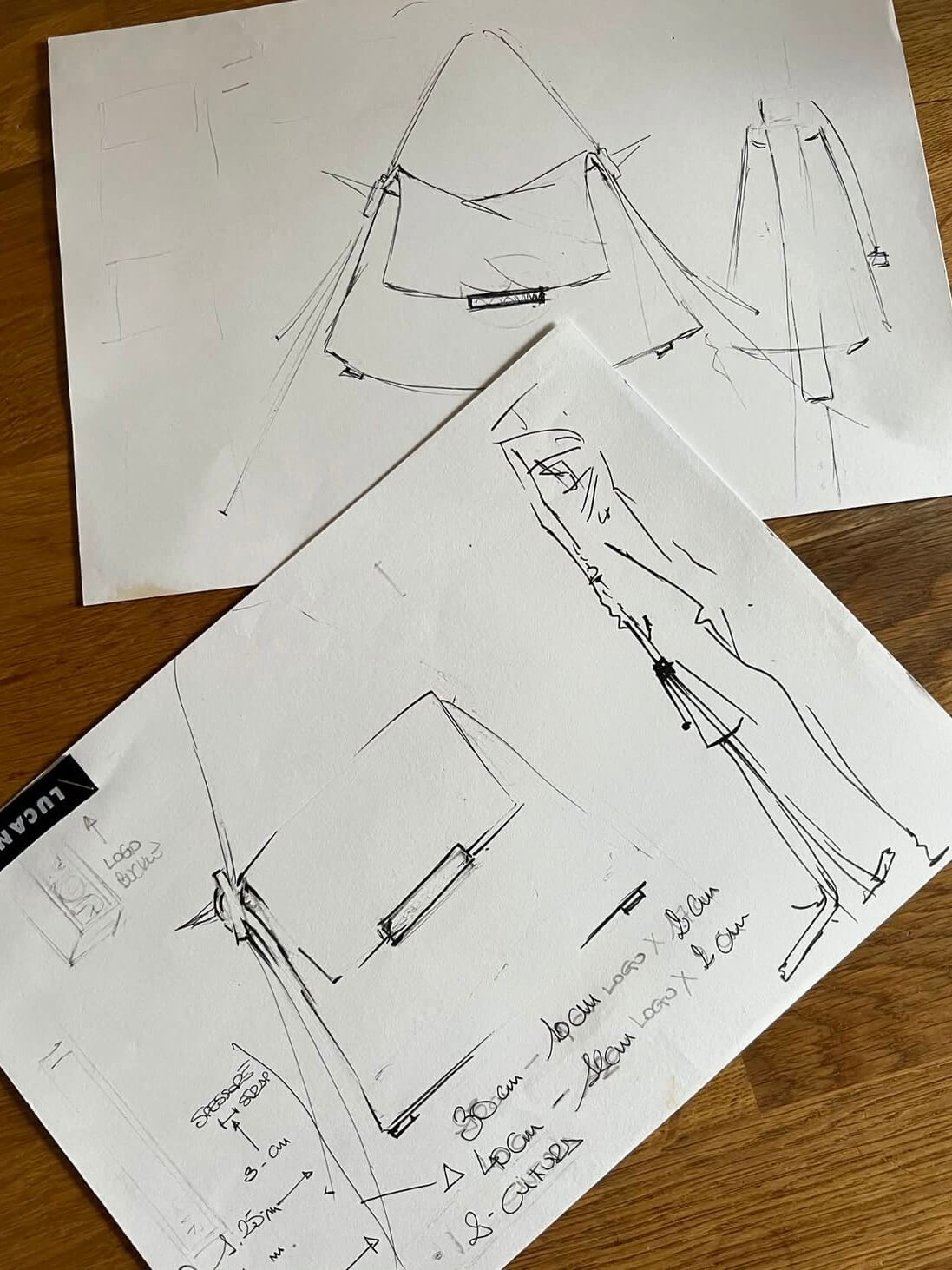
From sketch to silhouette: Armando Condemi at work. Photo: Private archive.
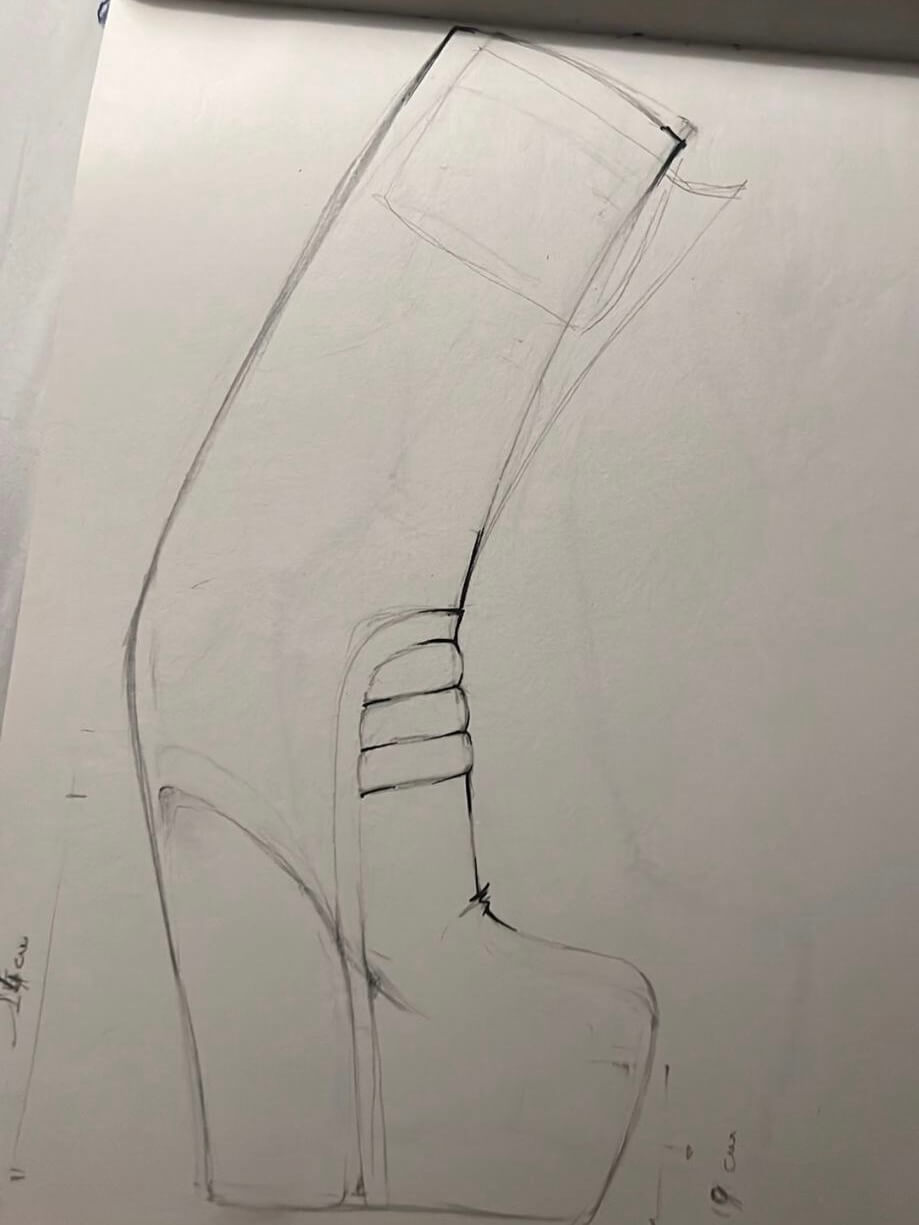
From sketch to silhouette: Armando Condemi at work. Photo: Private archive.
ACT II: THE NEW CREATIVE DIRECTOR HAS ARRIVED
This is territory he knows from the inside. As a merchandiser, he has spent years working along the fault line between people with highly specific taste, rooted in a strong sense of style and identity, and those whose desires are shaped by trends and increasingly sophisticated marketing mechanisms. He does not underestimate either group. He is more interested in what the system has learned from serving both.
“Those mechanisms have completely changed the way people perceive the industry. And, unfortunately, I think they have also created a lot of confusion, especially by constantly blurring the line between fashion and luxury, between identity and status. If you think about it, this is almost the curse of our time. We often settle for something that is simply good enough, something that satisfies an immediate need of the masses without necessarily exciting them.”
That logic now reaches all the way to the top of the biggest fashion houses.
“They often choose creative directors who are extremely good at understanding the market, almost great merchandisers, but perhaps less remarkable as designers. And I see the same thing happening when it comes to emerging talent. Brands increasingly seem to want less personality and more execution: someone who can take the existing values of a brand and translate them efficiently into product.”
The price of that efficiency is an entire generation of emerging talent sitting on the sidelines and waiting, in some cases long enough to grow older while waiting for a real opportunity. When I later ask what he considers overrated in fashion, his answer sounds almost like a footnote to the same problem: “Which big designer is going to which big fashion house next.”
“I often wonder what would happen if some of the biggest companies simply doubted the system a little more. If they questioned how unhealthy parts of it have become and were willing to take a risk and change things, even at the expense of immediate profit. Maybe we wouldn’t be experiencing one of the biggest crises the industry has ever seen.”
This is not some romantic rebellion against business. He knows how important timing is precisely because he works in one of its most practical territories.
“Both can be dangerous. You have to be right on time. Timing is almost everything.”
Consultants sometimes see a trend long before the market recognises it, but the urge to be first can easily work against you. The instinct for the right moment, he says, may not even be something you can learn. You either have it or you do not.
And when the market rejects something he strongly believes in?
“I don’t necessarily question my taste. I question the market.”
It is not a claim to infallibility. Taste is built over years through experience, culture, mistakes and obsessions. It does not automatically have to surrender to a sales result.
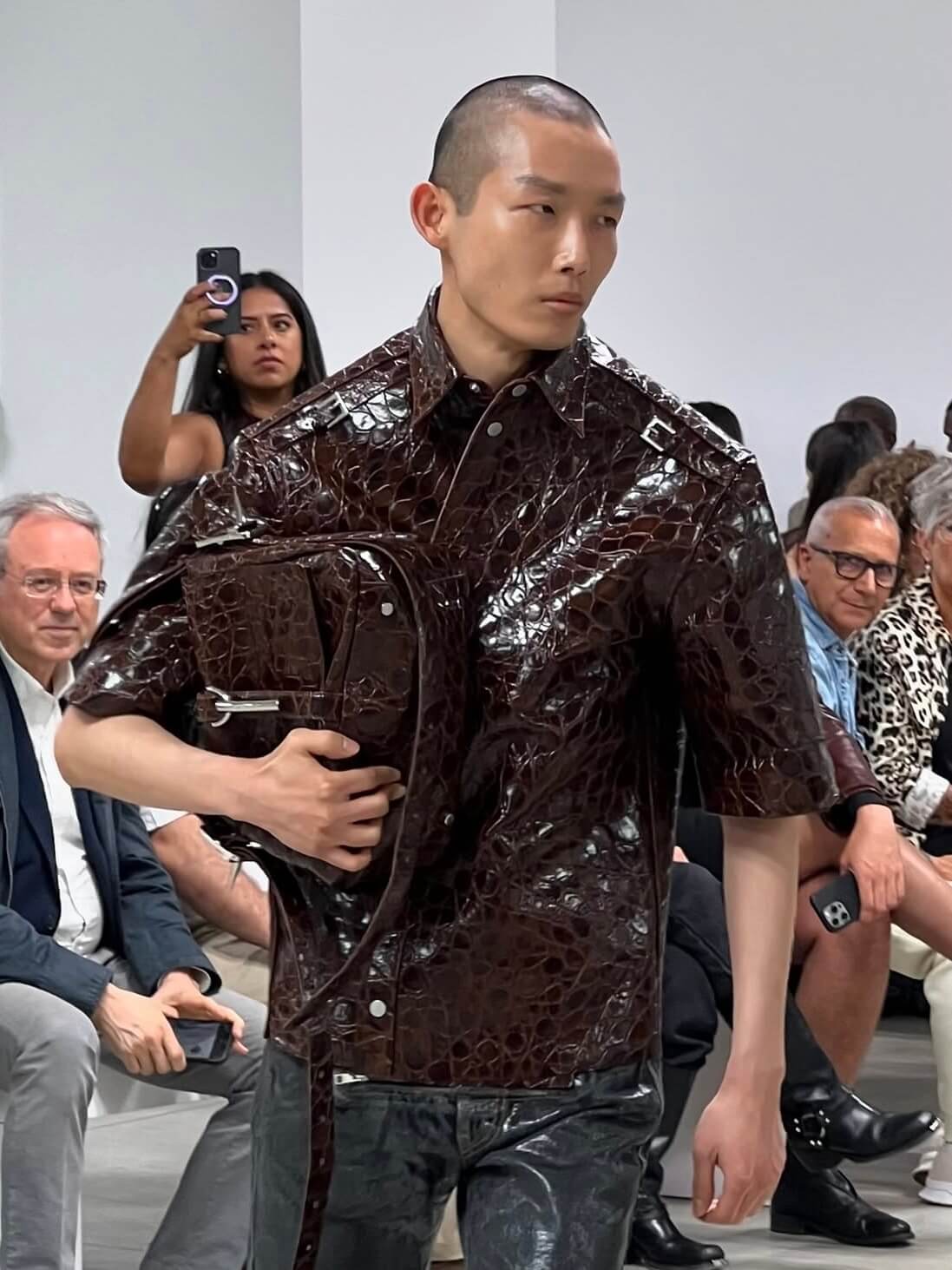
The Gotham Series bag by Jordan Luca, designed by Armando Condemi. Photo: Private archive.
“I would say that 80% of what we call luxury today isn’t fashion, even though it constantly looks at fashion for inspiration. Can something be genuinely luxurious and completely unfashionable? Absolutely. And can great fashion be cheap? Absolutely. I think vintage is probably the best example of that.”
There is, he says, something “much more cultural, romantic and idealistic about approaching fashion from the bottom up, rather than starting with the price tag.” Which is why he sometimes sees more fashion on the New York subway, in the parks of Paris or along the Navigli in Milan than at certain fashion shows. It sounds like a cliché, he admits, but he still believes it to be true.
His diagnosis of why fashion stopped taking risks is more uncomfortable.
“I think fashion started wanting to be luxury, and in doing so it betrayed part of its original purpose. And as a consequence, it became expensive. But more than fashion becoming too expensive, the fashion industry itself has become too big and too heavy to take risks. There is simply too much money, too many people, too many expectations and too much at stake.”
During his time with JordanLuca, one of the most exciting periods of his career, stylist Samia Giobellina gave him a sentence he never forgot: “Repetition is recognition.”
It explains more than recognisable product. At some point, fashion stopped identifying only an aesthetic or an ideology and began gathering entire communities around them. Miuccia Prada, Rick Owens and Demna became almost interpreters of those cults, with languages so recognisable they could sometimes look like repetition rather than surprise. Consistency matters more to him now than endlessly reinventing yourself for the sake of novelty, because somewhere in that process you can easily betray your own identity.
With Demna’s Balenciaga, what interested him most was not the clothes but the shift in who was allowed to become an ideal.
“What I found so powerful was not simply the clothes. It was the idea of taking people who had traditionally been considered outsiders, the outcasts, the people who didn’t necessarily fit into the conventional idea of beauty or success, and putting them on a runway, turning them into an ideal. That, to me, is fashion. Not because it was expensive. Not because there was a logo. Not because everyone immediately understood it. Because it gave you an idea you hadn’t necessarily had before. And I think that is the part of fashion we should be protecting.”
So what are we actually buying? The object, the idea, access, belonging, recognition, a version of ourselves? Probably all of them at once. Contemporary desire is complicated enough that reducing it to a single motive would be too easy. Force him to choose, however, and the answer is clear.
“I would say we buy the idea. The object is just the vehicle.”
Later he reduces the same diagnosis to four words.
More ideas, less product.
A fairly radical position for an industry that has never produced more.
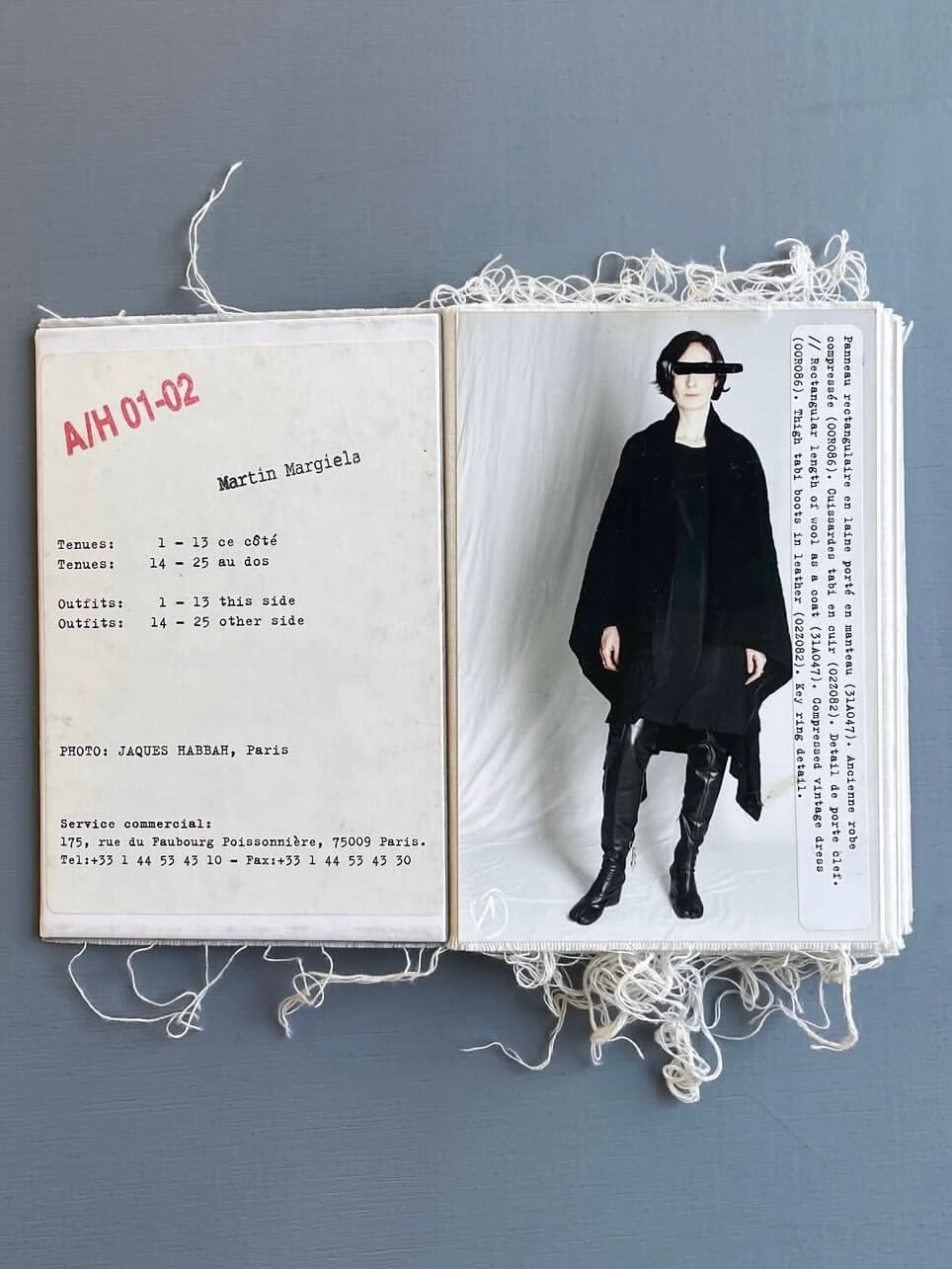
Inside the Martin Margiela F/W 2001–02 archive. Photo: Private archive.
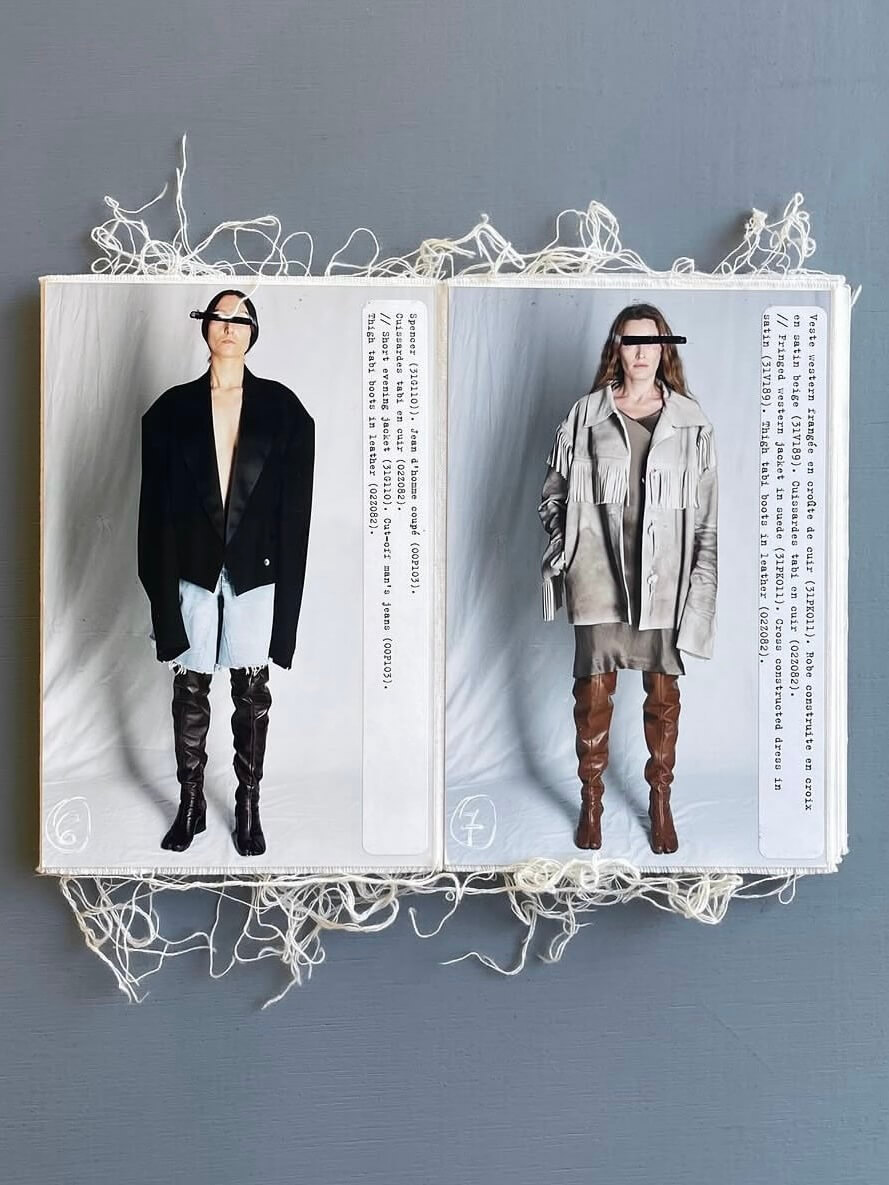
Inside the Martin Margiela F/W 2001–02 archive. Photo: Private archive.
ACT III: ICONIC IS DEAD. LONG LIVE KIM KARDASHIAN!
Ms. Kim entered the conversation almost by accident. When I gave him a few words contemporary fashion culture had worn out completely, he decided luxury could stay. Curated could stay too. Iconic came with one condition: “Keep, but only to make fun of Kim Kardashian.”
Kim is collateral damage to a good joke, but the word itself opens a much more interesting question. Iconic status once required time. Something had to exist long enough, alter an image, a behaviour or a culture before we called it an icon. The internet can now finish the job somewhere between two posts, enough repetition and a few million views.
It would be convenient to blame the algorithm for all of it, or Kim, if there is a difference. He refuses to cast it as the villain.
“In that sense, the algorithm is almost a mirror. If we keep feeding it the same references, the same designers, the same aesthetics, the same kind of content, we shouldn’t be surprised when it keeps serving us the same world back. So yes, I do think we have a responsibility here. If our algorithm is boring, perhaps we are being a little boring too.”
Access to the same references does not produce the same taste.
“You and I could wear exactly the same T-shirt, and still experience it in completely different ways. We could give it a completely different meaning, and in a way, that makes it a completely different T-shirt, even though the object itself is exactly the same. And maybe that’s where personal taste becomes really interesting: not in finding something nobody else has, but in being able to make something your own.”
He sees a bigger problem in the sheer amount of fashion information now delivered with an authority that is not always matched by knowledge. Social media is full of people discussing fashion in supposedly serious terms, while some of them, he says, can place Acne Studios and Bottega Veneta on exactly the same level, as if they were interchangeable, creating enormous confusion for their audience.
Imagining what he might say if @subwaytakes stopped him today and asked, “What’s your take?”, he proposes that social-media fashion commentators should have an official licence to talk about the things they talk about.
He added a smiley. I’m not entirely convinced the smiley cancelled the proposal.
From there, the conversation moves naturally from clothes into space. After years in retail, he reckons that perhaps 90% of what makes a place memorable comes down to the people.
“You could take us tomorrow and put us in the most beautiful hotel in the world, with incredible architecture and perfectly designed interiors, but if the service were disastrous, we would probably remember it forever as a terrible experience. So for me, beauty alone isn’t enough. An environment becomes memorable through the human experience that happens inside it.”
He continues: “What looks perfect to one person can be completely boring to another. So I think there is always something else to discover. And perhaps the moment we think we’ve reached perfection is exactly when things start becoming uninteresting.”
The bridge to architecture is one he makes himself. He does not consider fashion to be art in the literal sense; if he had to find its closest relative, he would choose architecture. Both exist in physical reality and both have to serve a purpose.
“I actually think fashion has something to relearn from architecture: functionality. Fashion has become so obsessed with the image, the concept and the idea of desire that sometimes it seems to forget that clothes are also objects that have to be worn, moved in and lived in. Perhaps fashion needs to rediscover what architecture has always understood: that beauty becomes much more interesting when it has a reason to exist.”
Ask a man who works professionally with taste to define bad taste and he refuses.
“I don’t really believe in bad taste. Culture moves forward regardless of what we think is good or bad. We’re basically just trying to keep up with it. What we call ‘bad taste’ is sometimes simply something we haven’t learned how to understand yet. So maybe there is no bad taste. There is just culture moving faster than our ability to understand it.”
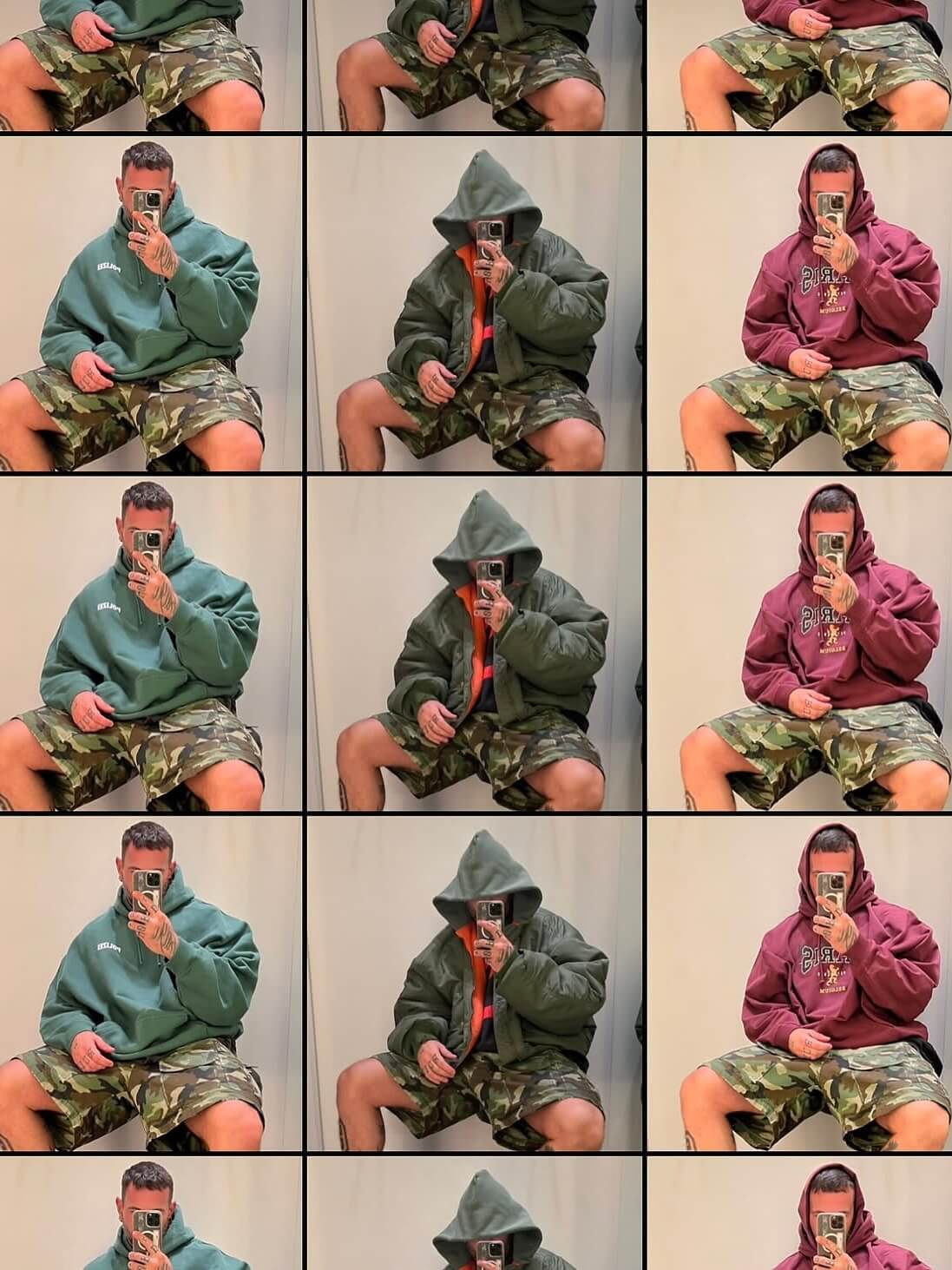
Armando Condemi, variations on a uniform. Photo: Private archive.
ACT IV: THE SCORE IS 10-0
If we have already arrived at the question of who manufactures desire, one question remains: who gets the chance to make anything new in the first place? Why is the system so difficult to change when practically everyone inside it knows there is a problem?
The answer is not complicated.
“Because fashion is one of the most profitable businesses in the world. And, unfortunately, the money machine wins ten to zero against the ideas machine.”
“Everyone knows there are problems, everyone talks about them, but when there is that much money involved, suddenly changing the system becomes a much less attractive idea.”
Those rules also determine who gets to become “new”.
He sees two kinds of people. The first have the financial means to produce a collection and, equally importantly, the financial means to make people see it, to create visibility and gain access. The second have something far harder to quantify: a hunger to become relevant because they are convinced they have something to say and are willing to do almost anything to communicate it.
He is far more interested in the second group.
“Money can give you access, but it can’t necessarily give you something to say.”
It may be the most precise business sentence in the entire conversation.
He does not see his own responsibility as extending only to the companies he works with. He also consults, completely for free, for young designers taking their first steps in the industry. It is here that cultural responsibility stops being a grand abstract term. What matters is not only the output you give to the consumer. It is also the input you give to the person trying to create something.
“Sometimes you have to make them understand that, despite the disaster happening around us, there are still people who believe in ideas. People who are willing to support them, listen to them and give them a chance.”
Immediately afterwards, he refuses the opportunity to place himself at the centre of that noble narrative. Fortunately, he says, he is not the only person who thinks this way. There are people far more qualified and important than him with exactly the same approach, and he finds that reassuring.
Perhaps this is where his criticism stops sounding like another industry diagnosis and becomes something more useful.
A cynic would not care.
He clearly does.
When I finally ask what life has taught him is actually worth keeping, after the markets, collections, cities, airports and objects he has spent a career choosing, his answer has nothing to do with the next big thing.
“People. Without a doubt. And also a good archive.”
Which, come to think of it, is a pretty good definition of what might actually be worth saving from fashion.
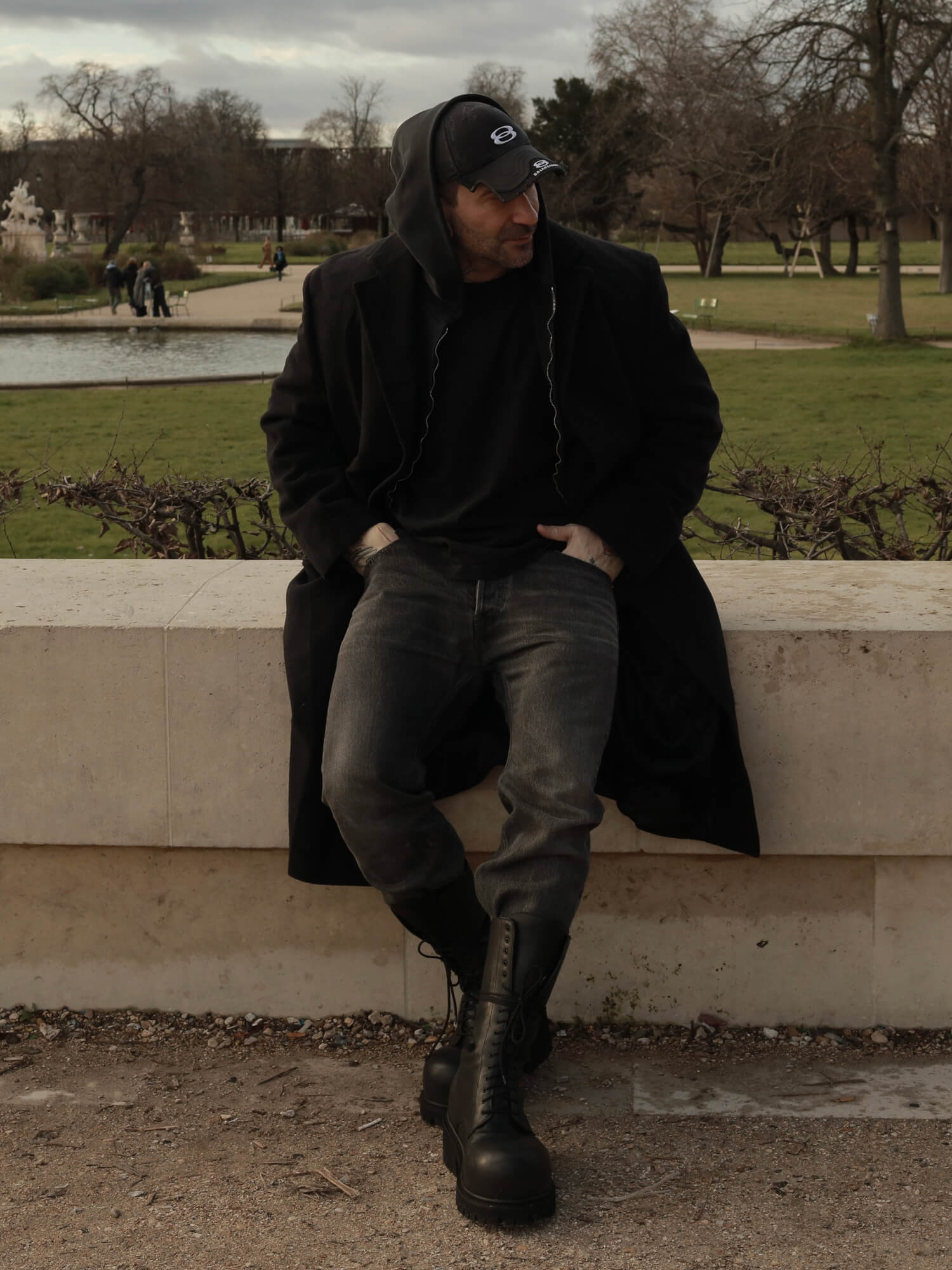
Armando Condemi in Paris. Photo: Private archive.

KIKA JOVANOVIĆ ON THE ARCHITECTURE OF THE BODY: HOW MANY REVISIONS ARE ENOUGH?

Kristina Kika Jovanović has worked in modelling for years and is the author of the blog napisalaKika, where she writes openly about the body, appearance, ageing and beauty from the perspective of someone whose own appearance has long been part of the job. We talk about the body as working material, an industry forever asking for one more revision, and the point at which a change stops being part of the process and becomes a question of authorship.
There is one sentence in the creative industries that almost never means what it promises: just one more revision. Architects hear it from developers, designers from clients, photographers during selects, writers from editors. In modelling, things are more complicated because the material being altered is not a file, a drawing or a frame. It is the body.
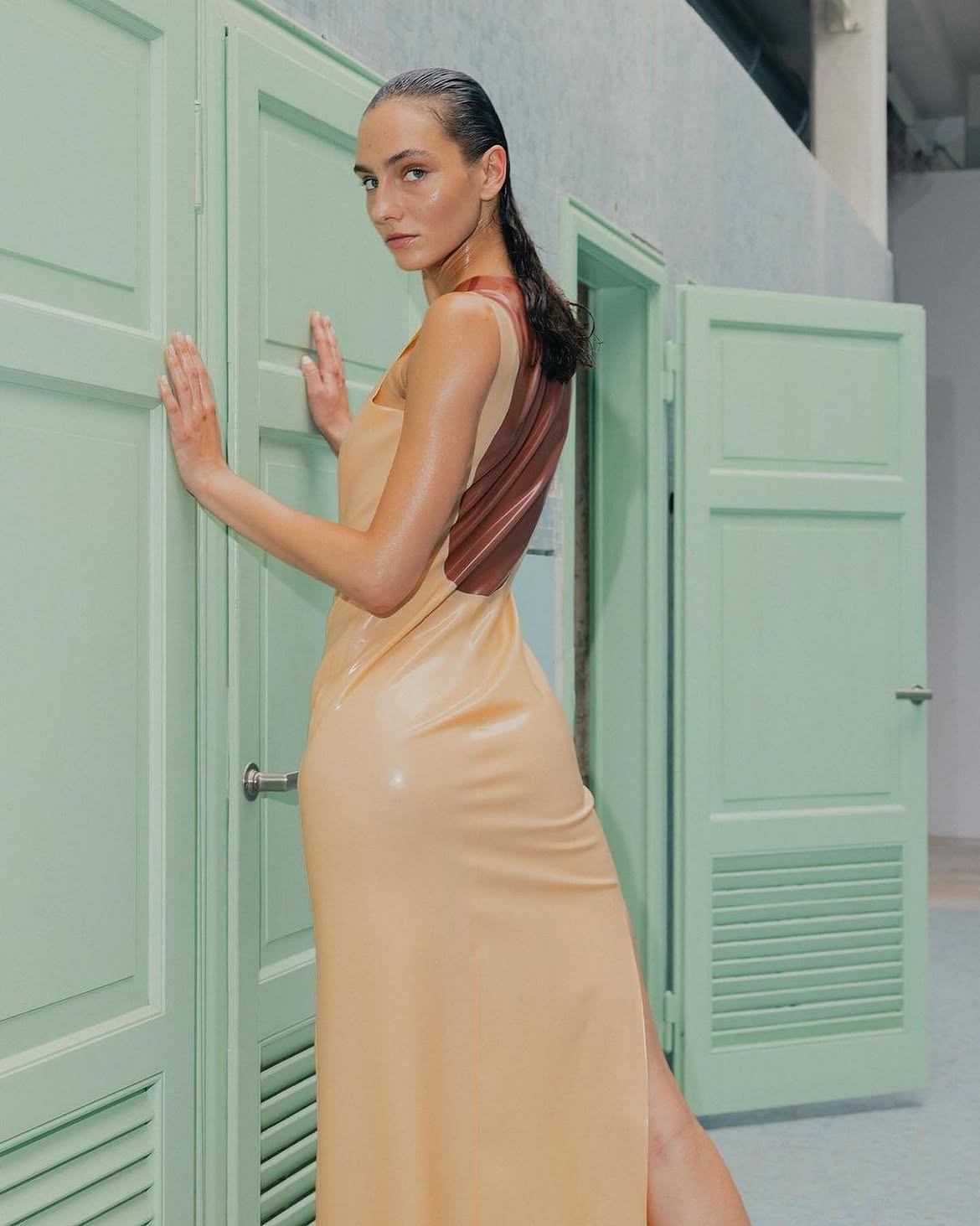
Kristina Kika Jovanović has known that system from the inside for years. She has moved through couture, fittings, shoots and shows, working within the worlds of houses such as Stéphane Rolland, Mugler and Zuhair Murad, while also beginning to document what happens backstage and write about appearance, the body, ageing, beauty and control. She has spent enough time inside that image to understand how it is made, and enough time observing the process to recognise the point at which a correction stops being merely professional.
When I ask what her body would be if it really were architecture, she answers without much theory:
“A house in the city that is occasionally rented out on Airbnb to selected guests.”
It is funny until it starts to sound like a perfectly serious business model. A house has doors, rules of entry, rooms that are not open to everyone, and someone who is supposed to decide who gets the key.

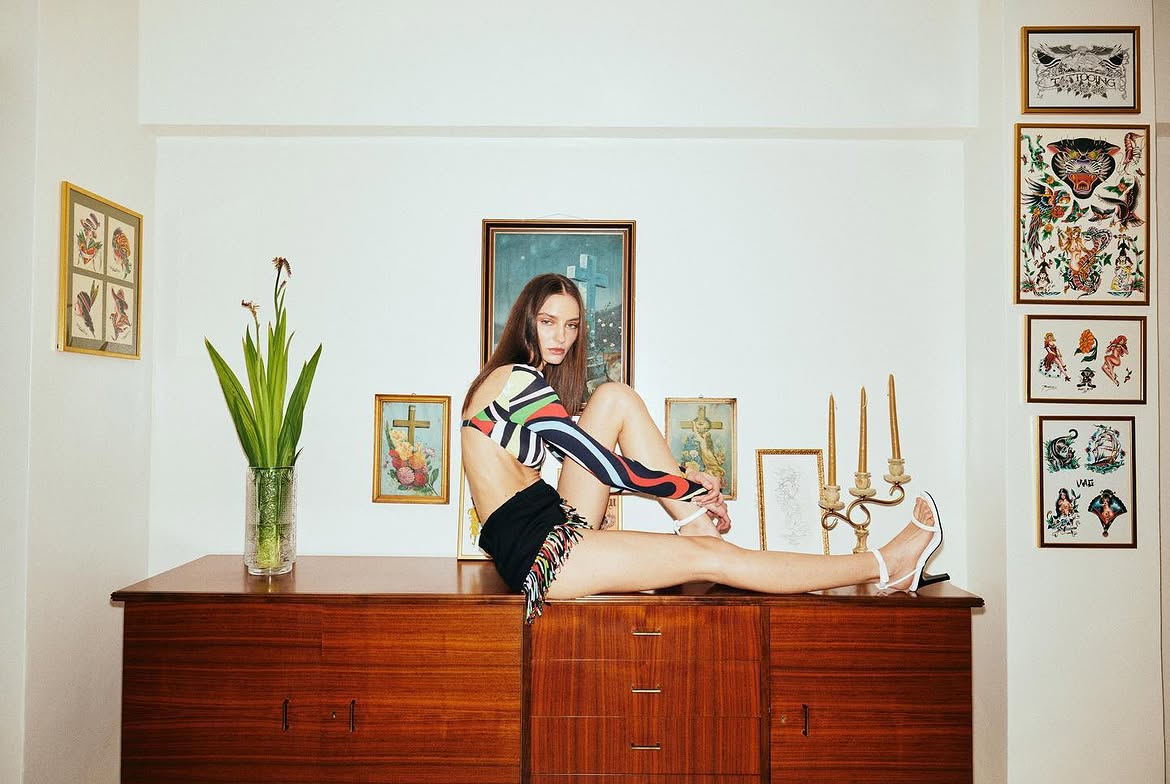

JUST ONE MORE REVISION
There is a peculiar fact about modelling that the final photograph makes very easy to forget: the person and the material being worked on are physically the same thing. The body is measured, dressed, moved and adjusted through light, make-up and cut, but it does not get left behind in the studio when the production ends.
After shoots lasting several days, the professional role can stay with her for a while. “The feeling that I am a model stays with me for longer, and the transition back into Kristina takes a few days.” That transition back into Kristina describes the effect of the job with unusual precision: the professional version of the self does not necessarily disappear when the lights go out.
With long fittings, she takes it further. “You learn to detach yourself from your body and hand it over to the professionals.”
That can mean experience, trust and the ability to collaborate. In that process, other people adjust the clothes, hair, make-up, posture and movement. That professional ease opens a more difficult question: how many times can you look at your own body as a project before you begin to see it that way when the job is over too?
With Stéphane Rolland, she describes the process almost in reverse, as a form of creative transformation. “I think it is incredibly difficult not to change your character when Stéphane Rolland dresses you.” She talks about strength, mystery and the embrace of beautiful fabric, about posture changing and the body becoming, for a few minutes, “an untouchable, elevated being.”
Sometimes the change is not metaphorical. Some pieces are constructed so that the seam and composition of the garment themselves allow you to move only in certain ways. Strip couture of the house name, the music and the spectacle, and she reduces it to a single word:
“Cut.”
Construction itself is not the problem. The problem begins when a person no longer knows how much of the change they are still choosing for themselves.
WHO REQUESTED THIS REVISION?
Every profession requires discipline, but modelling is one of the few in which the result of that discipline is visible directly on the body. That line is very clear for her today. If something presented as necessary for the season is something a person does not want, restricting food, excessive training or other forms of pressure stop being professional requirements.
“That is an act of violence against your own body.”
Not every change is violence, and not every correction is a problem. What matters more is who requested the revision, and when the person agreed to it. In creative work, feedback can very easily become an internal voice. Hear often enough that something should be moved, narrowed, cleaned up, sharpened or fixed, and eventually it becomes difficult to know whether you are still looking through your own eyes or through someone else’s notes.
Contemporary beauty culture makes that process even harder to see. She does not look for a single culprit. When I ask who creates the average, she answers: “All of us.” Someone establishes the norm, someone accepts it, someone repeats it and then, as she puts it, the snowball becomes an avalanche.
If beauty is understood as symmetry, she believes that today “it is more radical to remain specific.” Fashion lives inside its own paradox here: it wants a face people will remember, then knows with remarkable precision what it would like to emphasise on that face. In her case, it is more pronounced cheekbones and a sharper jawline.
This is not only a fashion problem. Anyone working in a creative industry knows the moment when the thing that was once distinctive becomes an expectation. A designer is asked for another version of the same object, an architect for another house resembling the last one, a photographer for the same frame, a writer for the same voice. Success can turn style into a template very quickly.
Which is why how many revisions are enough? is ultimately less a question of appearance than of authorship.

THE BODY HAS ITS OWN BRIEF
The conversation changes weight when I ask what her body refuses to forget.
“The history of my body remembers unwanted touch, being taken without consent, and desires that should never have been voiced to a child.”
The body never arrives at work empty. It carries a history of touch, control, intimacy and fear, things that remain invisible to the people dressing, photographing or directing it that day. A professional relationship with the body can therefore never be purely technical. A fitting is not unwanted touch, just as collaboration is not possession, but the boundary between them has to belong to the person whose body is involved.
She does not frame recovery as some grand transformation. Old habits, she says, disappear more slowly than we expect: “Healing takes a lot of energy, but it is all in service of living better in your own body.”
A better stay inside your own body matters more than a perfect result. There is no final version of a person that can be approved once and sent into production. There is a sequence of changes, and the point at which we learn which ones are actually ours.
WHO SIGNS OFF ON THE FINAL VERSION?
Writing becomes an important part of her story, though not as an escape from appearance. On her blog napisalaKika, she returns to appearance directly, writing about the body, ageing, aesthetic standards and her own relationship with the image. She has not stopped talking about appearance; she has changed the position from which she talks about it.
“I needed somewhere to hide where I could be Kika as a word, rather than Kika as a photograph.”
Writing has not offered her an escape from the image. It has given her the possibility of deciding for herself how she wants to speak about it. When I ask what is harder for her to post, a photograph or a piece of writing, there is no hesitation: the writing. “I write so I can feel calmer. Something in me has something to say, and that is why I write.” The worst moments are the ones when she catches herself writing for the sake of a good reputation rather than for the satisfaction of doing it.
This is where the shift in her position becomes clearest. Years spent inside a system that constantly evaluates and corrects appearance have not given her complete control over the process, but they have given her a far more precise understanding of which part of that control she is no longer willing to hand over. Confidence here has little to do with refusing change; it looks more like knowing the difference between collaboration and giving yourself away.
In the end, she reduces it to a simple boundary: “If the vision is fundamentally against my values, then it is the photograph. If I cannot stand behind my own words, then it is the writing.”
The question, then, is not whether trauma is somehow foundational to the profession of modelling. That would be both too broad and too simple.
The far more interesting question is what happens when an industry built on revisions works with material that has a history of its own, boundaries of its own, and the right to refuse the next version.

Photo: Private archive
IZBA HOME: THE LAST FIVE CENTIMETRES
© Formani
The word izba belongs to an older domestic vocabulary, one that understood everyday life without needing much theory. It was where a household kept what it needed, stored things for later, used things without ceremony. Function came before image. Its importance was measured simply by how much easier life around it became.
Today, it feels completely at home in the present.
For sisters Jelena Protić and Jovana Jakovljević, it has acquired a new structure. Jelena comes from architecture, Jovana from management, and their shared practice operates between two disciplines that continually test one another. A spatial idea has to survive use and time. A product has to find a market, a distribution model and a reason for someone to want to live with it long after the first photograph.
Izba Studio designs spaces, while Izba Home selects, represents and sells the elements that carry a project into its final layer. A need discovered on one project can open up an entirely new category within the Home selection, while something found through Home can later find its way back into a new Studio interior. It is a closed loop in which space raises a question and the market occasionally offers an answer.
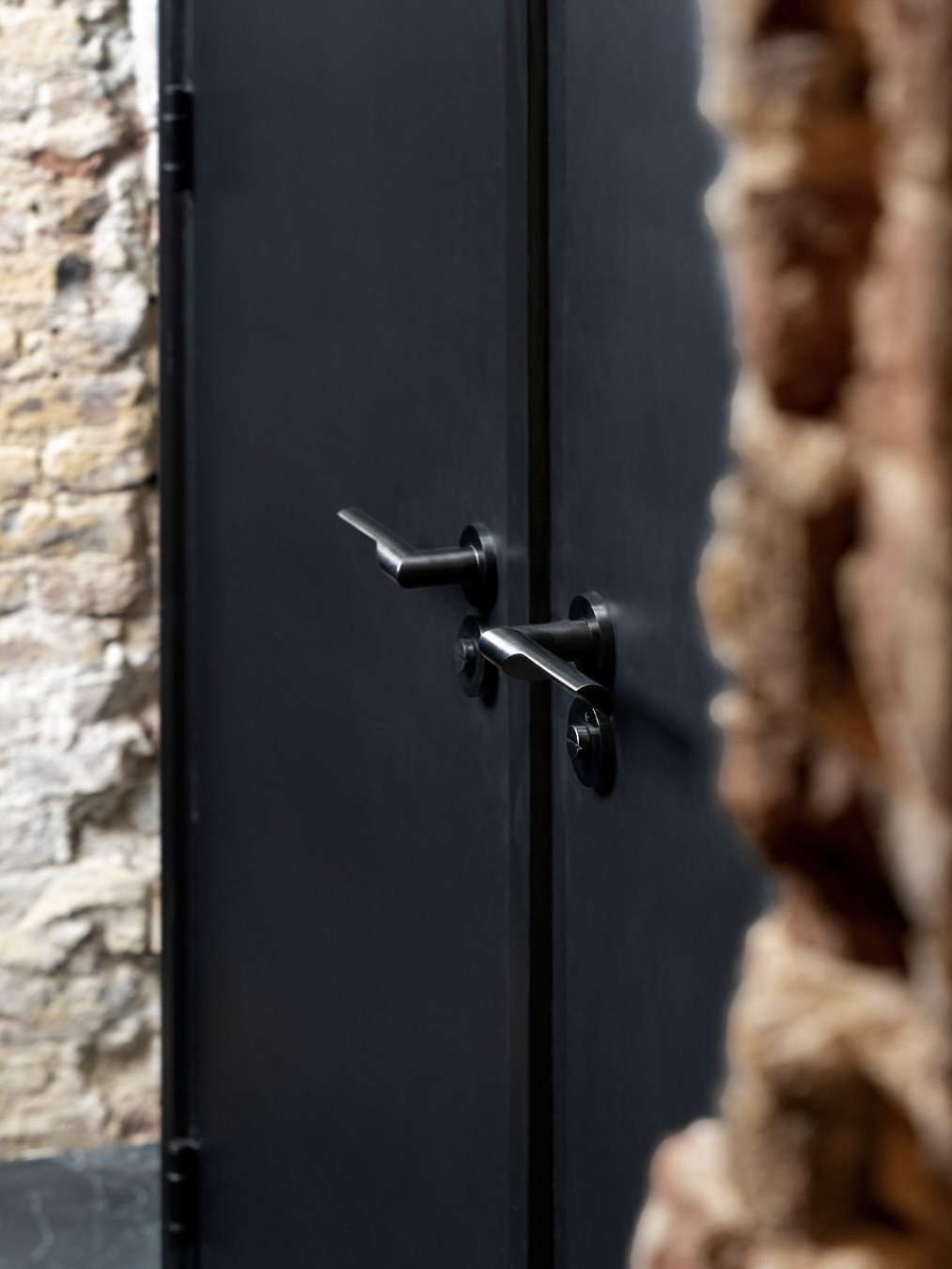
Years of working on interiors led them to what they now call the last five centimetres.
“We believe those last five centimetres are often what give a space its final character. Architecture continues through everything we touch, use, feel and ultimately remember.”
AT THE EDGE OF THE TABLE
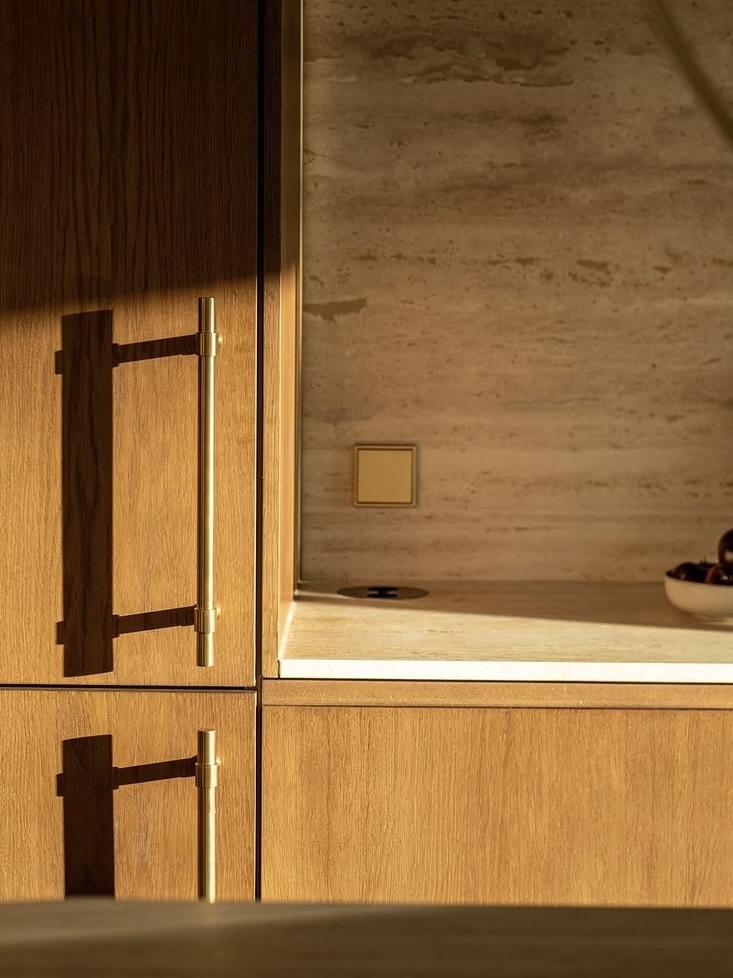
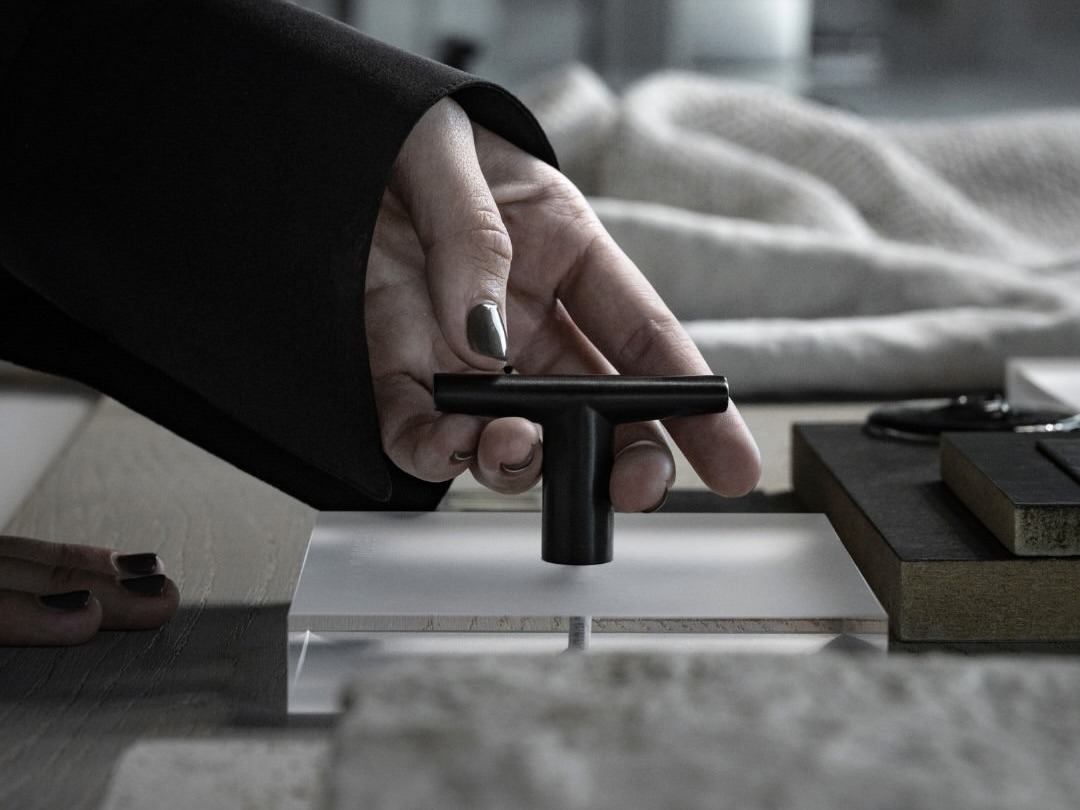
Five centimetres is not a literal measurement here. It is the distance at which architecture reaches the hand.
A handle, a switch, a light fitting, a metal surface or a piece of furniture may occupy very little room on a drawing, yet through repetition and habit they come to define a large part of how an interior is experienced. These are precisely the elements that have gradually taken on greater weight within Izba Studio’s projects.
This is where the business structure of Izba Home becomes more interesting than the story of yet another showroom.
Jelena’s criteria test how an object performs within an interior, whether its proportions hold up, how the material looks at close range and what happens to it after hundreds of touches. Jovana introduces another kind of discipline. The same product has to be available, commercially sustainable as a category and relevant enough to exist beyond a single project.
Those two logics do not always have to agree. A strong architectural idea can make for a poor commercial proposition. A commercially successful product can have very little to offer a serious interior. Their model takes shape precisely within that friction, at the point where aesthetics have to justify economics and economics cannot be allowed to lower the standard.
For that reason, Izba Home is difficult to read as a showroom whose authority is built on the number of names it represents. The quantity of brands means very little when the selection itself has no point of view. More products do not automatically make a better space.

© Formani
GOOD TASTE COMES AT A PRICE
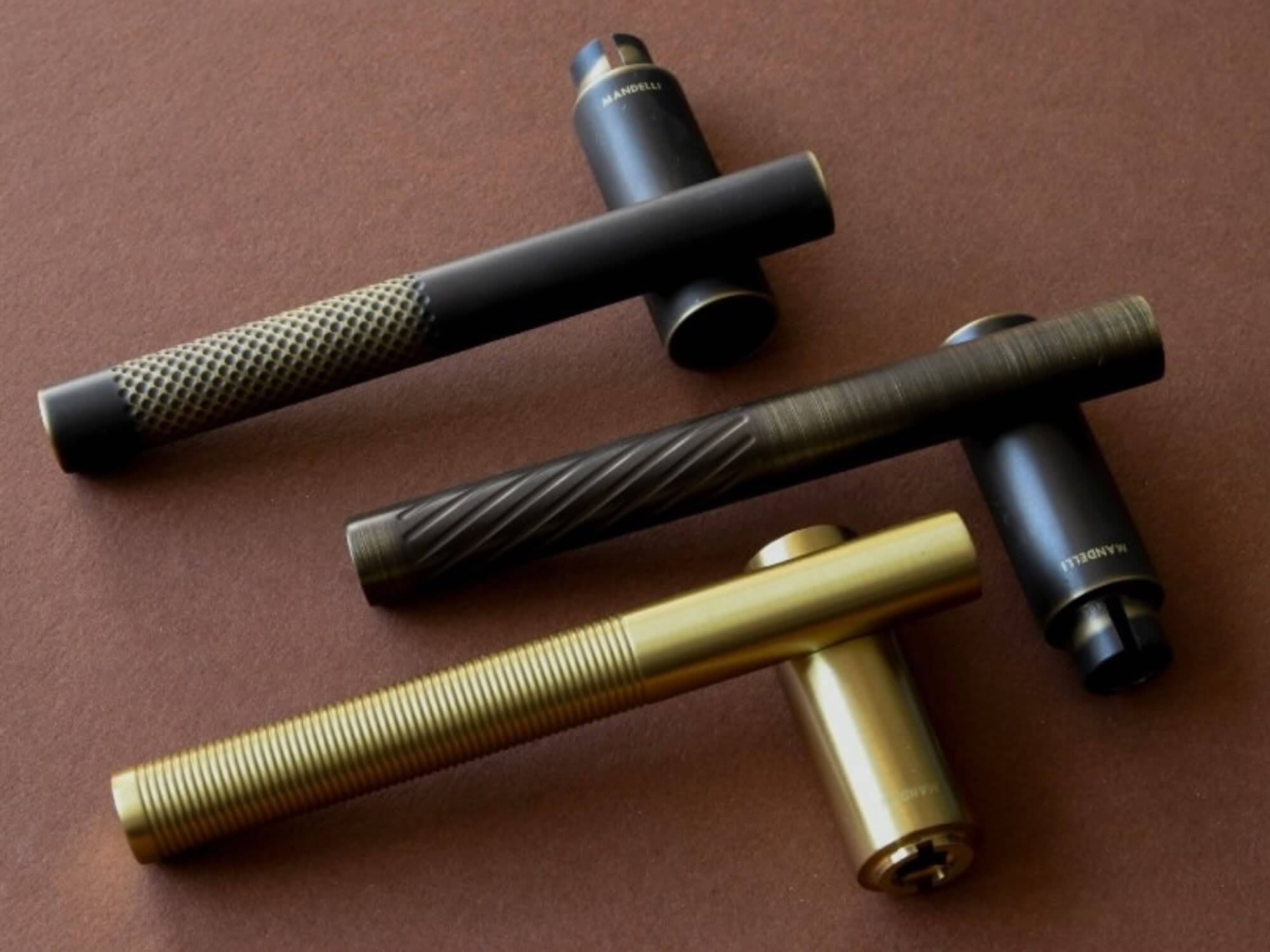
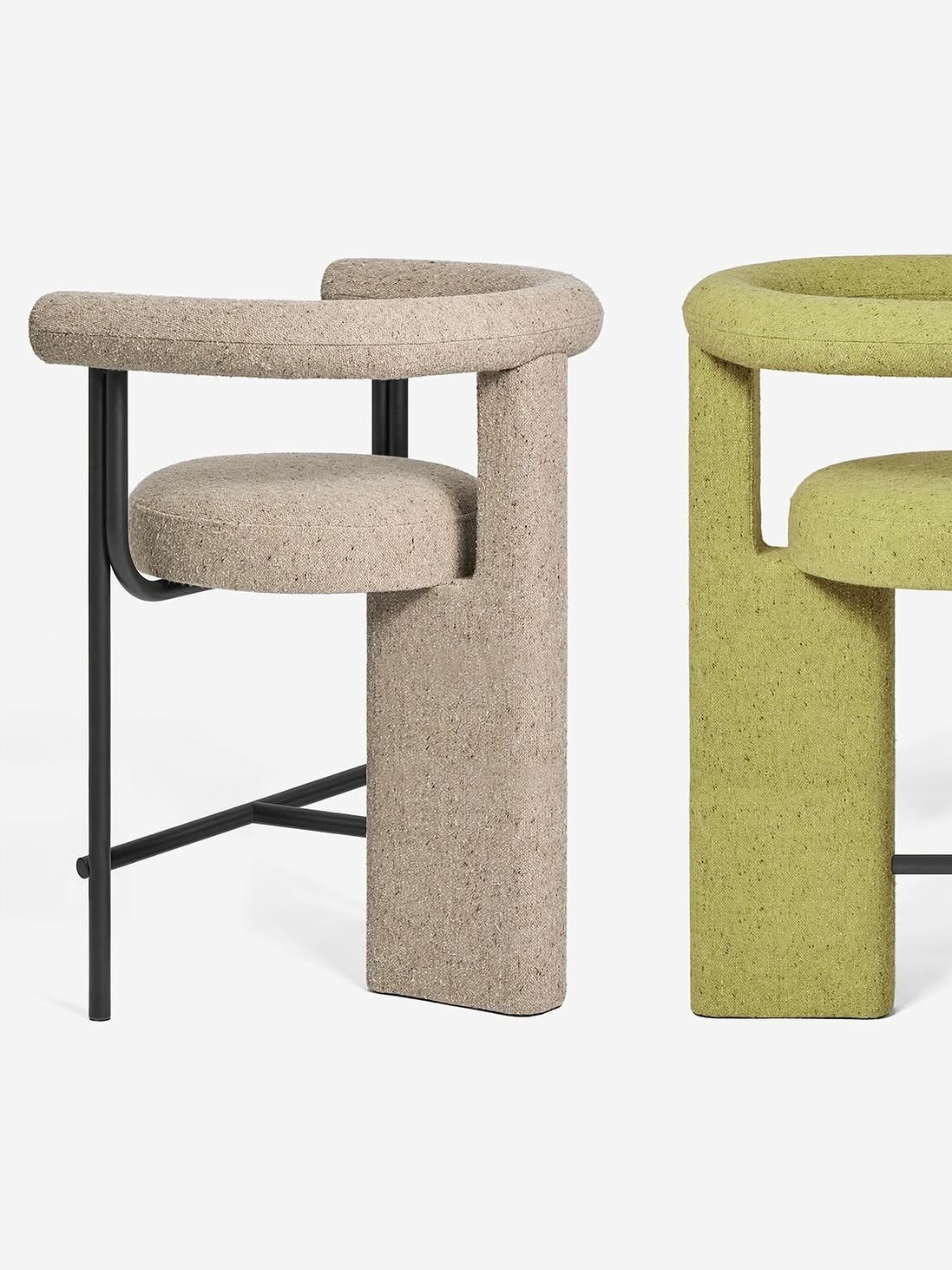
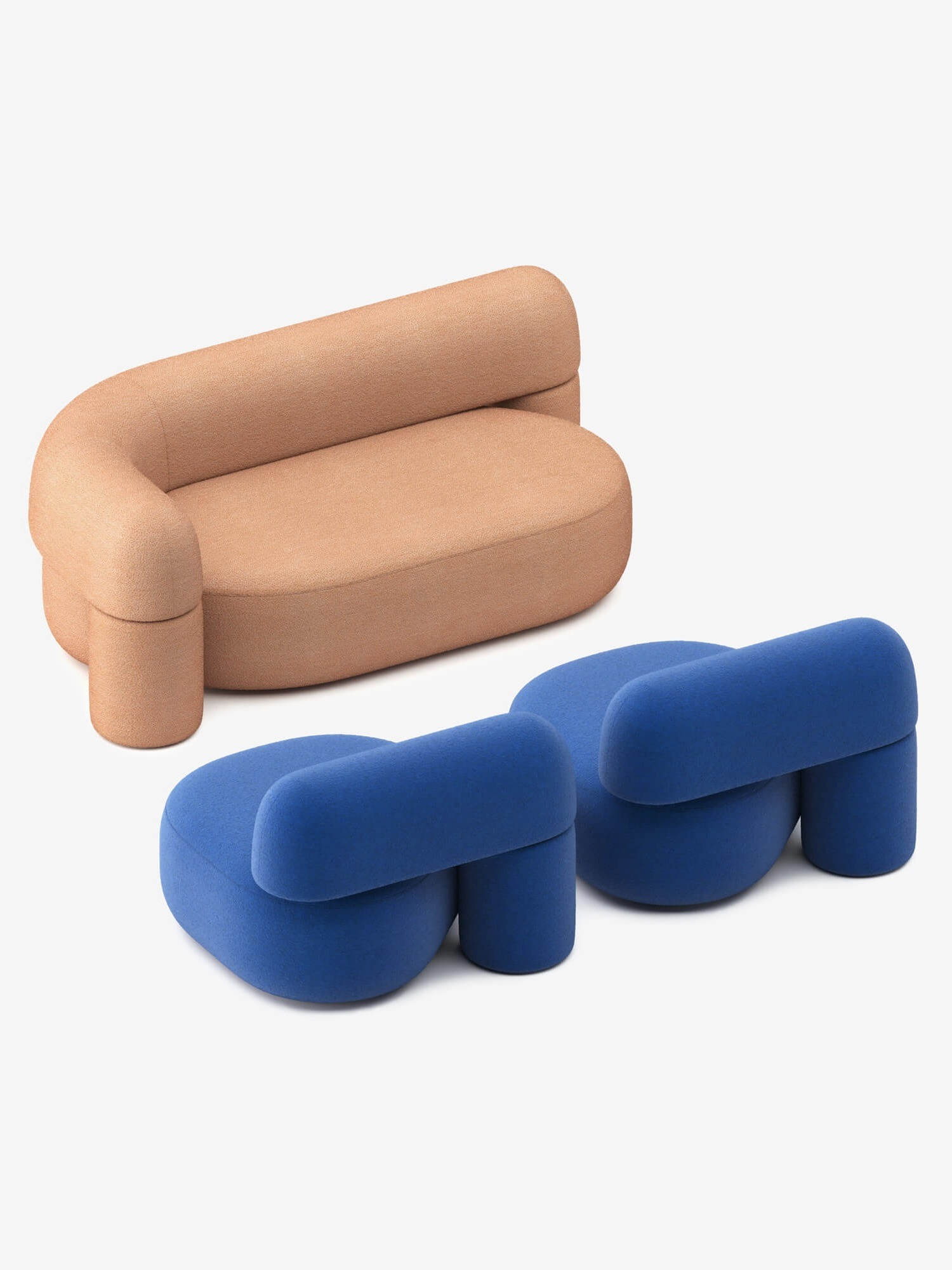
Formani, Enger, Mandelli, Woo Furniture and Atelier Rebul occupy very different categories, spanning design details, furniture and home fragrance. What connects them is how they are made, the attention paid to finishing and an ambition to remain relevant after the first wave of desire has passed.
For Jelena and Jovana, this is a form of design maturity, expressed through craftsmanship and detail rather than through any theatrical display of price. That standard is harder to maintain today than it might seem.
Hotels, restaurants, houses and apartments pass through the same screens. References circulate almost instantly, allowing the same stone, the same chair or the same sofa profile to travel from discovery to visual fatigue in a matter of months. Popularity can very quickly start to look like proof of quality.
“The line between looking for inspiration and falling into uniformity is becoming increasingly thin,” Jelena and Jovana say.
Izba Home responds to that speed by slowing the selection process down. Material, proportion, production and detail matter more than how often something appears in the feed. A trend can be a signal, but it remains a weak argument for something expected to live in the same room for years.
Their question to clients does more work than most moodboards:
“Will you still like this object when it is no longer everywhere?”
Interiors have long lives. A sofa, stone surface, light fitting, handle or switch will remain in a home far longer than a social media cycle, which means a badly judged trend can become everyday life remarkably quickly.
Izba Home assumes an almost editorial role here. The selection can be visually diverse, as long as every choice has a strong enough reason to remain.

© Enger
WHAT LINGERS IN THE AIR
Atelier Rebul introduces something into the story that no render can properly explain.
Scent.
Its real value only begins when you enter a space, which makes it something of an anomaly within an interiors culture that increasingly tests everything through images first.
Jelena and Jovana call it the memory signature of a space.
The last five centimetres are no longer only about touch. Metal registers through the hand, light through the eye, scent somewhere less precisely defined, through memory.
“Scent can reinforce the character of an interior, making it more distinctive, warmer, more intimate or completely different. It shapes the emotional experience of a space even though it is not a visual element.”
At a time when so much architecture is first consumed as photography, anything whose full value can only be understood in person carries a particular weight. Scent becomes more than decoration. In their thinking, it functions as an invisible layer of architecture, equal to the other elements of an interior.
Emotion here does not depend on a decorative gesture. It can sit in the weight of metal, in a surface that accepts age gracefully, or in a scent that becomes part of a place before we even realise we have committed it to memory.
DOOR HANDLE, BRASS, SANDALWOOD
Asked to reduce Izba Home to one object, one material and one scent, Jelena and Jovana answered with remarkable precision.
“A door handle, brass and the scent of sandalwood.”
The door handle matters more than its scale might suggest. It was, they say, the product with which the entire Izba Home concept began. We use it almost automatically, often as our first physical contact with an interior, while the hand is already registering weight, temperature, proportion and resistance before the eye has even decided to pay attention.
Brass introduces time. Its surface accepts use, shifts in tone and records contact with people.
“The traces of time can give a quality material greater depth and character.”
For them, patina is not a flaw to be concealed. It is evidence that the material has begun to belong to the space.
Sandalwood brings the story to a quieter close. Warm, understated and deep enough to remain present without taking over the room, Jelena and Jovana see it as an apt metaphor for the entire Izba Home approach.
“It does not try to dominate a space, but to colour it with something you cannot see.”
And this is where the word izba begins to make sense again. It once named the place where a household kept what it needed. Today, the same name sits behind a model that first tests an object through architecture, then finds a market for it, and ultimately returns it to the place where it will spend most of its life.
Five centimetres is a small measure, but more than enough to reveal the difference between something that simply looks good and something that, over time, truly becomes part of a space.
ANJA DEMIĆ: THE BODY HAS A RIGHT TO ERROR
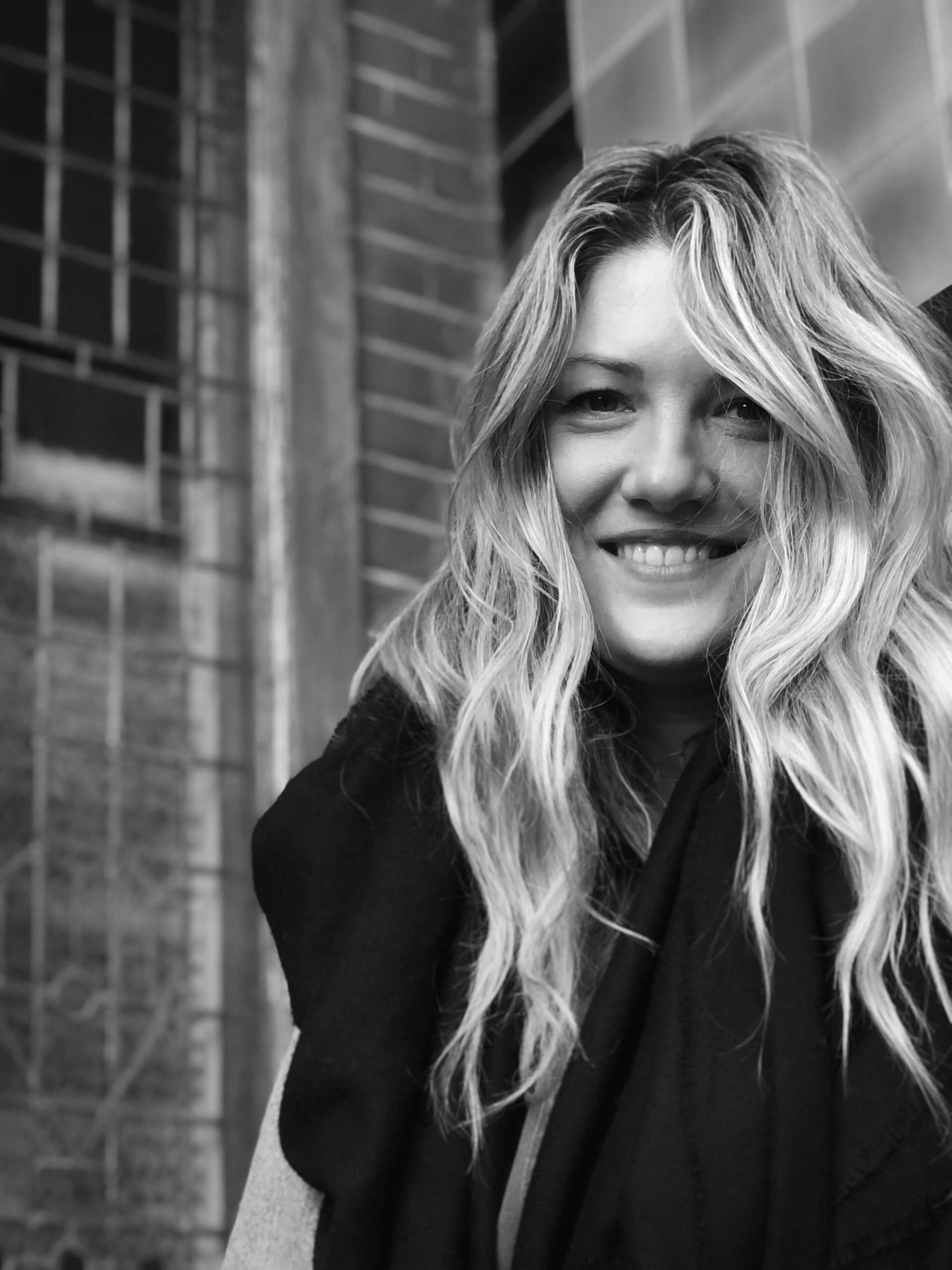
I think I began looking at Anja Demić’s work differently when I realised that the faces she records are rarely models in the conventional sense. They are her people. Friends, familiar faces and bodies, people with whom a relationship exists long before they enter the work. That small shift in perspective changes everything: what might initially read as a study of the body becomes a record of intimacy, trust and a precise moment that will never return in exactly the same form.
That feels close to the way I know her. She does not walk into a room with the urge to deconstruct it. She is calm, thoughtful and unobtrusive, but quick to notice relationships others overlook: between people, objects, materials and space. Listen to her for a little longer and you realise how precisely she observes what surrounds her. The same concentration runs through her work, through folds, shadows, textures and the small departures from order that make a surface feel alive.
She moves between painting, relief, the body, material and, occasionally, interiors, but none of those categories quite finishes the job. A list she offers almost in passing says far more about her practice: texture, shadow, tactility, touch.
“I always knew I would end up doing something that wasn’t tied to a fixed timeframe, and that it would be something I made with my hands.”
So the best place to begin is without too much theory, but with the hands.
ERROR IS NOT AN INCIDENT
There is a work in her hallway that began as a test. It has been there for several years, long enough for the way she sees it to change. What looked like a mistake at the time has become interesting to her because of that mistake. Almost every work, she says, carries some form of imperfection or incompleteness, but this piece is a particularly good example of how time can alter our judgement of the things we initially dismiss.
Here, error is not a pre-designed irregularity inserted to prove that something has been made by hand. It is far more ordinary, and far more useful. A material may refuse to cooperate, a reaction can move in an unexpected direction or a surface can behave differently from what she had in mind, and the work moves somewhere else.
The materials she uses often behave in exactly that way. They change in contact with one another and respond to temperature, humidity and time, which makes her want to understand them better.
“The ceramicists and craftspeople I work with have been invaluable advisers. My mother, on the other hand, would answer almost every one of their that can’t be done with yes, it can. I suppose she taught me that things don’t always have to be done by the book, and that there is probably a way. Maybe that is why I often feel like I can do anything.”
That “I can do anything” feels less like a statement of confidence than a habit she has developed over time, a refusal to treat a technical “no” as the end of the conversation. If something does not work, she changes the material, the process or the direction and keeps testing until something opens up.
And yet she is at her best when there is no answer she has to find at all. As long as the process remains a game and there is no target she has to meet, she works more freely. She can stop at the moment the work feels right, without forcing it further just because it is supposed to be “finished”.
At a time when even leisure is quickly given a task, a result and a metric of success, that relationship with play feels almost radical because she does not present it as such. She does not turn it into a philosophy. She wants the work to have room to surprise her.
And almost always, something has to escape.
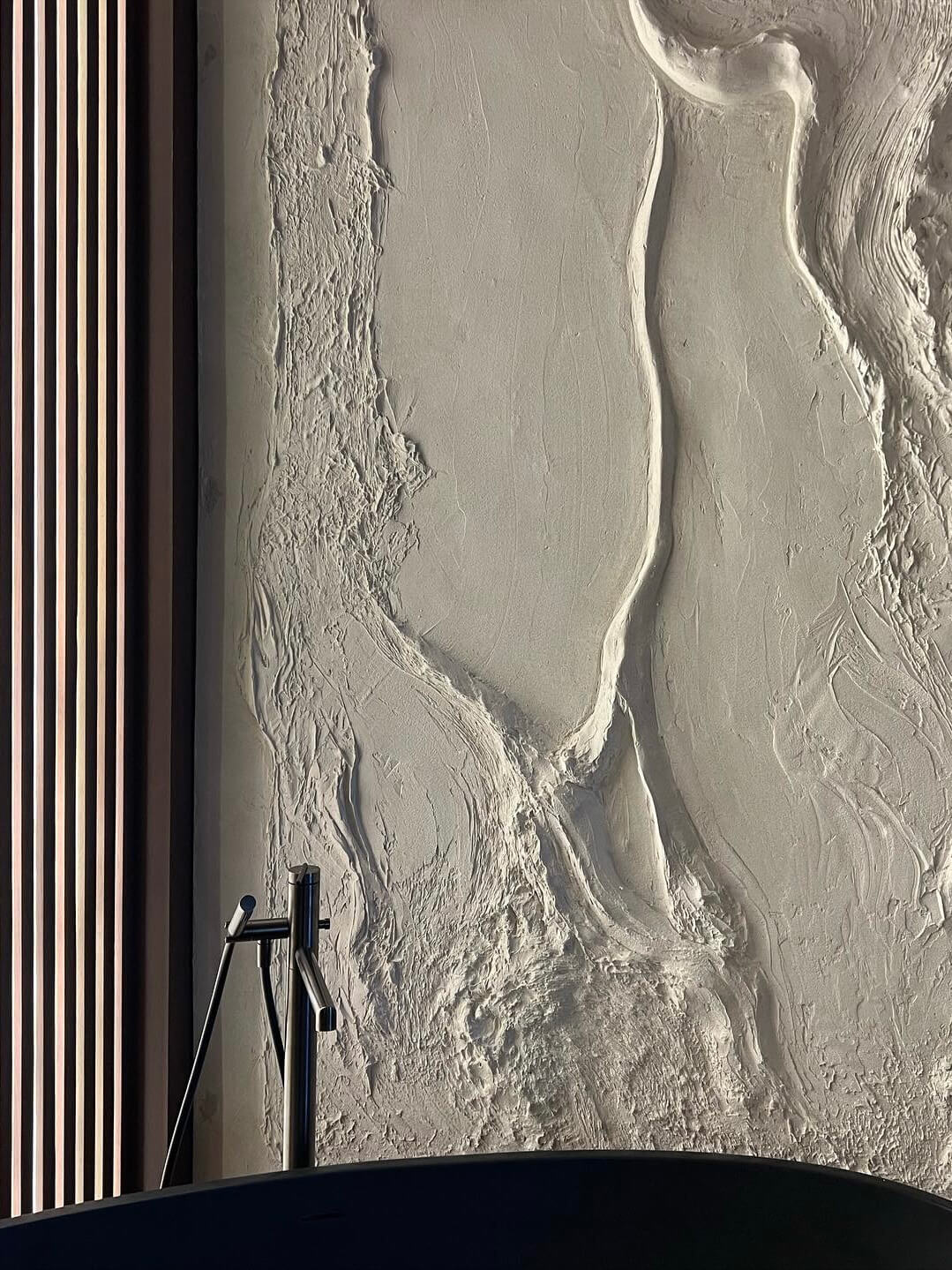
She does not like everything to resolve into a flat plane. She is drawn to the detail that moves beyond it, the fold that was not completely planned, the surface that lifts and changes the way the work catches light. Her reliefs are therefore not simply paintings with volume added to them. They operate through shadow, depth, shifts in angle and physical proximity. The boundary between the work and the space around it becomes less certain.
That desire for form not to behave too obediently also appears in the way she works. Physical closeness often matters to her more than an overview of the whole.
“I trust the eye, of course, but when I am sculpting or painting I often do not want to step back. I know seeing the whole is a crucial part of the process, but sometimes the detail, the fold and the feeling under my fingers that the material is the way I imagine it matter more to me.”
One gaze organises the whole, while another tests the skin of the work. For her, those two ways of seeing do not necessarily exist in a hierarchy. Sometimes what is beneath the fingertips carries more weight than the composition viewed from the other side of the room.
Texture spills into the things she chooses outside the studio too, into clothes, objects and surfaces. Even when something is flat, she looks for the point at which flatness stops being complete. Something has to disturb the image just enough to keep it from becoming dead.
Perfection bores her quickly.

THE CITY SHOWS UP IN MY PEOPLE
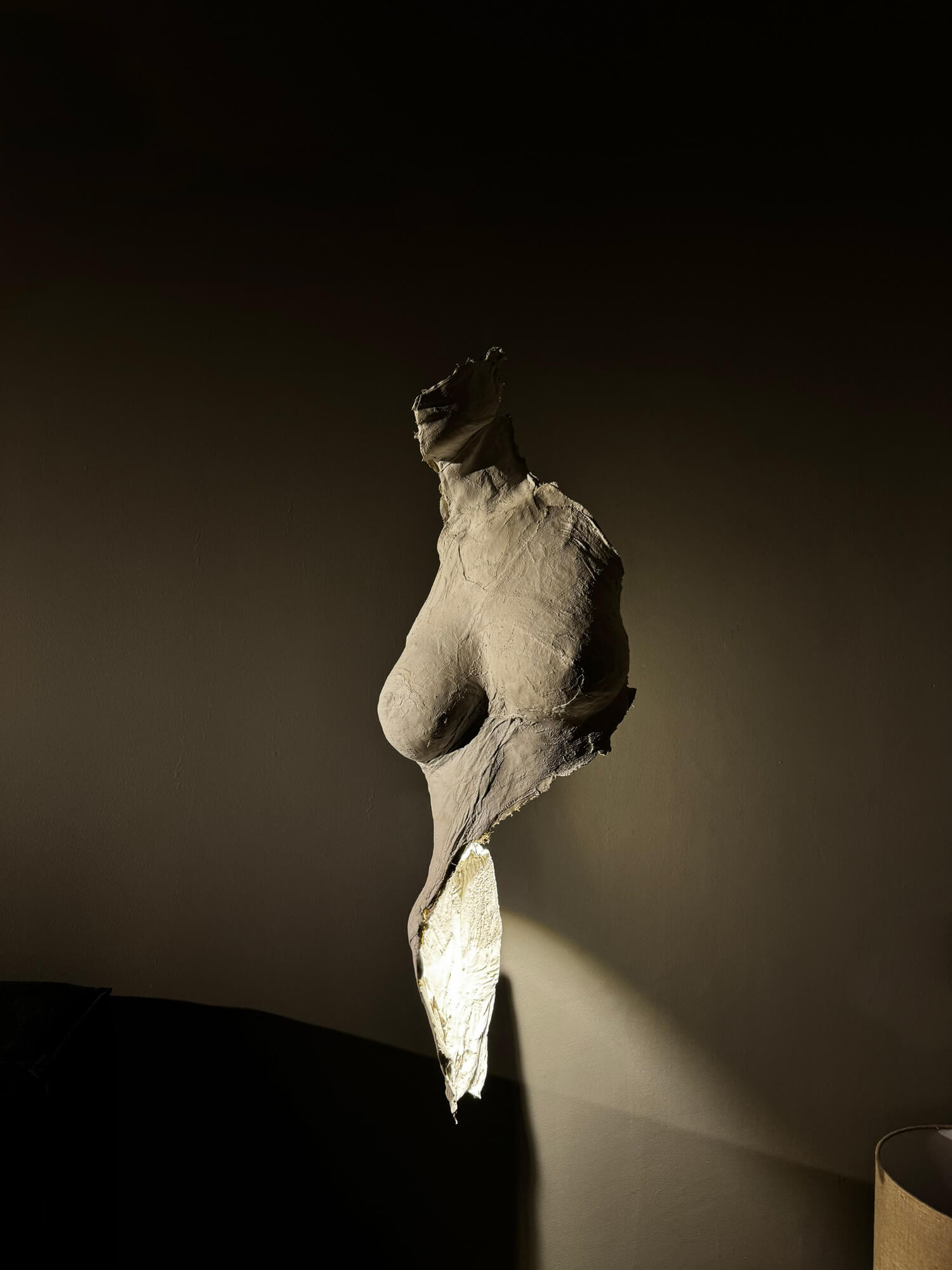
Belgrade Skin is a collection made directly through the human body. Plaster is applied to the skin, taking on its surface, its irregularities, folds and differences, so each work begins with an actual body at a specific moment. The title is easy to misread if taken too literally. The skin of Belgrade here is not a façade, asphalt or a collection of brutalist surfaces. It belongs to people.
“I think people are the greatest charm of Belgrade. The city has gone through dark periods, but the warmth and welcome of its people are still what foreigners remember when they leave.”
The city stops being something observed from the outside and begins to accumulate through the people who live it. In Belgrade Skin, the body is not simply a subject or a neutral surface onto which a concept is projected. It physically takes part in making the work. Through direct contact, the plaster takes on its form, leaving behind a relief-like record of that body at that moment.
No two bodies are the same, and individuality interests her far more than comparison. Bodies change, which means the same process can never produce the same result twice. A fold, a shift, a trace, a difference. All the things that make one body impossible to substitute for another.
Many of the people whose bodies become part of the collection belong to her everyday life. They are friends, familiar faces, people she knows before the work and continues to know afterwards. The gaze she turns towards them is therefore not the gaze of someone encountering a body for the first time, because it already contains closeness, memories and earlier versions of the person that came before the moment she records.
This is where Belgrade Skin functions as a personal archive, without any desire to freeze things in place. It does not preserve Belgrade through buildings, but through the physical traces of people who existed within it at a given moment. The city does not accumulate in a panorama, but in the presence, character and bodies of those who carry it with them.
That is a more precise way of recording a city. Architecture can remain unchanged for years while the people inside it change countless times.

HANDS KNOW MORE THAN THE PLAN
Workshops attract her because of the period before the finished object, when it is still not entirely clear what the material will do and when someone else in the room knows far more than she does.
“For me, a creative workshop is much more than a gallery. It is an inexhaustible source of play and possibility.”
When she travels, that can mean tiles, moulds, casting, clay and techniques that cannot be learned by looking alone. There is no need to romanticise craft because what interests her is the process itself, what happens when you take a material into your hands for the first time, get it wrong, repeat the gesture, learn its logic and only then begin to contradict it.
In every process, she feels as though she is back at the beginning. Again and again. There is always something else to explore in form, in the body, in material, in the way it behaves and affects its surroundings.
That sense of beginning does not mean she glorifies not knowing. Quite the opposite. The better she understands a material, the more confident she becomes in testing it and taking it further.
The workshop is therefore not an escape from artistic practice, but the place where that practice expands. She does not go looking for a souvenir, but for an experience that remains in the hands longer than the finished object.
She carries the same principle into interiors, which she occasionally works on without any need to declare them a second profession. She has a very specific measure for how much of a space should remain open to life: twenty per cent.
“A space should remain at least twenty per cent unfinished so that the person living in it can leave their own mark.”
It is a surprisingly good measure. Enough for a space to have intention, but not so much that the person entering it has to spend the rest of their life acting as an extra in someone else’s composition. A bad space interests her more than a characterless one. If nothing else, she says, it leaves a trace.
This is where the conversation about good taste becomes more complicated than the standard critique of Pinterest, Instagram or trends. Good references train the eye, and the problem begins when the gaze becomes so well trained that it no longer dares to make a mistake.
Once everyone has learned the same lesson about which wall colour looks serious, which chair signals design literacy and exactly how carelessly books should be left on the table, taste can easily stop being personal.
She would rather leave that twenty per cent unfilled, so life still has somewhere to enter.
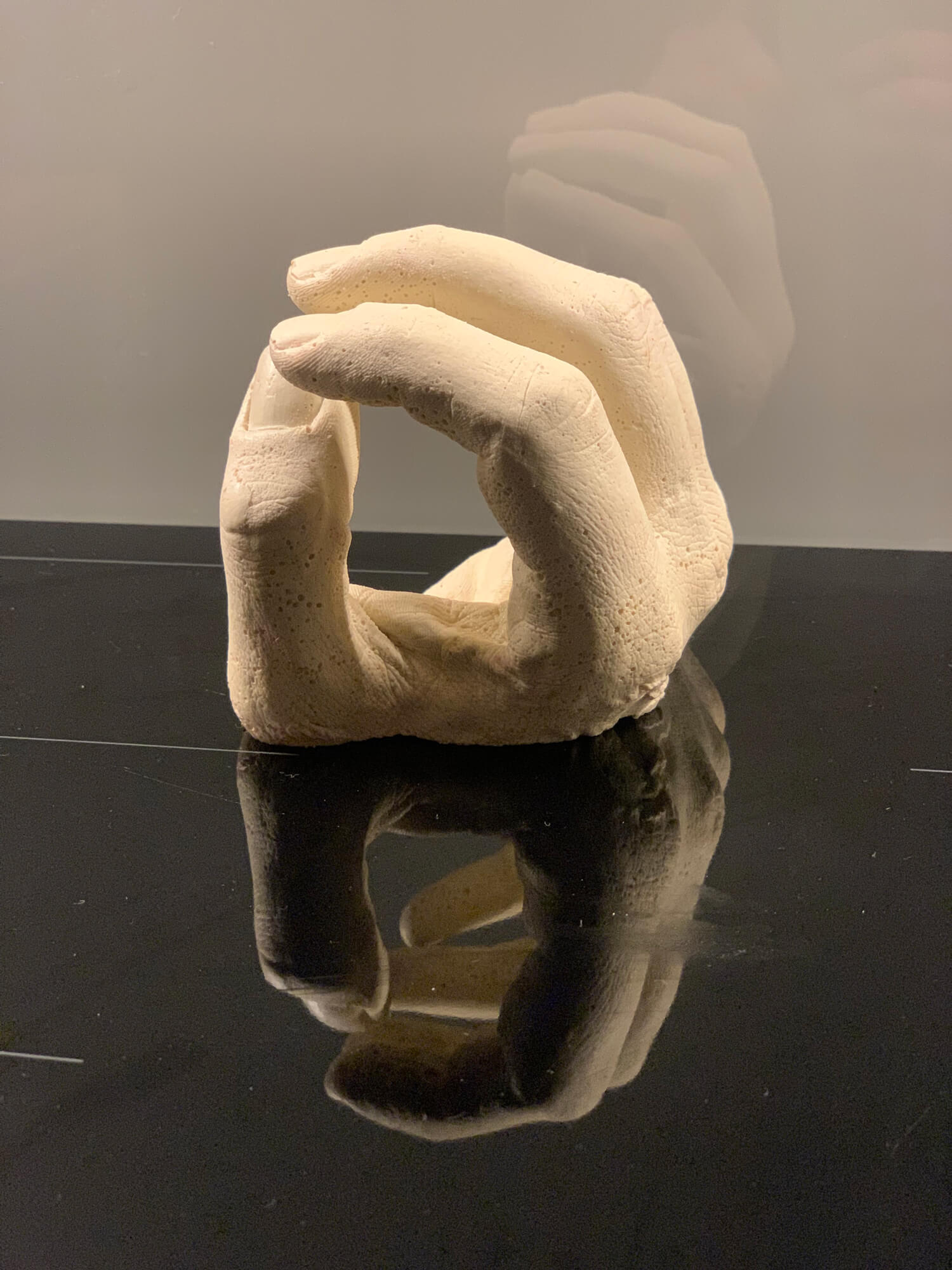
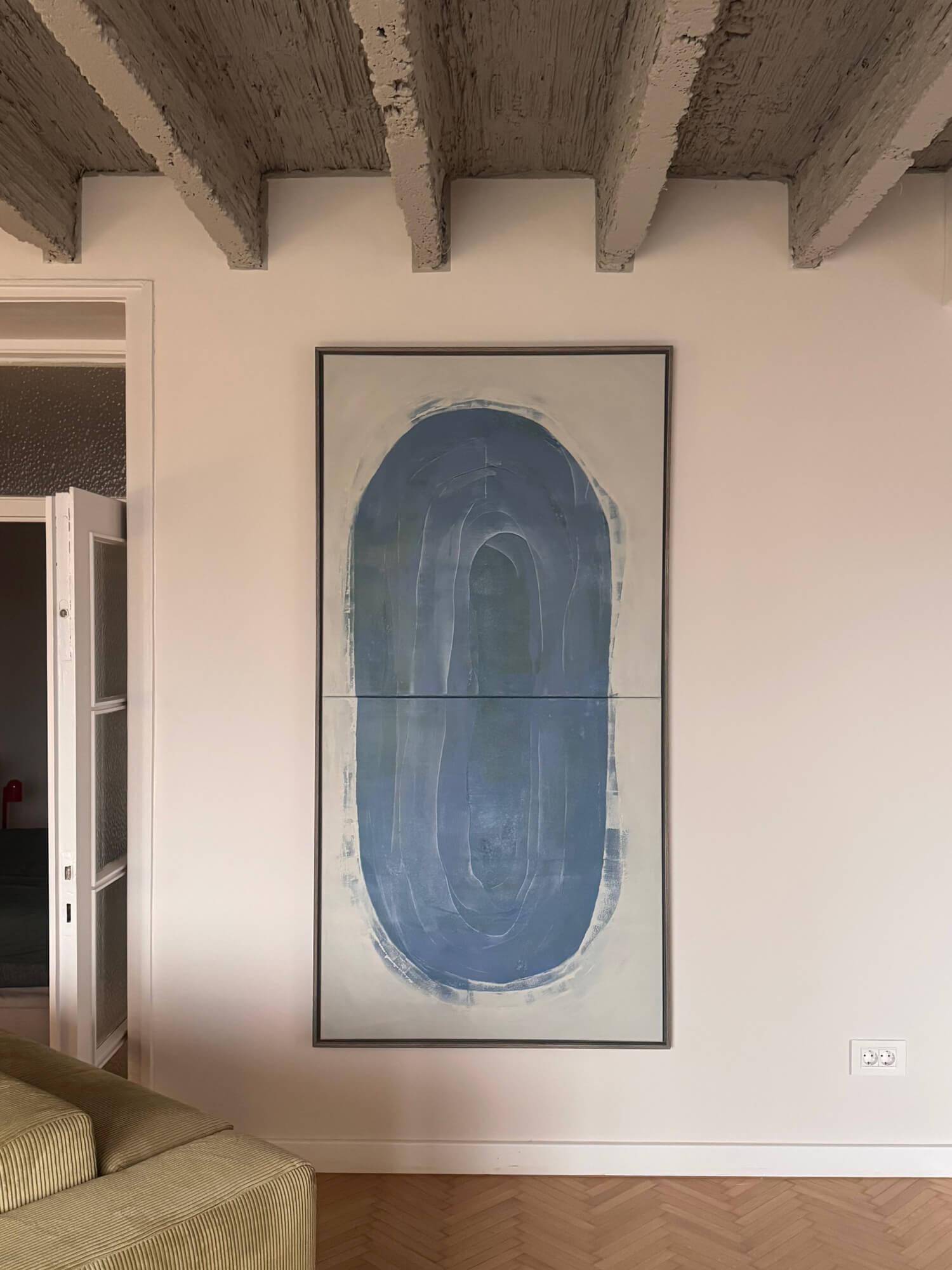

THE BODY CHANGES FASTER THAN STONE
Anja loves rocks.
It could easily be one of those things you know about a friend and never have any reason to write down. In her case, though, it is difficult to separate from a body of work in which material, the body, change and time are so present.
Stone exists at a rhythm that is almost impolite towards human time. The body does not have that luxury.
“A sealed moment matters to me, but so does transience. As bodies age and change, they gain more character for me. They become more interesting.”
The most accurate way to see her here is as a kind of quiet witness. Not a portraitist in the classical sense, and even less someone attempting to stop time. She records a situation knowing that everything within it will continue once the work is over.
The people she knows will change. Their bodies will change. Her relationships with them may deepen, recede or become something else entirely. The city around them will change too, along with the way they see themselves. The work will remain as a precise record of one version of a person that was once the present.
That is why transience in her work does not carry the taste of loss. It is simply another material.
The materials she works with continue to shift in contact with time, air, temperature and other surfaces. A work that has spent three years in a hallway gradually stops being a mistake. A body once recorded acquires another history. Belgrade stays the same only on the map.
Stone, meanwhile, is doing something else entirely. Almost nothing.
It is enough to remain close: to see the fold before the whole, to feel the material under her fingers, to recognise when something should be allowed to escape, and when a moment, however brief, is worth keeping.



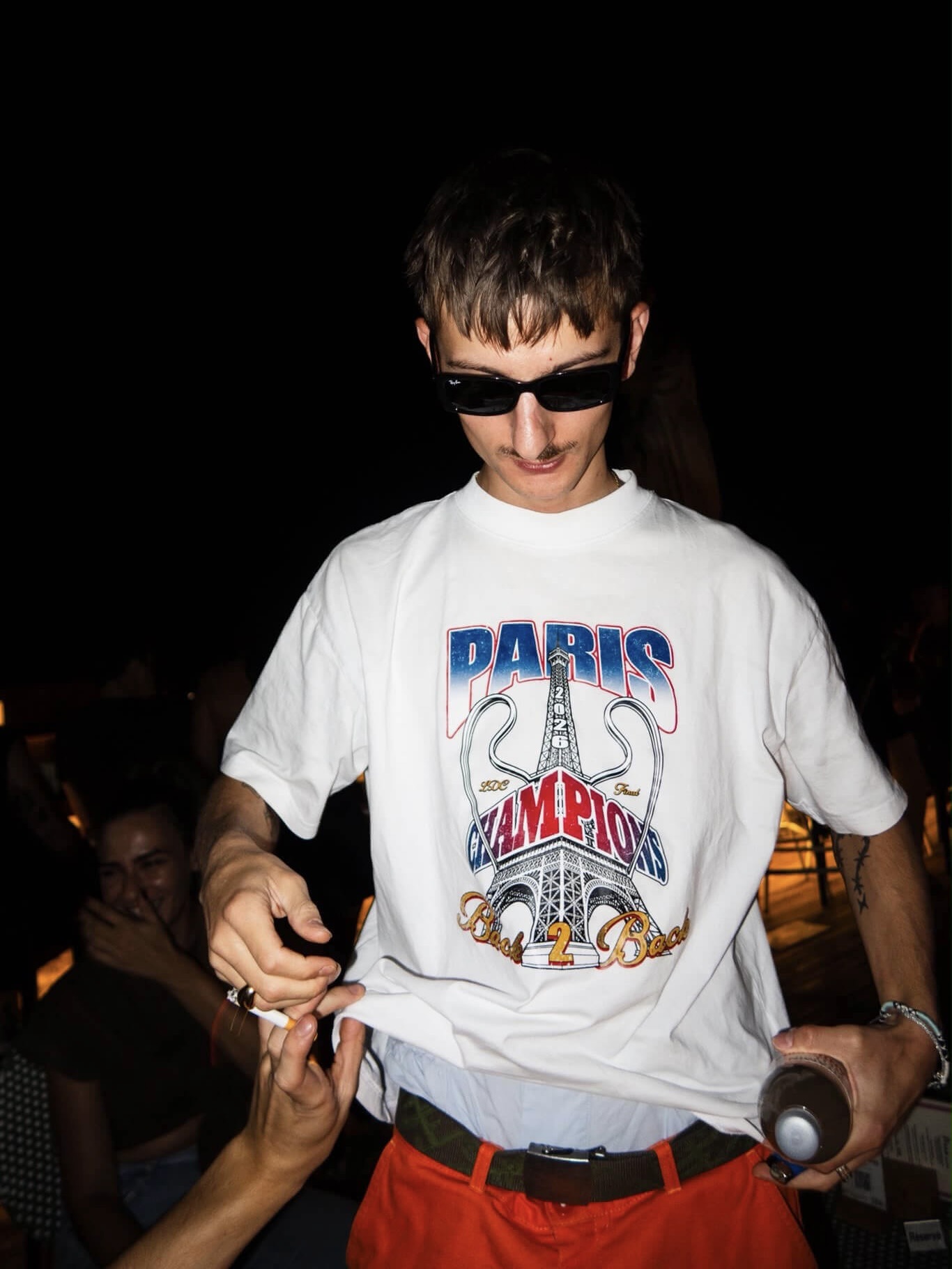
AROUND 5 AM IN PARIS WITH SACHA KASSY
Paris is wet tonight, though not in the cinematic way. It has been raining long enough for coats to smell damp, pavements to turn black and windows to fog up from the inside. I’m sitting at Le Crocodile in the Latin Quarter, between photographs and old posters on the walls and a cocktail menu so long that ordering feels like a minor commitment to the evening.
Somebody has decided that tonight belongs to the Red Hot Chili Peppers. Not one song, but what increasingly feels like the entire discography. After thinking about him for days, Sacha Kassy starts to sound like a plausible cocktail somewhere between two others I have never heard of. It isn’t there, though by then I think it should be.
A room like this makes sense as an opening scene: too much music, too many objects and an interior that looks as though it accumulated its identity over time. He is a French DJ and producer based in Paris, but music entered his life long before clubs did. He started playing drums at seven, moved through jazz and classical orchestras, discovered DJing at sixteen, later became a resident at London’s Subtle Radio and today also works as a curator at Hark, where records, audio equipment, design and people still have to occupy the same room.
Miu Miu has translated that renewed appetite for physical music into its Vinyl Club pop-ups, where records and turntables become part of the architecture of retail. A fashion house no longer just chooses music to accompany clothes; it rebuilds the conditions around listening and makes them desirable in their own right.
Calling all of this an analogue revival misses the point. The seventies are not coming back, nor is vinyl returning in any historical sense. What is returning is an appetite for things with weight, surface, ritual and a little resistance.
DESIGN MADE THE RITUAL SEXY AGAIN
His explanation for the renewed interest in vinyl begins somewhere much more practical than a collective hunger for authenticity.
“Vintage culture, second-hand objects and thrifting are mainstream now, for good reason, and they’re economically much more interesting. I think that plays a big role in the new generation becoming interested in vinyl again.”
He belongs to a generation for whom music was never purely sonic. An early 2000s childhood meant music videos, YouTube, label identities and pop culture experienced as much through images as sound.
“The vinyl object itself reminds me of that pop culture era and echoes our new world, which is much more digital than it used to be but is still based first and foremost on the visual aspect of things.”
We miss touching things, but we also like the way touching things looks. Records, sleeves, turntables and speakers satisfy both impulses at once. His first vinyl was The Marshall Mathers LP. He was eight or nine and had no idea who Eminem was. “I just thought a guy randomly sitting in front of his house looked cool.”
Before taste becomes knowledge, it is often attraction. A record sleeve does the same job as a chair, a poster or a piece of clothing: it makes you stop before you have worked out why. Domestic technology spent years trying to disappear; now speakers are becoming sculptural again and turntables are given furniture of their own.
When a day is organised around sound, the distinction between music and design becomes hard to maintain.
“Music almost never ends. I wake up and the first thing I do is play a record, then I produce or dig for a bit, then I spend the whole day at Hark, and finally I go back home and play or listen to music again. I don’t watch TV or play games, and I don’t really go out that often. I’m kind of obsessed with making things sound.”
The way he makes music follows the same logic. It begins with something concrete: sampling something specific, building a club track around a bassline, playing with breaks and allowing the rest to find its direction.
“From that starting point, everything comes out naturally with the flow. There isn’t much reflection beyond that.”
When I ask whether records, objects, spaces and Hark have changed the music he makes, he tells me he cannot give a particularly relevant answer. Working there has opened him up to a much wider range of musical styles and given him a stronger knowledge of recording history. He does not improve the answer for the sake of the interview.

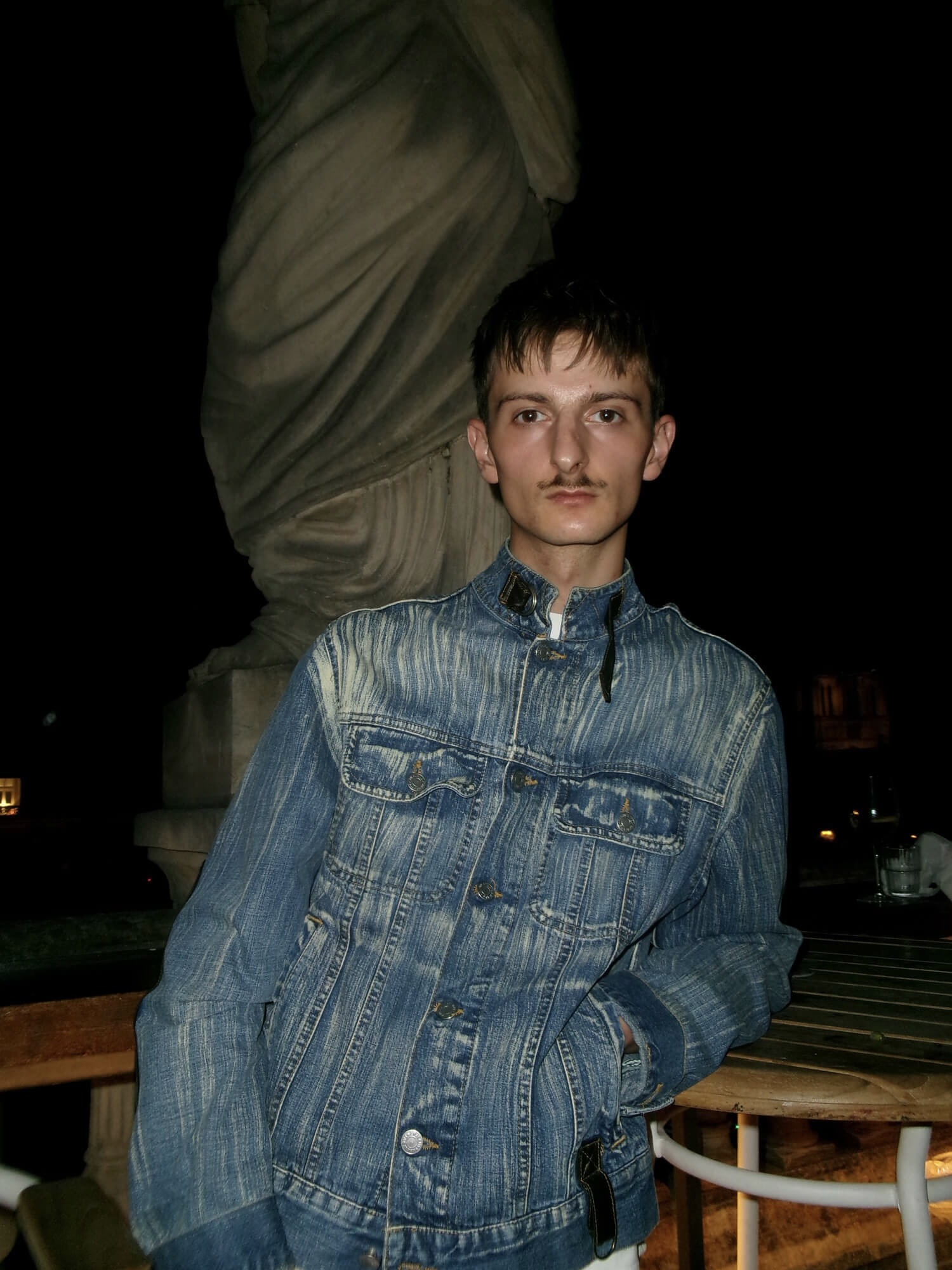
WHEN THE ALGORITHM ACTUALLY WORKS
A neat version of this story would require him to distrust algorithms. He spends his days around records, so it would be convenient if he told me digital discovery had flattened everything. Instead, Instagram introduced him to Ele A, a Swiss rapper from the Italian-speaking part of the country, and he has kept listening ever since.
“I really appreciate how hybrid and unique her musicality is, also thanks to the productions from her DJ, Disse3000. I think they’re both in my top ten at the end of every year.”
The algorithm occasionally gets it completely right. There is more music available than anyone could realistically hear, yet he usually knows within a few seconds whether something is going to stay with him.
“I can’t really explain it. I guess it’s just a feeling. Most of the time, I can tell within a few seconds if I’m going to like a track or if it just won’t make anything resonate inside me.”
Artwork and record covers still enter the decision. “Visual art and record covers also play a big role in the way I understand a project or become interested in it.”
Access is no longer the privilege; attention is. A record sleeve interrupts the endless stream differently: you have to hold it, turn it over, decide whether the image or typography deserves another look. None of that makes digital discovery its opposite. A day spent among records can still end with a favourite new artist found on Instagram.
WHEN THE UNDERGROUND BECAME DESIRABLE
The codes of underground culture are everywhere now: small rooms, vinyl, raw interiors, secrecy, visible equipment. Fashion, retail and hospitality speak the language fluently, and projects such as Miu Miu Vinyl Clubmake the shift obvious.
I had assumed there was an interesting question here about the moment underground became aspirational. He is far less interested in the category itself.
“To be honest, nowadays I can’t really tell what is underground and what isn’t, and I don’t really care.”
Then he becomes more exact. “As artists, we just need to create what we feel. After that, the audience and the ‘big machine’ of the industry choose what is working and what isn’t. Designing or creating something in order to seem underground doesn’t make any sense to me. It isn’t a vibe or an aesthetic. Some talented people really struggled hard to get themselves out of that category.”
A raw wall is still only a wall, and a vinyl-only set does not automatically make a scene. Once underground becomes an aesthetic target, it begins to lose the thing that gave it meaning.
What still feels alive in Paris has less to do with defending the purity of a scene than with the people moving through it.
“I still love the fact that I’m discovering new artists, DJs, photographers, painters and filmmakers every week, every time I’m out. It makes me very happy to be surrounded by all those creative people and to have the chance to sometimes cross paths with them.”
Paris enters the story less through addresses than through collisions. A photographer meets a DJ, a filmmaker ends up beside a painter, somebody hears something they had not gone out looking for. A scene needs rooms, but its real infrastructure is proximity.
Working at Hark gives him a good position from which to watch people choose music when no feed has already chosen it for them.
“There’s a very specific way of digging that’s unique to each customer, and I find that really interesting. Some people know exactly what they’re looking for, some only look through the newly arrived records, while others can spend hours going through everything and listening to anything.”
“I don’t know exactly what it reveals. I guess it just reflects the way people consume art, and I find it very amusing to get the chance to experience that every day.”
A physical space lets the process remain visible: hesitation, wrong turns, the record somebody picks up and puts back, the one they never intended to hear.
When I ask what can still happen between two people and a piece of music that no platform can reproduce, he refuses to make the answer larger than it needs to be.
“Anything can happen, and nothing can happen too. It’s only music.”
Dry, accurate and almost annoyingly resistant to interpretation. Good.
SACHA THEN AND NOW, AROUND 5 AM
By the time our conversation is almost over, the rain outside Le Crocodile has not improved and the Red Hot Chili Peppers have been with us for most of the evening. The room has become louder without anybody deliberately making it louder, and the objects around us have stopped asking to be interpreted. You no longer care who designed the chair or whether the speaker deserves to be called sculptural. The night has moved beyond that.
I ask him to imagine two versions of himself meeting somewhere around five in the morning in Paris, the one who was starting out and the one standing there now.
“I think both versions of Sacha would recognise this quest to be one hundred percent true to themselves, which I could describe as wanting to remain as reckless and humble as a kid. But I think the one from years ago would look much sadder and more lost than I do today, luckily.”
It is the most personal thing he says, and he does not decorate it afterwards. He does not perform an answer because an interview demands one, nor does he turn instinct into theory. If there is something precise to say, he says it; if there isn’t, the empty space does not bother him. In an environment where everybody is expected to have an articulate position on everything, that restraint looks unusually confident.
As we finish, the RHCP run finally comes to an end and whoever is controlling the music switches over to Rinse France. The sound changes almost imperceptibly, a different rhythm slides underneath the conversations, and Only Love Tries, his new mini EP, begins to play.
I look back at the cocktail menu. Maybe Sacha Kassy was on it after all.
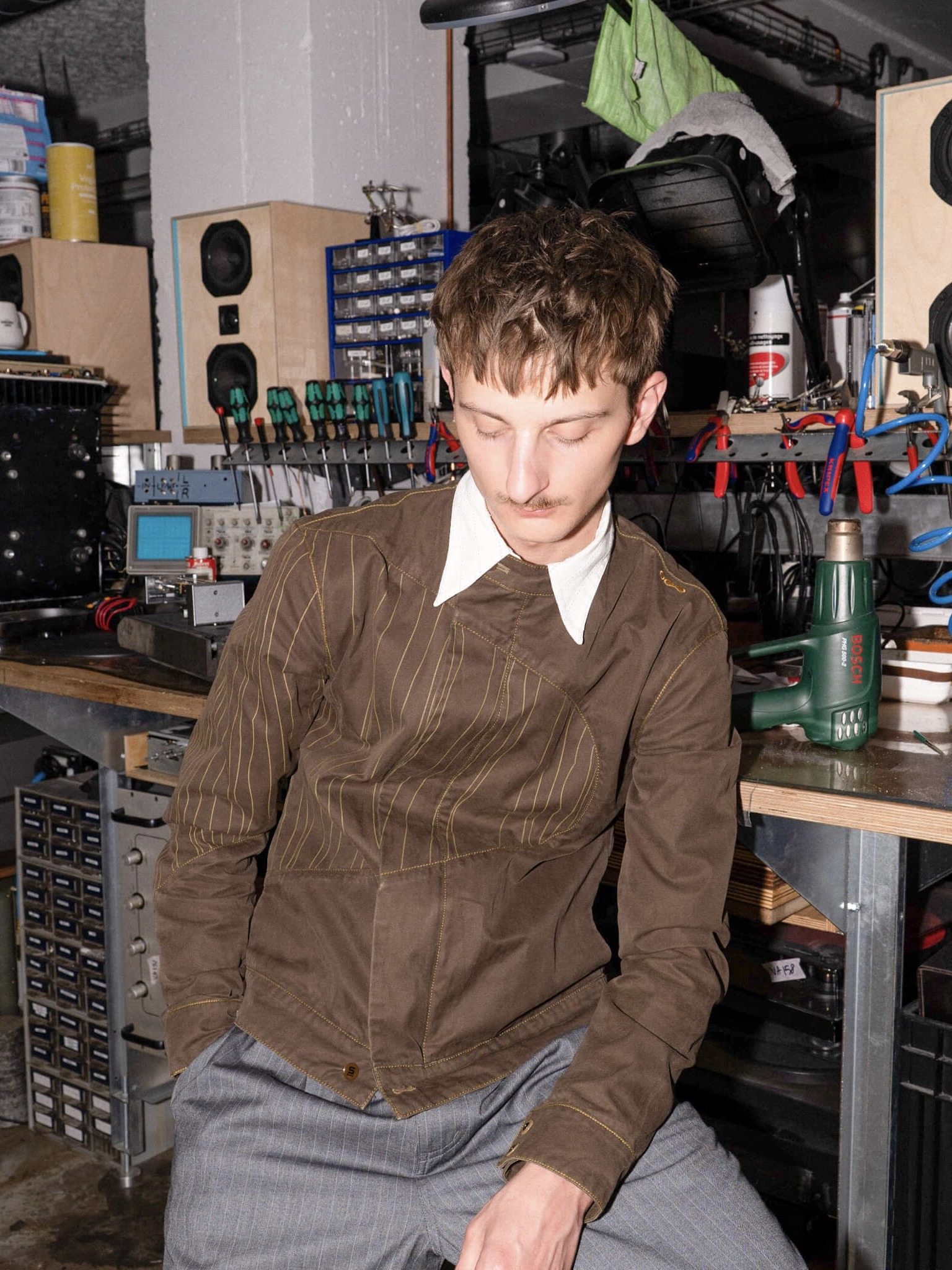

PIERRE ZENATTI: “A PHOTO THAT DOESN’T DIVIDE IS A PHOTO THAT’S FORGOTTEN”
Marseille has a habit of dismantling whatever image of it you arrive with. It is loud, rough and overcrowded, then almost village-like a few streets later, monumental, improvised, French only up to a point before becoming something far more Mediterranean. Stefan and I spent much of this summer discovering it on foot, which is probably the quickest way to understand how badly a single definition fits the place.
That is precisely why Pierre Zenatti’s photographs caught my attention. His city is quiet, empty, precise and intensely blue. There are no crowds spilling across the pavement, no scooters passing slightly too close, no faces interrupting the geometry. Facades become lines, shadows almost become architecture, and Marseille, a city not particularly known for its mute button, suddenly goes silent. Everything looked so clean and exact that, for a moment, I found myself wondering whether I was looking at a photograph at all.
And yet, I already knew this Marseille. We had been staying in Le Roucas-Blanc, an almost village-like part of the wider city centre, where small houses, narrow streets and gardens slow the pace, and the view from above reshapes the relationship between sea, sky and architecture. From there, this version of Marseille felt entirely real. Walk downhill, however, and the same image begins to come apart.
His photographs occupy the space between those two Marseilles: a very real fragment extracted from a much louder whole. People sometimes accuse him of showing a city that is too clean, too quiet, almost imaginary, yet everything stood in front of his camera. The more interesting question is why we are so much more willing to accept certain other versions of Marseille as more real.
“A photograph is real as an object, but what it shows is an interpretation. Pure observation does not exist. As soon as we look, we construct.”
ALL OR NOTHING
He started taking pictures as a hobby during university, without much passion or ambition. His first real visual love was graphic design, particularly Photoshop. Photography became more serious during his time in the French Army, where he began developing the fundamentals of photojournalism.
“Through these photo essays, I was asked to convey as much as possible with a single photo, so that a viewer could understand the entire scene and its implications as quickly as possible. So there was little room for emotion, and even less for artistic concerns.”
The photographs he is known for now came later, after years of experimentation and a search for a visual language that could combine his own aesthetic instincts with techniques drawn from graphic design. The contradiction is useful: he was taught to put as much information as possible into a single image; today, he seems interested in what happens when almost everything is removed.
“I’m not thinking yet. I’m feeling.”
Control follows quickly. A slanted line bothers him, as do a badly adjusted frame and imperfect symmetry.
“So if I had to answer in one sentence: intuition tells me where to look, and control decides what stays. One without the other doesn’t work. An image that’s purely intuitive is rough around the edges. An image that’s purely controlled is cold. It’s the tension between the two that makes a photo just right.”
He is equally precise about what he refuses to photograph: too much movement, too many people, a face breaking the silence, an image that already looks like a postcard.
“I’m not documenting a place; I want to transform it.”
Maybe he simply does not like crowds. That is probably healthier than turning every aesthetic preference into theory. What matters is that he has turned that inclination into an unusually consistent visual language.

Marseille. © Pierre Zenatti


Marseille. © Pierre Zenatti
THE “REAL” MARSEILLE DOESN’T EXIST
Marseille officially contains 111 neighbourhoods, many retaining traces of the villages and local centres absorbed as the city expanded. It has never been very good at being just one thing. When people describe his Marseille as too beautiful, he says they may be reacting less to the city than to what they have stopped seeing.
“When you live in a big city, you no longer look at it; you just pass through it. My work doesn’t deny the noise, the movement, or the chaos, because that is the very identity of this city. It simply sets them aside. For the duration of a single image, I remove everything that’s overwhelming, and what remains in the end is a silent, peaceful city.”
The lines are there. The blue is there. What changes is the way they are looked at. Marseille has long been easier to sell through another vocabulary: danger, poverty, drug trafficking, violence, neighbourhoods where the state can feel absent. He does not deny any of it.
“I’ve been living here and exploring the city for nearly five years now, and I’ve never been afraid, not even once. I’m not saying there aren’t problems: there’s poverty, drug trafficking, neighbourhoods where the government is absent, and where people naturally feel abandoned. But the violence people talk about abroad and even here in France isn’t part of everyday life in Marseille. It’s just a small part of reality, the part that makes headlines in the media.”
For him, the city is closer to Naples or Barcelona than to Paris.
“It’s Mediterranean before it’s French.”
People speak loudly, become familiar quickly, argue and show affection in the same sentence. Marseille can be criticised endlessly from within; criticism from outside plays by another set of rules. Yet fear is only one way outsiders flatten the city. Romanticising it can do exactly the same thing.
“Those who romanticize Marseille make the same mistake as those who fear it: they look at the city from the outside, but from the opposite perspective. They’re searching for the Marseille of the past, the one that smelled of soap and lavender, where neighbors knew one another. The problem is that that Marseille never really existed; the old neighborhoods were poor, and people didn’t live there because it was picturesque—they lived there because they had no choice. Finding charm in a place where people are struggling isn’t paying them tribute at all; it’s turning their lives into a backdrop.”
Then he turns the argument back on himself.
“They also forget that Marseille isn’t a museum. It’s a living city; people don’t want to live in a postcard, they want a future. And I have to be honest: my work can feed into that vision. My Marseille is silent, empty, clean; it isn’t the whole truth; it’s just a fragment. I don’t claim to show the ‘real’ Marseille; I show my own.”
He knows that his Marseille is a construction too, neither more nor less truthful than every other version. Perhaps the “real” Marseille does not exist. A city made from 111 different neighbourhoods probably never needed one.
AI TAKES A PHOTOGRAPHY MASTERCLASS
The conversation eventually returns to my original suspicion: the photographs had initially looked generated to me, while AI, he tells me, has already copied his work.
“It’s my perception, one that’s hard to replicate, even if AI can copy my work, as has already happened to me recently.”
The question is therefore less whether AI can produce an image that resembles his than whether it can reproduce the reason he noticed that particular line in the first place.
His visual language was not born in Marseille. He traces it back to a trip through Mexico and the intensely colourful alleyways of its southern cities.
“I could apply it anywhere, in any city; I’ve already done so. The place changes, but the perspective remains.”
That perspective is physical too. His photographic walks can stretch for at least twenty kilometres, alone and without music. Design and architecture matter, as does Provence; so does the solitude he openly admits is part of the reason people rarely appear in his work.
“I’m a solitary soul, even a bit antisocial at times. That’s partly why there are never any people in my photos. It’s not an aesthetic choice. It’s a reality.”
He describes himself as pragmatic, organised and a bit of a control freak.
“My minimalism isn’t a way to withdraw from the world. It’s a way to look at it more closely.”
AI can learn the blue, an empty facade, a hard shadow and a perfectly aligned line. What remains harder to reproduce are the twenty-kilometre walks, Mexico, Provence, military photojournalism, graphic design, solitude and the instant in which someone decides that this wall or this shadow is worth stopping for.
For him, the reason to keep photographing is not primarily the finished image.
“What makes a photograph indispensable to me isn’t what it shows. It’s what it makes me feel the moment I take it. When I take a photograph, there’s a moment of calm. A moment when everything stops. I don’t think about anything else. It’s instinctive: I see something, I raise the camera. And then, very quickly, it becomes a deliberate process: framing, settings, composition. But that first impulse, that inner moment of silence, is what drives me to keep going.”
He wants to leave something behind that survives the endless stream of images.
“For me, the fewer elements there are, the more beautiful and essential the image is. To remove is to make it stronger. And deep down, what I want is to leave a mark. Not just another photo in a stream. A reminder.”
He has also quit his job to try to make a living from photography. There is something usefully concrete about that: the eye AI is learning to imitate still belongs to someone trying to build an actual life around it. Universal approval does not seem to interest him much either, and perhaps that is the more interesting problem of suspicious beauty.
We have become so accustomed to asking whether an image is real that we sometimes forget to ask whether it made us feel anything at all.

Marseille. © Pierre Zenatti


Marseille. © Pierre Zenatti